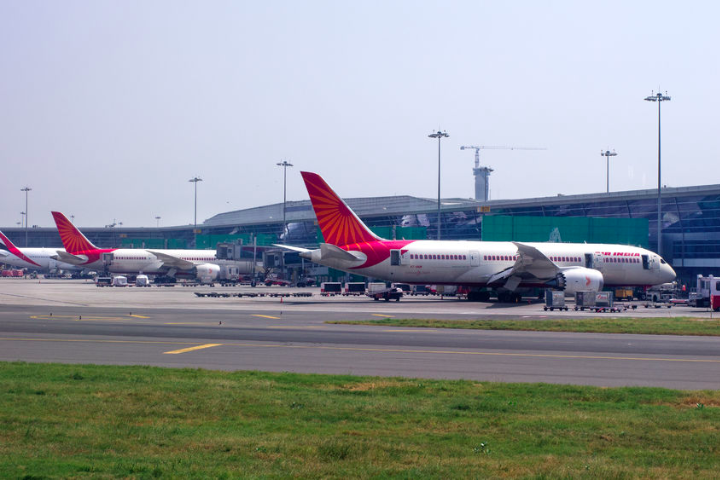
It’s the news foreign carriers had been waiting to hear for years. After more than a decade of deliberations, India finally unveiled an aviation policy to open up the world’s fastest growing major air-travel market. Prime Minister Narendra Modi’s government decided Wednesday to permit domestic airlines to fly overseas provided they deploy 20 planes or 20 percent of capacity, whichever is higher, on local routes. Earlier, carriers needed to have a minimum of 20 aircraft in their fleet and five years of domestic services. The move benefits operators such as Singapore Airlines Ltd. and AirAsia Bhd., two of Southeast Asia’s biggest airlines, and has the potential to attract new investments from Middle Eastern carriers such as Emirates airline and Etihad Airways PJSC. More may enter the market, leading to a possible consolidation among local carriers, said Amber Dubey, an aerospace consultant at KPMG in Gurgaon near New Delhi. “The policy framework is transparent now,” Dubey said. “If you don’t get in now, you never will.” Outpacing China Air travel in the South Asian country grew more than 20 percent last year, according to the International Air Transport Association. In comparison, passenger traffic in China rose about 10 percent and by less than 5 percent in the U.S., IATA said in a December presentation. Local air traffic in India increased even faster at more than 23 percent in the first four months of 2016, according to data from the Directorate General of Civil Aviation. Modi’s decision to amend the regulation, locally known as the 5/20 rule, is part of a new aviation policy framework unveiled by the cabinet after at least 13 years of consideration by successive governments. The South Asian nation, which has at least 10 major carriers, had earlier relied on the British colonial-era Aircraft Act of 1934, which was periodically revised in a piecemeal fashion. “It is a turning point for India’s civil aviation sector as it frees the operators from the shackles of the 5/20 rule for flying overseas,” said D.S. Rawat, secretary-general of the Associated Chambers of Commerce & Industry of India, a business lobby. “The step would surely attract more investment in aviation, which in any case had become quite viable after a sharp correction in fuel prices.” ‘Too Many’ Singapore Airlines and Etihad said they will study the policy before commenting, while Emirates said in an e-mail that it “is significant and includes positive initiatives that aim to address challenges.” In comments posted on his Twitter account, AirAsia group Chief Executive Officer Tony Fernandes said the minimum fleet requirement of 20 is “too many,” but thanked Modi. “We will now focus on aggressively investing in India and increasing the fleet size,” said Amar Abrol, CEO of AirAsia India. He is targeting to increase the carrier’s aircraft to 20 from six now, he said, without elaborating. Vistara’s CEO Phee Teik Yeoh said he’d like to see the unconditional removal of the 5/20 rule for the sector to grow faster. “This announcement paves the way.” After a brief rally on Wednesday, spurred by the clarity on the new structure, shares of some carriers declined on Thursday. SpiceJet Ltd. was down 0.2 percent in Mumbai; Jet Airways India Ltd., 24 percent owned by Etihad, fell 0.7 percent. IndiGo rose 0.4 percent following a 2.1 percent advance the previous day. More Orders The move also heralds increased competition, posing a possible challenge for market leader IndiGo, run by Interglobe Aviation Ltd., and SpiceJet, carriers that were opposed to freeing up the sector. The winners are Singapore Airlines, which has a local venture known as Vistara, and AirAsia, the region’s biggest discount carrier that began domestic Indian flights in June 2014. “This will help expand their market position in India,” said Shukor Yusof, founder of Malaysia-based aviation consultant Endau Analytics, referring to Vistara, adding the Singapore Airlines partnership will benefit more than AirAsia. “Given this, there could be demand for more aircraft, more orders.” No Game Changer Not everyone was impressed with the new policy. It takes at least 36 months to get a new airline started, and would take about three to four years to build a fleet of 20 planes, not to mention various approvals from regulators and authorities, said Mark Martin, founder of Dubai-based aviation consultancy Martin Consultancy. “It isn’t a game changer and nothing to write home about,” he said. For Middle East-based operators, “starting an airline in India would mean compromising your hub model.” If every middle-class Indian takes just one flight a year, Indian carriers will sell 300 million tickets compared with the current 80 million. India wants to achieve that in five years to become the world’s third-biggest aviation market, according to the government. “Imagine what kind of business opportunity it represents,” R.N. Choubey, the top bureaucrat in the aviation ministry, said in an interview. “We will become the new hub. I expect investments to go up considerably." By Anurag Kotoky, Deena Kamel Yousef and Kyunghee Park/Bloomberg

 Tata Electronics hit by cyber breach claiming to expose Apple, Tesla trade secret
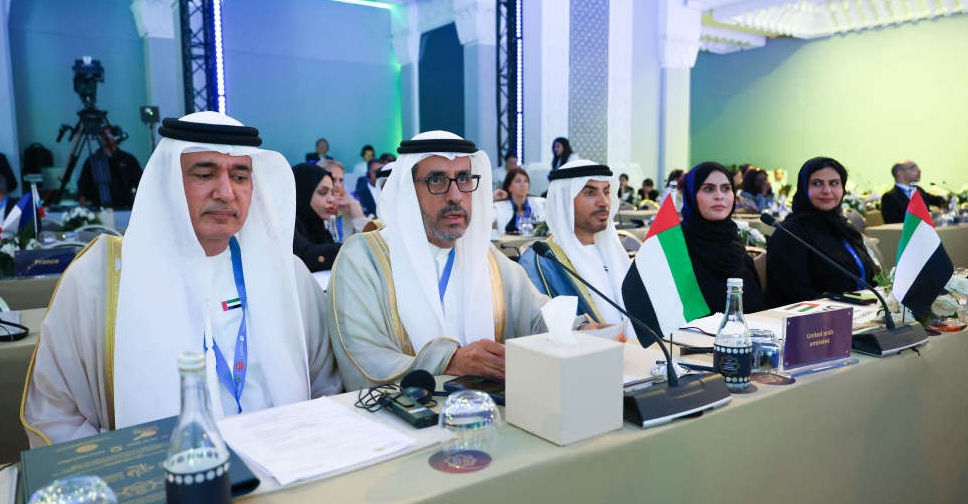 FNC proposes Euro-Mediterranean and Gulf AI hub at economic forum
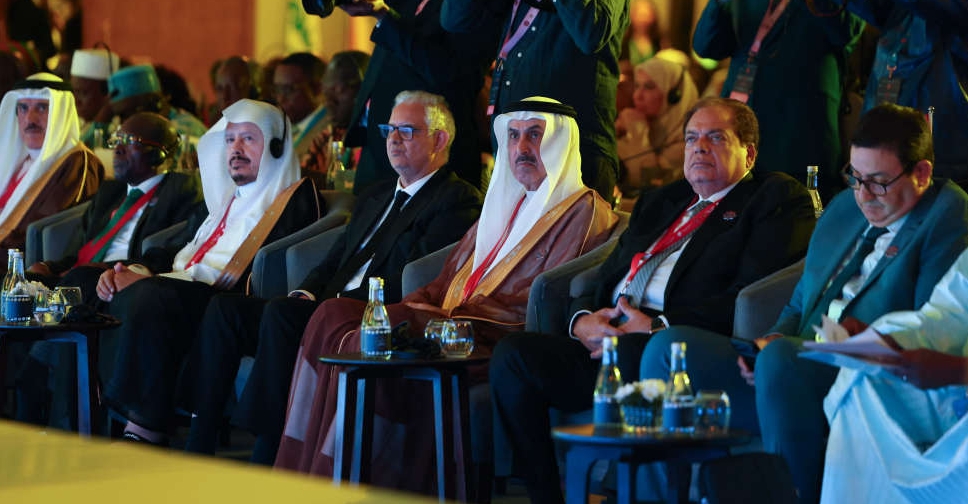 UAE calls for stronger Euro-Mediterranean, Gulf cooperation
 Dubai's DGCX to launch region’s first Gold Spot T+0 Contract
 AD Ports launches new logistics link between UAE and Iraq