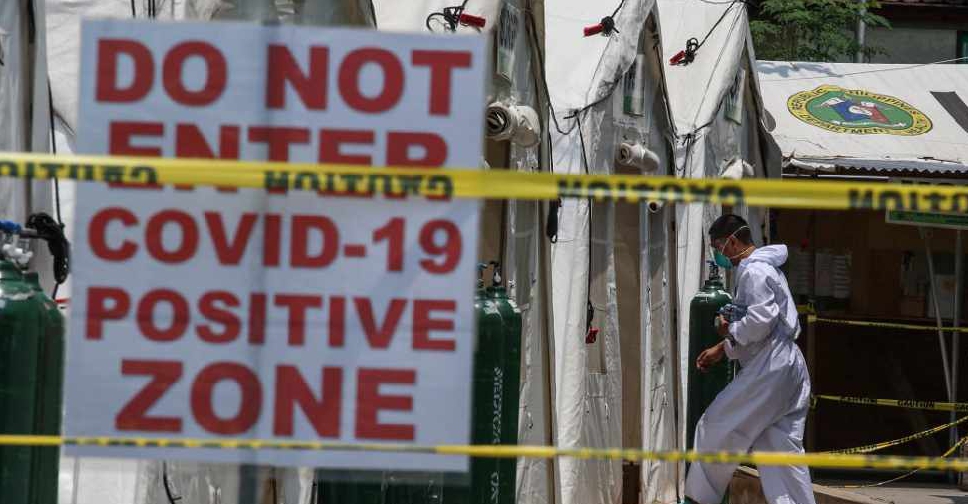
President Rodrigo Duterte has prolonged restrictions on movement and businesses in the Philippine capital and nearby provinces until mid-July.
He's also retained stricter COVID-19 curbs in central and southern areas.
Infections in the capital region, home to at least 13 million people, have dropped since peaking in April, but some provinces are battling spikes as the country scrambles to distribute and administer vaccines.
Entertainment venues, amusement parks, and contacts sports are prohibited in the capital region and nearby provinces, while restaurants, gyms and indoor tourist attractions are allowed to operate at up to 40 per cent capacity.
But 21 cities and provinces outside the capital remain under tighter measures to contain the virus.
A ban was extended on inbound travel from Oman, the United Arab Emirates and most countries in South Asia, to ward off highly contagious COVID-19 variants.
Local officials have two days to appeal to the president over the restrictions, presidential spokesperson Harry Roque said in a statement.
The Philippines has fully vaccinated only 2.5 million people, or just 3.6 per cent of the 70 million targeted for immunisation this year.
It has received 17.5 million vaccine doses, mostly those of Sinovac, among 40 to 55 million doses of various brands on order for June to September.
In a weekly national address, Duterte told local officials to prepare cold storage facilities for the vaccines.
With more than 1.4 million cases and 24,456 deaths, the Philippines has among the most coronavirus deaths and infections in Asia.


 Kenya tourist helicopter crash kills seven
 US, South Korea to cut length, scope of military drills after Trump order
 Central African Republic gold mine collapse kills at least 100
 Israeli airstrike kills nine Palestinians at Gaza police station
 Thai schools hold shooting response drills after deadly school attack