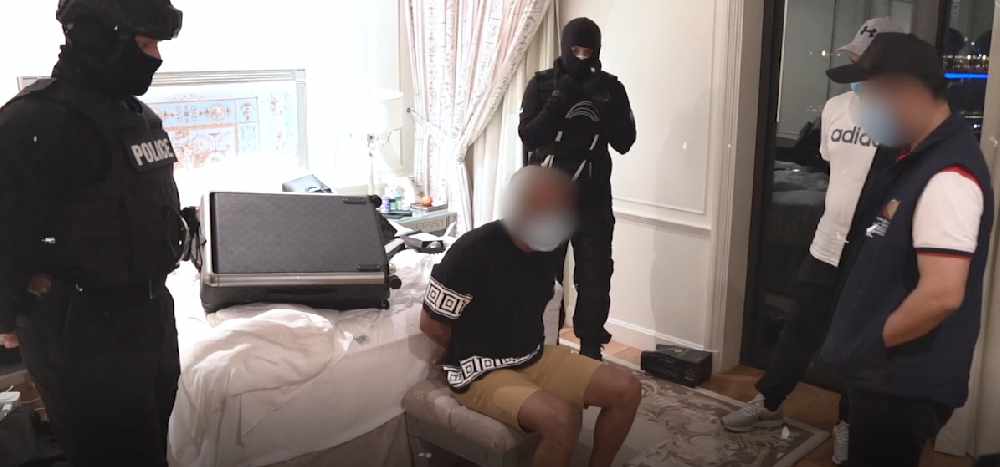
An international online scammer Raymond Abbas, better known as Hushpuppi, has been arrested in Dubai.
After months of investigating, a team of highly trained officers from the Dubai Police nabbed the Nigerian Instagram celebrity in an operation dubbed "Fox Hunt 2".
Twelve more members of his gang have also been arrested after the Dubai Police force carried out six different raids simultaneously.
Hushpuppi faces multiple fraud charges for crimes committed in different parts of the world, amounting to AED1.6 billion.
Officials also seized items worth more than AED150 million, which included 21 computers, 47 smart phones, 15 storage memory devices and 5 hard disks containing data of around 1,926,400 victims.

.

 UAE carriers extend flight cancellations to Saudi Arabia amid regional disruption
 UAE strongly condemns Houthi attacks on King Khalid International Airport
 2 UAE convoys deliver 259 tonnes of food aid to Gaza

