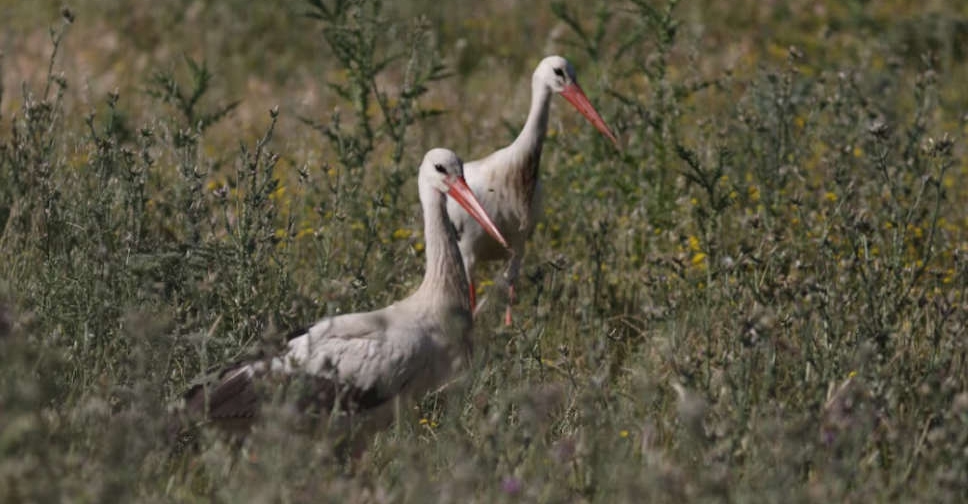
Black-winged white stilts wade through a salt pan, plunging their beaks into the water in search for food at the Kalloni bay on the Greek island of Lesbos, as bird-lovers watch through binoculars from afar.
Stilts are one of more than 330 species found in the wetlands of Kalloni and elsewhere in Lesbos, which have established the island as a European hotspot for birdwatchers from around the world since the 1990s.
"We have some very special birds that are breeders on the island, like the Cinereous Bunting or the Kruper's Nuthatch, the Masked Shrike," local environmental scientist and bird guide Eleni Galinou said.
The island's main attraction are the migratory birds in spring.
Sitting at the crossroads of Africa, Europe and Asia, Lesbos gives birdwatchers the chance to see around 200 European migratory species, from crakes to pelicans, as they pause to rest and feed on their way back from Africa northwards through the eastern Mediterranean Sea.
"Many of us have always wanted to come to Lesbos because it is well-known for its migratory birds," said Ian Wordeyn, 73, one of a group of birdwatchers on the island.
"It's relaxing. When you're looking for birds and you're out in the wildlife, the countryside," said 79-year-old birder Maureen Greer.
But spotting birds involves a great deal of fortune and patience.
"You go there and wildlife is wildlife, it comes and it goes. Sometimes you're lucky, and when you are lucky that's great," Wordeyn said.

 Abu Dhabi invites public to name two 'giants' at Natural History Museum
 Swarms of moths in Australia lift hopes of recovery for endangered species
 NASA says new Roman telescope's lifespan could more than double, to 22 years
 Can sheep save the glaciers? Swiss scientists put wool to the test
 Ultra-white falcon fetches AED1.5 million at Abu Dhabi auction