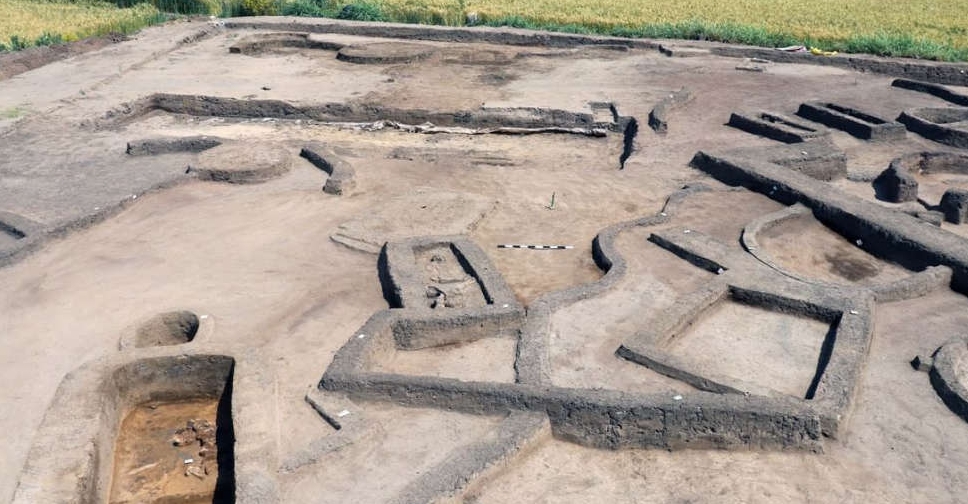
Archaeologists in Egypt have uncovered an ancient burial ground and settlement containing remains spanning thousands of years of the country's history.
The discoveries were made at the Kom el-Khilgan archaeological site in Dakahlia governorate in the eastern Nile Delta, with the oldest finds dating to the first half of the fourth millennium BC.
Archaeologists uncovered simple oval graves containing handmade pottery and marine shells, with the number of burials suggesting a sizeable community once lived in the area.
A residential area dating from later periods was also discovered, including the remains of mud-brick buildings, grain silos, ovens and hearths.
Pottery, stone tools and large quantities of fish, bird and animal bones were recovered, providing clues about the diet and everyday lives of the people who lived there.
Other graves contained jewellery, amulets, scarabs, bronze weapons and pottery, while one tomb dating to the early 18th Dynasty contained pottery vessels and bronze tools.
The discoveries also include remains from the Ptolemaic period, including the burial of a child inside two amphorae that had been reused as a coffin.
Egypt's Ministry of Tourism and Antiquities says the discoveries will help researchers better understand the history and development of communities in the Nile Delta.

 Abu Dhabi launches study to map how AI can manage sleep apnoea
 Dubai Summer Surprises brings back '10 Dirham Dish'
 Dubai to launch regulated home gardening service through Careem
 UAE to showcase space achievements at major global science conference
 Abu Dhabi adds new bus routes to strengthen links with Etihad Rail