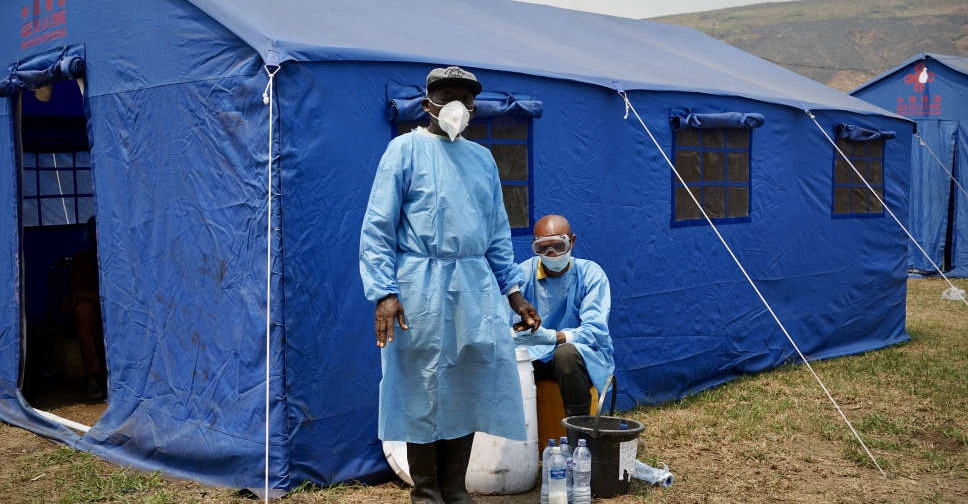
Britain said on Tuesday it would provide more than £50 million ($67.56 million) in new funding to support efforts to contain an Ebola outbreak in the Democratic Republic of Congo, where confirmed cases have surpassed 6,000 in the country's largest-ever epidemic.
Britain previously allocated up to £20 million to the Ebola response in May, and the latest funding brings its total contribution to £78 million.
The funding will support disease surveillance, frontline health workers, treatment access, infection control, community outreach and safe burials, Britain's Foreign Office said.
British public health experts have also been deployed in Congo to support the efforts. "As the outbreak intensifies, we are accelerating our response to match the pace and scale of the challenge," Britain's Minister for Africa Kirsty McNeill said.
The epidemic, the second-largest and fastest-spreading on record, was caused by the rare Bundibugyo strain of the virus, for which there are no approved vaccines or treatments.
The death toll from Nepal's devastating floods surpassed 1,000 on Tuesday as rescuers deployed heavy machinery, helicopters and excavators to reach thousands still missing nearly a week after the Himalayan disaster tore through towns and valleys.
Keir Starmer will stand down as a member of parliament, he said on Tuesday, some six weeks after he resigned as Britain's prime minister having lost the support of his Labour Party.
The German government said on Tuesday it had concluded that Russia was responsible for an attempted drone attack at Leipzig/Halle airport last month and ordered a series of measures in response, including the closure of a consulate and a Russian cultural centre in Berlin.
Novartis said on Tuesday it paused eight clinical trials of an experimental cell therapy, called rap-cel, targeting autoimmune and neurological disorders in late August, after three patients died.

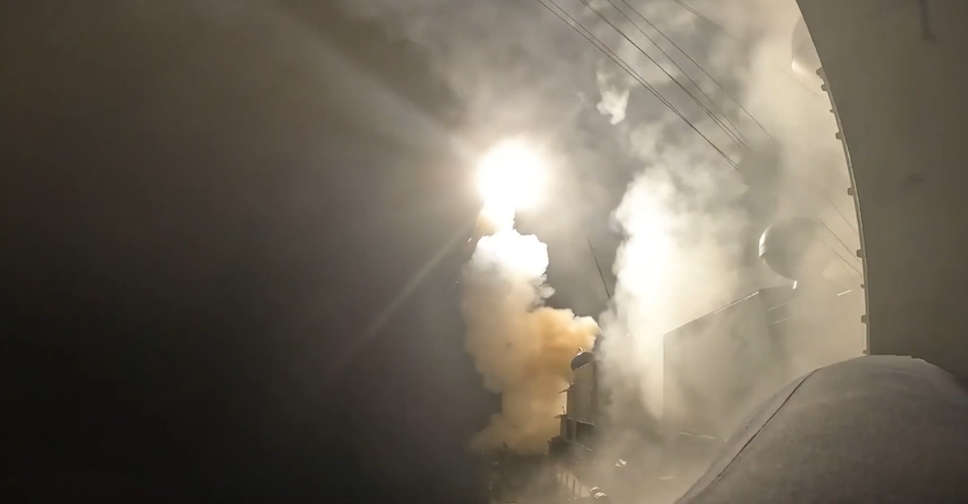 US completes wave of strikes on Iran, Tehran hits back
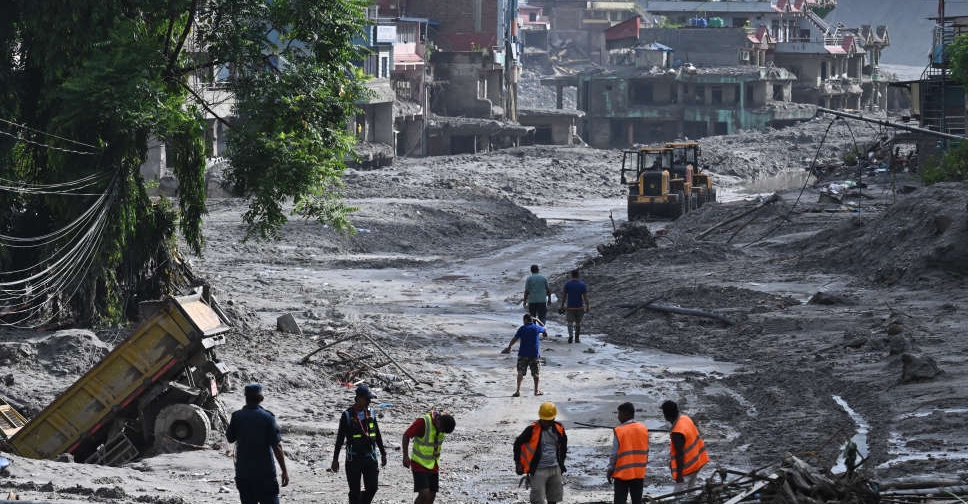 Nepal flood death toll crosses 1,000, rescuers reach remote areas
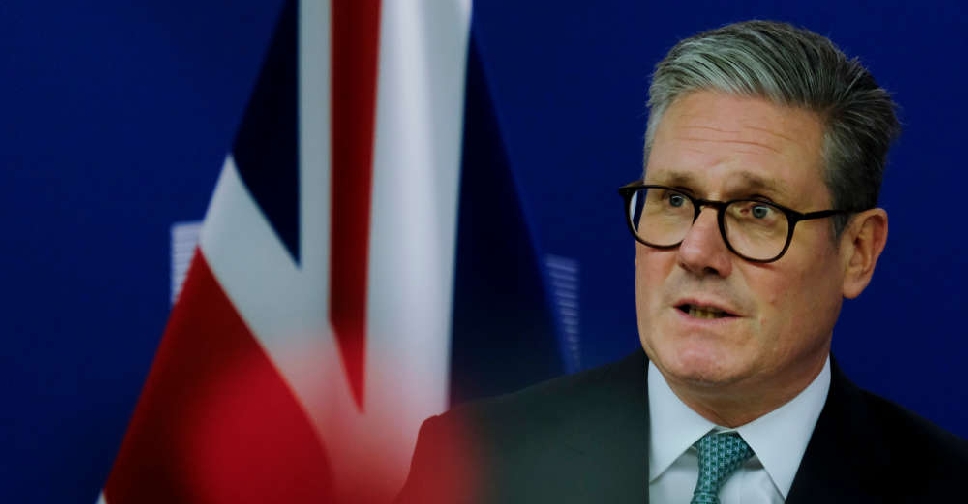 UK former PM Starmer quits parliament to focus on international affairs
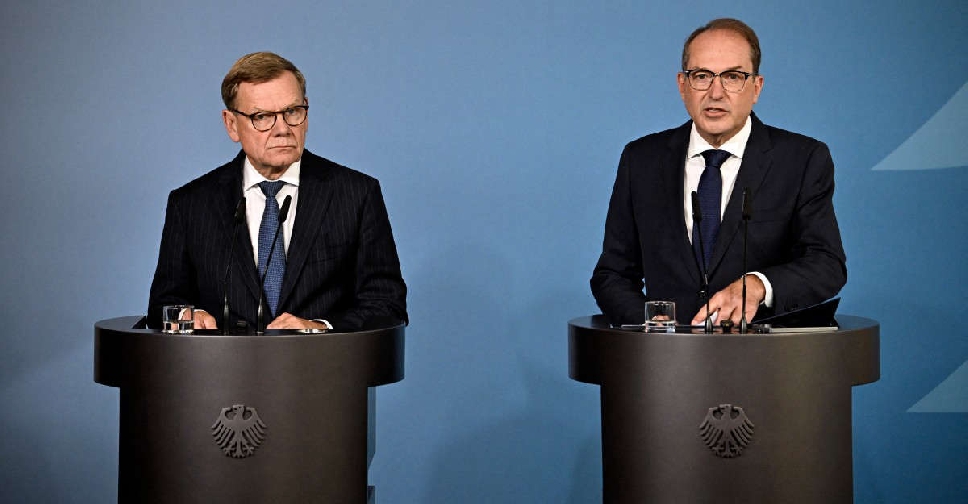 Germany says Russia responsible for drone attack at Leipzig airport
 Novartis pauses trials of experimental cell therapy after three deaths