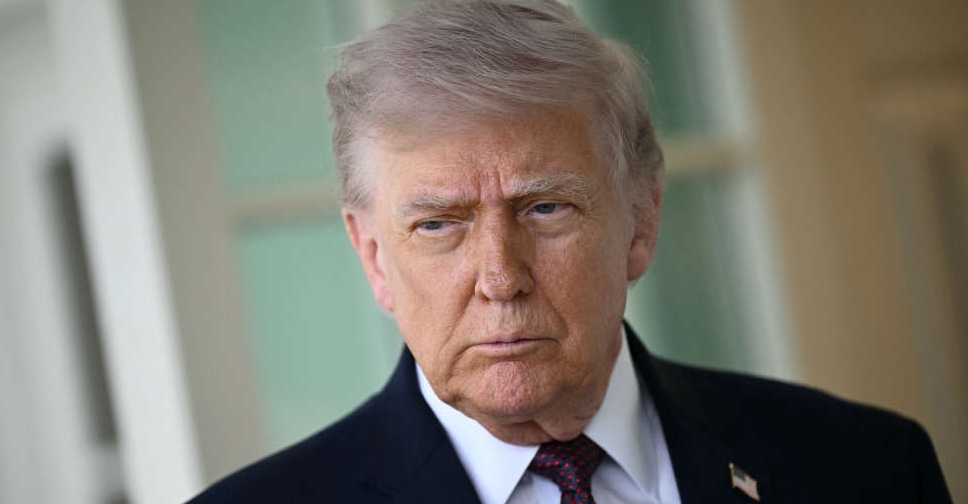
US President Donald Trump said the war with Iran was close to over, telling the world to brace for an "amazing two days", as the army chief of mediator Pakistan arrived in Tehran in a bid to prevent a renewed conflict.
The diplomatic push came as US and Iranian officials weighed a return to Pakistan for further talks after negotiations there ended on Sunday without a breakthrough.
Israel expects a two-week ceasefire agreed last week with the Iranians to be extended, a source told Reuters.
Pakistan's military confirmed Field Marshal Asim Munir had arrived in Tehran. A senior Iranian source told Reuters that Munir, who had mediated the last round of talks, was heading to Iran "to narrow gaps" between the two sides.
"I think you're going to be watching an amazing two days ahead," Trump told ABC News reporter Jonathan Karl, according to a post by the reporter on X, adding he did not think it would be necessary to extend a two-week ceasefire that expires next week.
"I think it’s close to over, yeah. I mean I view it as very close to over," Trump said in an interview on Fox Business Network conducted Tuesday and broadcast Wednesday. "We’ll see what happens. I think they want to make a deal very badly."
Officials from Pakistan, Iran and Gulf states also said both sides could return to Islamabad in coming days.
The talks last weekend broke down without an agreement to end the war, which Trump launched alongside Israel on February 28, triggering Iranian attacks on Iran's Gulf neighbours and reigniting a conflict between Israel and Hezbollah in Lebanon.
Trump's optimism lifted global stocks towards record highs. Oil prices - having fallen on Tuesday and in early Wednesday trade - were slightly up at around $95 per barrel, after the US said its blockade of Iranian ports had halted seaborne trade in and out of Iran.
White House press secretary Karoline Leavitt told a briefing on Wednesday that the US blockade of Iran has been fully implemented and is being enforced against vessels of all nations.
Finance ministers from almost a dozen countries, led by Britain, called on the US, Israel, and Iran to implement their ceasefire in full and said the conflict would weigh on the global economy and markets even if it was resolved soon.
TANKERS INTERCEPTED
The US military said it was turning back more vessels, including the US-sanctioned, Chinese-owned tanker Rich Starry which was seen heading back through the Strait of Hormuz on Wednesday.
A US destroyer stopped two oil tankers attempting to leave the Iranian port of Chabahar on the Gulf of Oman on Tuesday, a US official said.
An Iranian supertanker subject to US sanctions crossed the strait towards Iran's Imam Khomeini port despite the blockade, Iran's Fars News agency said on Wednesday. Fars did not identify the tanker or give further details of its voyage.
While Iran and the United States appear so far to have avoided a major confrontation at sea since the United States began its blockade on Monday, Tehran has said it would retaliate against military action.
Iran's joint military command warned it would halt trade flows in the Gulf, the Sea of Oman and the Red Sea - which connects to the Suez Canal - if the US blockade continued.
Trump has also threatened to escalate if the war resumes. He told Fox Business Network: "...We could take out every one of their bridges in one hour. We could take out every one of their power plants, electric power plants, in one hour. We don't want to do that...so we'll see what happens."
RETURN TO ISLAMABAD
Trump told the New York Post on Tuesday that his negotiators were likely to return to Pakistan, thanks largely to the "great job" army chief Munir was doing to moderate the talks.
Speaking later at an event in Georgia, Vice President JD Vance, who led the US delegation at last weekend's talks, said Trump wanted to make a "grand bargain" with Iran but there was a lot of mistrust between the two countries.
Iran's nuclear ambitions were a key sticking point at last weekend's talks. The US had proposed a 20-year suspension of all nuclear activity by Iran - an apparent concession from longstanding demands for a permanent ban - while Tehran had suggested a halt of 3 to 5 years, according to people familiar with the proposals.
The head of the International Atomic Energy Agency, Rafael Grossi, said the length of any moratorium on Iranian uranium enrichment was a political decision and suggested Iran might accept a compromise as a confidence-building measure.
Washington has also pressed for any enriched nuclear material to be removed from Iran, while Tehran has demanded that international sanctions against it be lifted.
One source involved in the talks said back-channel talks had made progress in narrowing gaps, bringing the two sides closer to a deal that could be put forward at a new round of talks.
Complicating peace efforts, Israel has continued to attack Lebanon as it targets Iran-backed Hezbollah. Israel and the US say that campaign is not covered by the ceasefire, while Iran insists it is.
Israel's security cabinet will convene late on Wednesday to discuss a possible Lebanon ceasefire, a senior Israeli official told Reuters, after Israeli and Lebanese officials held rare talks in Washington a day earlier.
FALLOUT OF THE WAR
The war has prompted Iran to effectively shut the Strait of Hormuz - a vital artery for global crude and gas shipments - to ships other than its own, sharply reducing exports from the Gulf, particularly to Asia and Europe, and leaving energy importers scrambling for alternative supplies.
The oil market also faces further tightening, as the US does not plan to renew a 30-day waiver of sanctions on Iranian oil at sea that expires this week, according to US officials.
An estimated 5,000 people have been killed in the fighting, including about 3,000 in Iran and 2,000 in Lebanon. The governor of Iran's Tehran province said many of those killed were students, women, teachers and university professors.

 Some UK departing flights disrupted by NATS technical issue
 At least 73 injured after Houthi rebels attack Saudi civilian and energy facilities
 UK, France and Canada sanction Israeli West Bank settlements
 Suspect detained after sabotage attacks on Germany power grid
 Nepal rescue focused on workers trapped in three tunnels