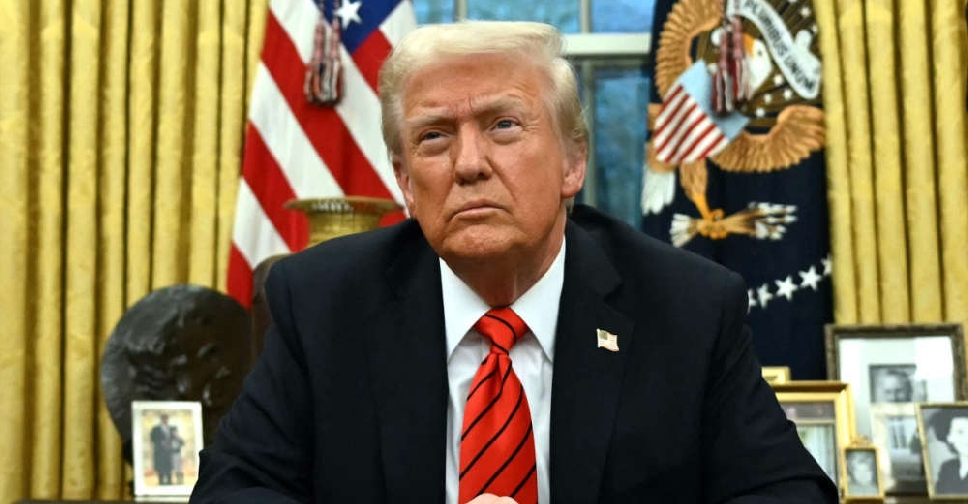
President Donald Trump has expanded a list of countries subject to a full travel ban on Tuesday, prohibiting citizens from an additional seven countries, including passports from Syria and Palestine, from entering the United States.
The White House said in a statement that Trump signed a proclamation "expanding and strengthening entry restrictions on nationals from countries with demonstrated, persistent, and severe deficiencies in screening, vetting, and information-sharing to protect the Nation from national security and public safety threats".
Tuesday's move banned citizens from Burkina Faso, Mali, Niger, South Sudan, Syria and those holding Palestinian Authority-issued travel documents.
The action also imposes a full ban on Laos and Sierra Leone, which had previously only been subject to partial restrictions.
The White House said the expanded ban goes into effect on January 1.
The action comes despite Trump's vow to do everything he could to make Syria successful after landmark talks in November with Syrian President Ahmed Al-Sharaa.
Trump has previously backed Al-Sharaa, but in a post on his Truth Social platform on Saturday, he vowed "very serious retaliation" after the US military said two US Army soldiers and a civilian interpreter were killed in Syria by an attacker who targeted a convoy of American and Syrian forces before being shot dead. He described the incident in remarks to reporters as a "terrible" attack.
The White House cited visa overstay rates for Syria in its justification for the ban.
"Syria is emerging from a protracted period of civil unrest and internal strife. While the country is working to address its security challenges in close coordination with the United States, Syria still lacks an adequate central authority for issuing passports or civil documents and does not have appropriate screening and vetting measures," the White House said.
US ADDS MORE NATIONS TO PARTIAL RESTRICTIONS LIST
Trump signed a proclamation in June banning the citizens of 12 countries from entering the United States and restricting those from seven others, saying it was needed to protect against "foreign terrorists" and other security threats.
Those countries included Afghanistan, Myanmar, Chad, Congo, Equatorial Guinea, Eritrea, Haiti, Iran, Libya, Somalia, Sudan and Yemen.
The bans apply to both immigrants and non-immigrants, such as tourists, students and business travellers.
The travel ban remains on those twelve countries, the White House said. Trump also added partial restrictions and entry limitations on an additional 15 countries, including Nigeria, which is under scrutiny from Trump, who in early November threatened military action over the treatment of Christians in the country.
Since returning to office in January, Trump has aggressively prioritised immigration enforcement, sending federal agents to major US cities and turning away asylum seekers at the US-Mexico border.
The expansion of the countries subject to entry restrictions marks a further escalation of immigration measures the administration has taken since the shooting of two National Guard members in Washington, DC, last month.
Investigators say the shooting was carried out by an Afghan national who entered the US in 2021 through a resettlement program under which Trump administration officials have argued there was insufficient vetting.
Days after the shooting, Trump vowed to "permanently pause" migration from all "Third World Countries," although he did not identify any by name or define the term.

 US House passes $1 trillion defence bill despite Iran, Israel concerns
 US military marks 11th successive night of attacks on Iran
 US says it reaches nuclear power deal with Saudi Arabia
 Indian opposition disrupts parliament to support student protesters and pressure Modi
 Rubio says US still willing to negotiate over Iran crisis