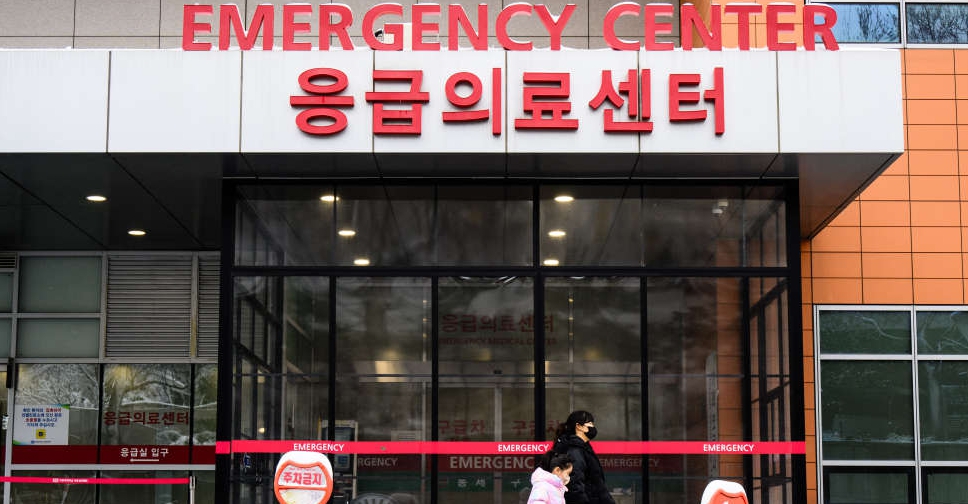
Emergency departments at all but one of South Korea's biggest hospitals were on red alert on Thursday as trainee doctors vowed to stay off the job in protest at government plans to increase medical school admissions to boost the healthcare sector.
The protests by almost two-thirds of the country's young doctors, which began this week, has forced hospitals to turn away patients and cancel procedures, raising fears about further disruptions to the medical system should the dispute drag on.
So far, more than 8,400 doctors have joined the walkout, the health ministry said, equivalent to about 64 per cent of the entire resident and intern doctors in South Korea.
The government has threatened to arrest the doctors leading the walkout. The physicians are protesting against a government plan to increase the number of students admitted to medical school in a bid to bolster the healthcare system of one of the world's most rapidly ageing societies.
The doctors say the real issue is pay and working conditions. Park Dan, head of the Korea Interns and Residents Association which is taking part in the protest, said he was willing to be arrested, so that the doctors' demands are heard.
"Everyone is angry and frustrated, so we are all leaving hospitals. Please hear our voices," he said in a radio interview, adding they were open to dialogue if the government was ready to hear their demands.
Some doctors say the increase in admissions will compromise the quality of medical education, a concern about 200 doctors and medical college students raised at a protest rally in the southwestern province of North Jeolla.
"We took to the streets like this because we are concerned that South Korea’s medical system, which is the most envied in the world, would collapse," Um Chul, head of the Jeonbuk Medical Association, was quoted by Yonhap news agency as saying.
"Doctors aren't playing turf wars," he added.
More doctors in Seoul are due to hold a rally later on Thursday in front of President Yoon Suk Yeol's office.
Government officials are calling on doctors to stop their protests and prioritise patients.
Many Koreans support the government's plan, with a recent Gallup Korea poll showing about 76 per cent of respondents in favour, regardless of political affiliation.
During a hearing in parliament, Prime Minister Han Duck-soo rejected claims by some doctors that the plan to increase the number of medical students was aimed at gaining votes ahead of April's general election.
The protesters say South Korea has enough doctors, and that the government needs to increase pay and reduce the workload, particularly in key areas such as paediatrics and emergency medicine, before recruiting more students.
Motel rooms and rental houses were fully booked near Seoul's major hospitals by patients from the countryside whose procedures have been delayed, newspaper JoongAng Ilbo reported.

 Trump says Israel banned from bombing Lebanon
 India fails to pass parliament expansion bill linked to quotas for women
 Trump says blockade on Iran 'in full force' until deal is reached
 Iran's foreign minister declares Hormuz Strait open during ceasefire
 Lebanese return home as ceasefire with Israel mostly holds