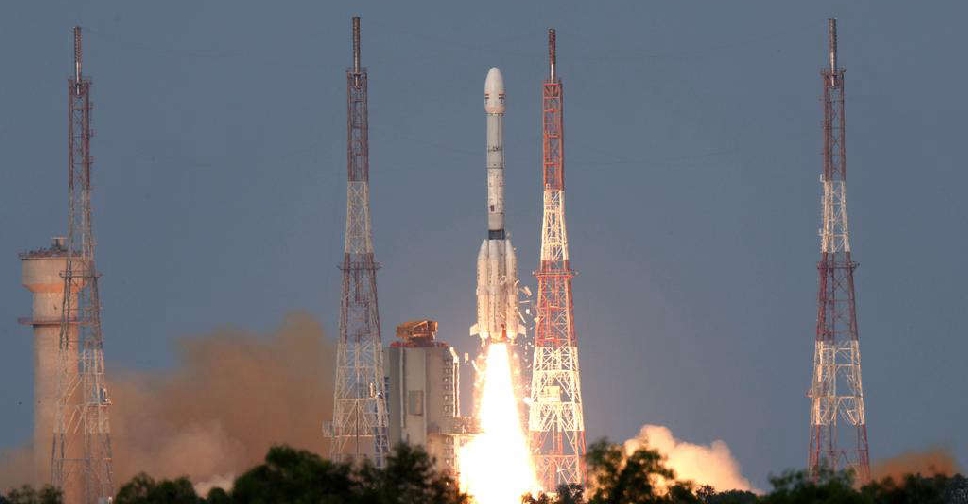
India launched on Wednesday a $1.5 billion, first-of-its-kind radar imaging satellite built in collaboration with NASA, deploying it to help enhance global monitoring of climate change and natural disasters.
The NASA-ISRO Synthetic Aperture Radar, or NISAR satellite, is the first such collaboration between the Indian Space Research Organisation and US space agency NASA.
It took off from India's Satish Dhawan Space Centre at 1210 GMT atop a medium-lift rocket, marking a milestone in space cooperation and bolstering India's profile in low-cost, high-impact satellite missions.
NISAR is the world's first radar imaging satellite to use two radar frequencies - the L-band provided by NASA and the S-band developed by ISRO - to track minute changes in the Earth's surface, including movements as small as a centimetre, the space agencies have said.
The satellite, roughly the size and weight of a fully loaded pickup truck - was placed into a near-polar Sun-synchronous orbit approximately 747 km (464 miles) above Earth.
It will map the planet every 12 days using a 240-km-wide radar swath, offering data to scientists and disaster response agencies to monitor everything from glacier retreat in the Himalayas to potential landslide zones in South America.
"The potential applications from the satellite are huge, and the global scientific community is eagerly awaiting the satellite data for their respective research and usage," ISRO Chairman V. Narayanan said after the launch.
"It is not going to be used by one or two countries. The entire globe is going to benefit from this great accomplishment," he said, adding that the mission had brought the two space agencies much closer than ever before.
Casey Swails, NASA's deputy associate administrator, called the mission a "pathfinder". "This Earth science mission is one of a kind and really shows the world what our two nations can do," she said.
NISAR is expected to operate for at least five years. The data it collects will be made freely available to users worldwide — a move aimed at enhancing transparency and accessibility in environmental research and hazard response.
The launch comes amid India’s broader push to establish itself as a leading space power, following the success of its Chandrayaan-3 moon landing and its upcoming Gaganyaan human spaceflight programme.
India has said it aims to build its own space station by 2035 and send astronauts to the moon in partnership with other countries as part of a broader vision to expand commercial and scientific activities in space.
Earth's surface is in motion: earthquake faults slip, crops grow, levees crumble, glaciers retreat.
— NASA (@NASA) July 30, 2025
A joint NASA/@ISRO radar satellite, NISAR, launched today to measure land and ice land and ice changes like these to within a fraction of an inch: https://t.co/NGDTpBBgb7 pic.twitter.com/CvLKuhZJIJ

 Trump says Israel banned from bombing Lebanon
 India fails to pass parliament expansion bill linked to quotas for women
 Trump says blockade on Iran 'in full force' until deal is reached
 Iran says Strait of Hormuz open as Trump sees deal 'soon' to end war
 Lebanese return home as ceasefire with Israel mostly holds