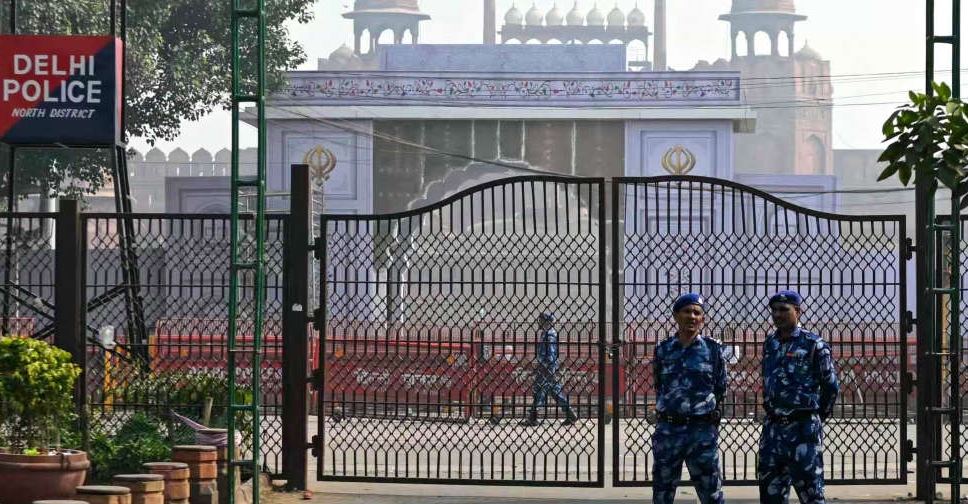
India's federal anti-terror agency said on Sunday it had arrested a resident of Kashmir who it accused of conspiring with the driver of acar that exploded in Delhi last week, killing eight people and wounding at least 20 others.
The National Investigation Agency said it had arrested Amir Rashid Ali in Delhi, adding the car used in the attack was registered in his name. It accused Ali of conspiring with the alleged suicide bomber, who it identified as Umar Un Nabi, a resident of south Kashmir's Pulwama district.
It said Ali came to Delhi to facilitate the purchase of the car which was used as a "vehicle-borne Improvised Explosive Device to trigger the blast."
The agency said it had seized another vehicle belonging to Nabi for examination. So far, it has interrogated 73 witnesses including those injured in the blast.
Last week, the Indian government said it was treating the car blast as a "terror incident" and vowed to bring the perpetrators to justice as swiftly as possible.
The blast outside Delhi's historic Red Fort was the first such explosion in the heavily guarded city since 2011.

 Saudi Arabia shuts key oil pipeline after drone attack
 BRICS members agree joint declaration at New Delhi summit
 Death toll in Philippine ferry fire rises to 76 as rescuers recover more remains
 Russian attacks kill six, injure dozens in Ukraine, Moscow says it hits ships, plants
 Explosion hits another weapons site in Bulgaria