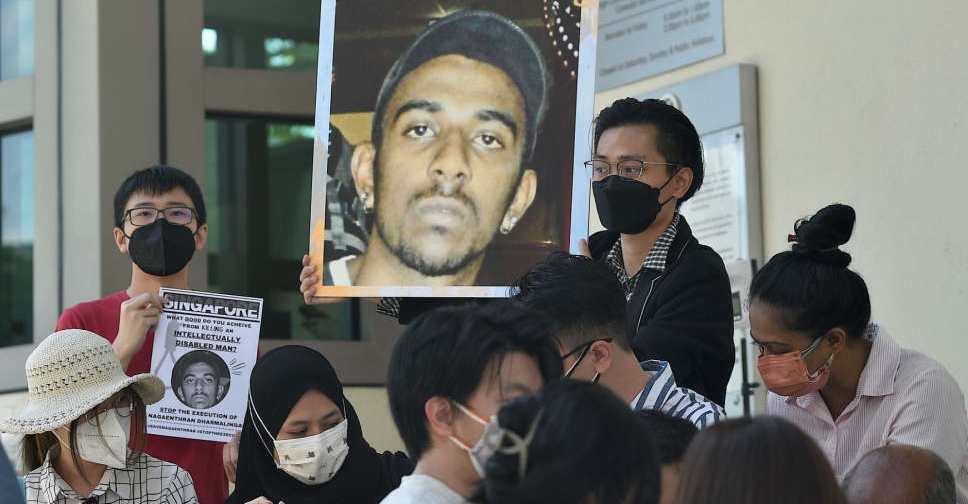
Singapore authorities late on Wednesday defended a decision to execute a Malaysian drug trafficker, in response to international criticism over their use of the death penalty.
Nagaenthran Dharmalingam, 34, had been convicted of smuggling at least 42 grams of heroin into Singapore, which has among the world's harshest narcotics laws. He was hanged on Wednesday morning, after multiple legal challenges and appeals for clemency on the grounds that he had an intellectual disability, failed.
His lawyers and activists have said Nagaenthran's IQ was found to be 69, a level recognised as an intellectual disability.
But Singapore's Central Narcotics Bureau said in a statement his actions were "a deliberate, purposeful and calculated decision", and reiterated court findings that "he knew what he was doing".
The Attorney General's Chambers said in a separate statement Nagaenthran was given a fair trial and had "exhausted his rights of appeal and almost every other recourse under the law over some 11 years".
The case attracted international attention, with a group of United Nations experts and British billionaire Richard Branson joining human rights activists to urge Singapore to commute his death sentence.
The European Union and Amnesty International were also among several voices that called the punishment "inhumane" and urged Singapore to impose a moratorium on executions.
The city-state's government says the death penalty is a deterrent against drug trafficking and most of its citizens support capital punishment.
Another Malaysian drug trafficker, Datchinamurthy Kataiah, is due to be executed on Friday.


 Saudi civil defence sends all-clear after alerts issued for capital Riyadh
 11 Syrian soldiers killed in weapons depot explosion
 Number of people displaced worldwide falls, UN says
 White House turns away reporters after Trump's ban
 Israeli strikes kill three people in Gaza, medics say