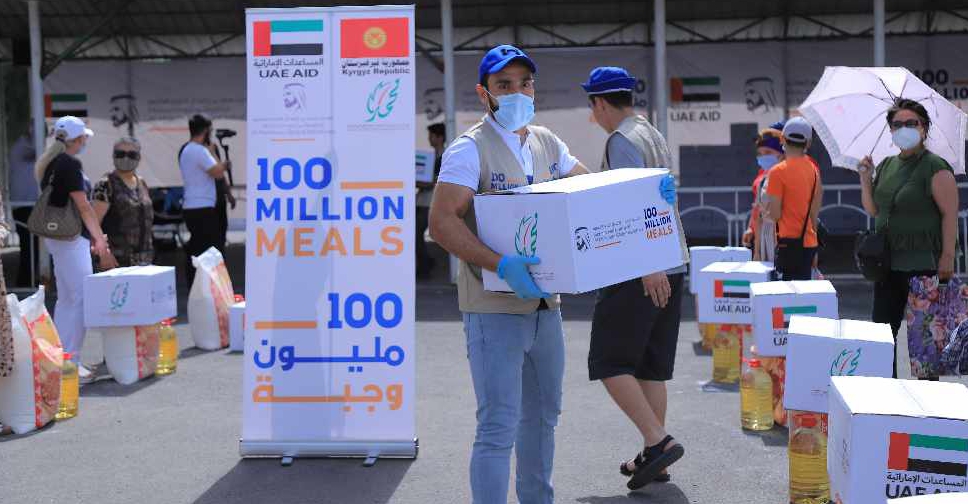
The UAE has distributed as many as 106 million meals within just four months of implementing a major food aid campaign.
The meals were delivered to underprivileged families and individuals in several countries as part of the first phase of the 100 Million Meals campaign.
Another 110 million meals will be distributed during the project's second phase.
Its eventual target is 216 million meals, which is the equivalent of AED 216 million, the amount that was raised by the campaign during the holy month of Ramadan.
The campaign utilises blockchain technology and big data solutions to reach communities and individuals most in need.
The aid is distributed in the form of food parcels and instant vouchers, which enable beneficiaries to purchase what they need from partner shops and stores.
The campaign’s organiser Mohammed bin Rashid Al Maktoum Global Initiatives (MBRGI) is working alongside the United Nations’ World Food Programme (WFP), the Mohammed bin Rashid Al Maktoum Humanitarian and Charity Establishment (MBRCH), and the Food Banking Regional Network (FBRN).
The organisations involved in the campaign cooperates with local humanitarian and charity groups on logistical and food parcels' delivery operations.
In numbers:
- Through its partnership with MBRCH, the campaign reached the lowest-income segments in 17 of the campaign’s 30 countries. The campaign has so far provided 2.8 million meals to more than 67,000 beneficiaries in India, Pakistan, Kenya, Bangladesh, Ethiopia, Tanzania, Tajikistan, Kyrgyzstan, Kazakhstan, Brazil, Burundi, Senegal, Kosovo, Nepal, Benin, and Uzbekistan.
- The campaign’s cooperation with FBRN has reached more than 806,000 beneficiaries in Lebanon, Egypt, Yemen, Sudan, Somalia, Jordan, Ghana, Uganda, Angola, Mauritania, and Iraq with more than 61 million meals.
- The campaign secured 32.5 million in Egypt, who received food parcels containing basic foods such as flour, rice, sugar, oil and others, equivalent to over 30 million meals.
- In Palestine, the campaign distributed 28 million meals in instant vouchers throughout the Gaza Strip and various regions, cities, and villages in the West Bank.
- The 100 Million Meals campaign has also distributed more than 4.7 million meals to refugees in camps in Jordan in cooperation with the WFP and in coordination with local authorities.
- More than 755,000 meals were distributed in Tanzania, Kenya, and Senegal.
- In Central Asia, the 100 Million Meals campaign equally distributed 600,000 meals in Kazakhstan, Tajikistan, and Kyrgyzstan.
- To date, the campaign has distributed 6.5 million meals to refugees in Bangladesh, 4.5 million meals in Mauritania, 145,000 meals in Kosovo, 604,000 meals in Ethiopia, 600,000 meals in Kazakhstan, Tajikistan, and Kyrgyzstan, and 442,000 meals in Brazil.


 Rainy weather to continue nationwide until Friday night
 Indian, Pakistani killed in falling debris incident in Abu Dhabi
 Ras Al Khaimah declares remote work for government staff on Friday
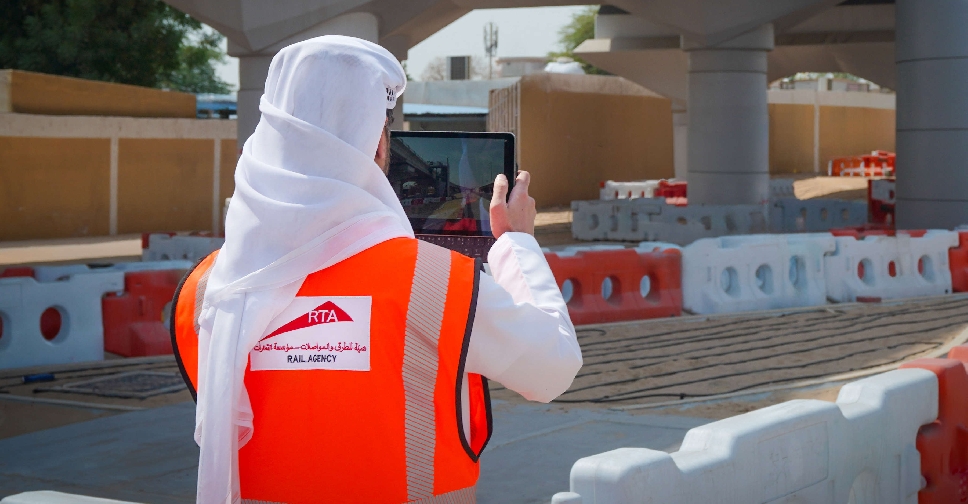 Dubai boosts rail safety with expanded inspections

