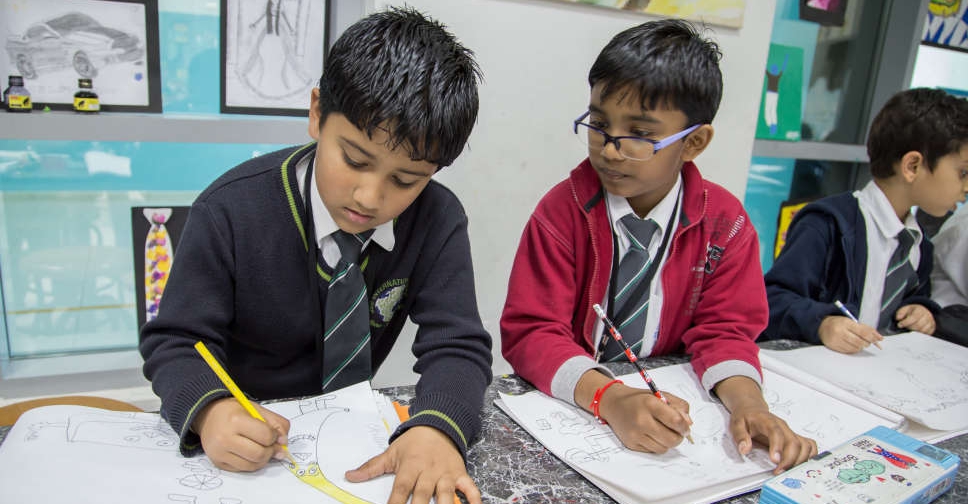
Dubai’s Knowledge and Human Development Authority (KHDA) has set the Education Cost Index (ECI), which guides private schools on fee increases, at 2.6 per cent for the 2024-2025 academic year, allowing some schools to raise fees by up to 5.2 per cent.
The ECI is based on the annual audited financial statements of private schools in Dubai, which outline their operational costs, and is calculated in collaboration with Digital Dubai Authority.
Under the School Fees Framework, the rate by which schools can adjust their fees is tied to each school’s most recent inspection rating. Any fee adjustment must be approved by the KHDA.
Private schools that maintain the same inspection rating will be allowed to increase their fees by up to 2.6 per cent. Schools dropping in the annual ratings will not be eligible to apply for any fee increase.
Schools that improve their rating from Weak to Acceptable or from Acceptable to Good will be eligible to increase their fees by up to double the ECI.
Schools moving from Good to Very Good will benefit from an increase of up to 1.75 times the ECI and schools improving their rating from Very Good to Outstanding will be eligible to increase their fees by up to 1.5 times the ECI.
Shamma AlMansouri, Director of Permits at KHDA said: “Aligning the fee adjustment with schools’ inspections ratings emphasises the quality offered by schools, while enhancing the competitiveness of the sector and encouraging schools to meet the needs of parents by catering to the needs of a diverse student body to ensure access to high quality education for all children.
“Furthermore, the application of a scientific methodology to monitor and analyse the audited financial statements of private schools in Dubai allows for a transparent process that takes into account the interests of all our stakeholders and ensures continuous improvement in the quality of education offered by schools while also safeguarding the sustainability of the private schools’ sector.”
The School Fees Framework was introduced to allow schools to develop long-term growth plans while contributing to a robust and reliable private education sector that offers families a choice of high-quality education.

 UAE intercepts 11 ballistic missiles, 27 drones on Monday
 UAE 'will emerge stronger' says H.H. Sheikh Mohammed, Cabinet approves new strategies
 UAE President and US Senator discuss regional developments
 Safety remains priority as UAE universities begin gradual return to campus

