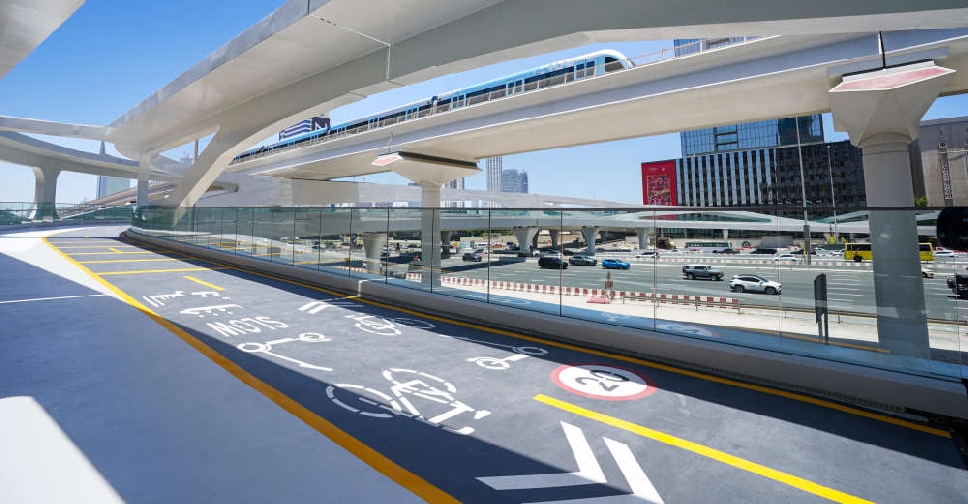
Dubai's Roads and Transport Authority (RTA) has approved a five-year plan to expand the emirate's soft mobility network, such as pedestrian crossings and cycle lanes, through to 2030.
The plan aims to strengthen links between residential areas and public transport stations and to build an integrated urban mobility system that supports first and last-mile journeys, making travel easier and safer for residents and visitors.
It will encompass infrastructure development across 25 residential areas, taking the total number of upgraded areas to 34, and upgrades to the infrastructure surrounding 63 public transport stations by 2030.
These include providing pedestrian and cycling tracks, safe pedestrian crossings, shading and urban beautification elements, and stations and parking bays for shared mobility services such as Careem Bike and e-scooter rental operators, encouraging residents to adopt more sustainable mobility patterns.
Areas covered by the soft mobility project are selected according to a set of priorities, including the availability of public transport services, high levels of public transport use, population density, land-use patterns, whether residential, commercial or mixed-use, and the existing condition of pedestrian and cycling infrastructure in the area.
The selection process also considers each area's future development plans under the Dubai 2040 Urban Master Plan.
According to the RTA, pedestrian journeys rose from 326 million in 2024 to 342 million in 2025, a growth of 5 per cent, while the maturity of infrastructure surrounding public transport stations reached 87 per cent and pedestrian satisfaction across Dubai rose to 89 per cent.
Cycling trips increased from 46.6 million in 2024 to 57.3 million in 2025, a growth of 23 per cent, and e-scooter trips rose from 32.3 million in 2024 to 39.6 million in 2025, a growth of nearly 23 per cent.
RTA has previously developed soft mobility elements across nine residential areas: Al Mankhool, Al Qusais, Al Karama, Al Barsha 1, Al Barsha 2, Al Khawaneej 2, Hor Al Anz, Abu Hail and Al Souk Al Kabeer.
Dubai's Roads and Transport Authority approves a five-year plan to expand the emirate's soft mobility network through 2030. The plan aims to strengthen links between residential areas and public transport stations. The plan encompasses infrastructure development across 25… pic.twitter.com/9AvZfMfY2S
— Dubai Media Office (@DXBMediaOffice) July 19, 2026

 Abu Dhabi authorities respond to fire in Al Dhafra warehouse
 UAE carriers extend flight cancellations to Saudi Arabia amid regional disruption
 UAE strongly condemns Houthi attacks on King Khalid International Airport
 2 UAE convoys deliver 259 tonnes of food aid to Gaza

