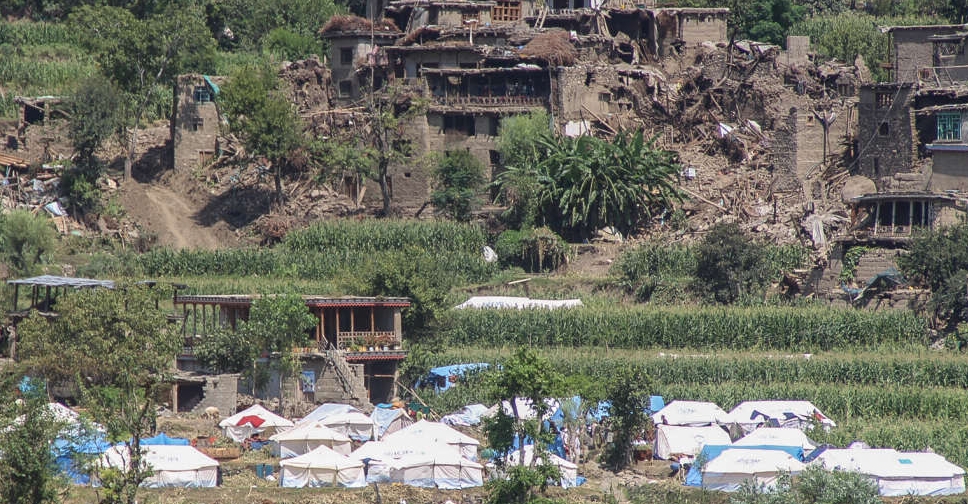
Earthquakes that flattened villages in eastern Afghanistan this month destroyed homes and livestock, the only assets owned by most families, leaving survivors with almost nothing to rebuild as aid runs thin.
At least 2,200 people were killed and more than half a million affected when a powerful earthquake struck the region on the night of August 31 followed by a series of strong aftershocks. The quakes have left tens of thousands of people homeless, with some fearing further landslides.
Abdul Ghafar, 52, has been living with his family of 10 under a tarpaulin sheet in Bamba Kot, a village in Afghanistan’s eastern Nangarhar province, since the quakes struck. The walls of his stone house are cracked, ceilings have collapsed and rubble covers the floor, forcing the family to sleep outside. "We only need one tent," he said, adding that officials refused to register his damaged house as uninhabitable.
For many families in rural Afghanistan, homes, land and livestock are all they can call their own. "In Afghanistan, households store wealth in homes, land and livestock, so when earthquakes destroy these assets, entire balance sheets collapse overnight," said Jennifer Brick Murtazashvili, a professor at the University of Pittsburgh who specialises in governance in fragile states.
Stephen Rodriques, UNDP’s Resident Representative in Afghanistan, said more than 1.3 million animals were affected in the worst-hit Nangarhar and Kunar provinces, with grain stores and irrigation systems destroyed, threatening food supplies and the next planting season.
More than 7,000 livestock were killed and seven irrigation systems destroyed, with others damaged, according to the Norwegian Refugee Council.
"When those inputs vanish, you see less production, higher food prices and long-term harm to nutrition and health, especially for the poorest households," said Ilan Noy, chair in the Economics of Disasters and Climate Change at Victoria University in Wellington. "Without financing, the recovery will take much longer, and will create long-term cascades of consequences from this event that can continue for a very long time, possibly inter-generationally," he said.
STRAIN UPON STRAIN
Taliban authorities say more than 6,700 homes were destroyed. Families remain in tents as aftershocks persist.
Thomas Barfield, author and president of the American Institute of Afghanistan Studies, said the coming winter would worsen the crisis and that decades of war and migration mean fewer relatives remain to help rebuild.
The quakes add gloom to an economy battered by sanctions, frozen assets and aid cuts since the Taliban takeover in 2021, while over 2 million deportations from Pakistan and Iran this year have further strained food and housing.
"Construction was a huge employer that disappeared after the Taliban takeover, the NGO sector is shrinking with aid cuts, and even the public sector is under strain," said Ibraheem Bahiss of the International Crisis Group. "Every year brings droughts and floods, and now earthquakes on top of that, compounding the tragedy Afghans face."
The United Nations has appealed for $140 million in aid, but pledges lag as donors focus on Gaza and Ukraine and resist funding the Taliban because of its curbs on women aid workers.
Some aid has trickled in following the earthquake, from tents to food supplies, but it is not nearly enough, analysts said.
"Emergency aid is a wet towel in a forest fire, it won't bridge the gap," said Obaidullah Baheer, an adjunct lecturer at the American University of Afghanistan in Kabul. He warned that aid flows have already dropped steeply in a country reliant on them for two decades, and that "the real impact will only start to show next year".

 Strong earthquake strikes central Peru
 Overloaded boat capsizes in Nigeria, at least 40 bodies recovered
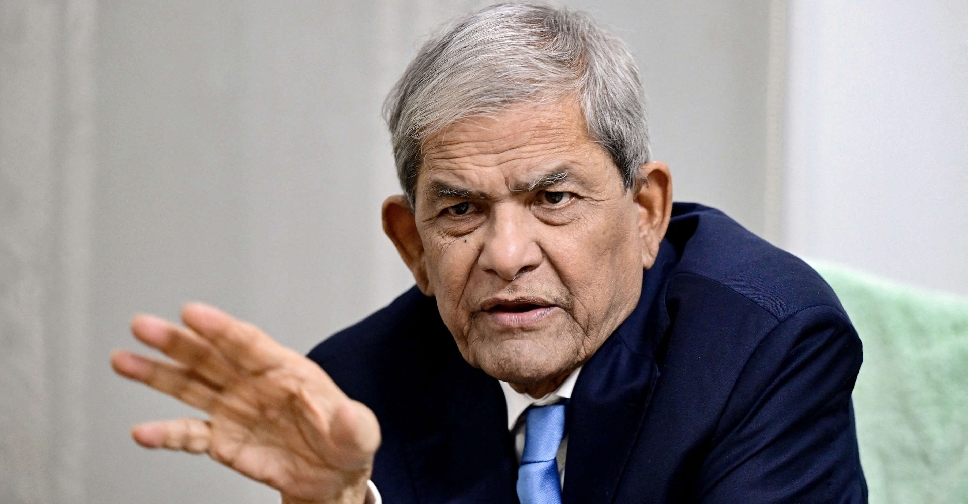 Bangladesh elects ruling party veteran Alamgir as president
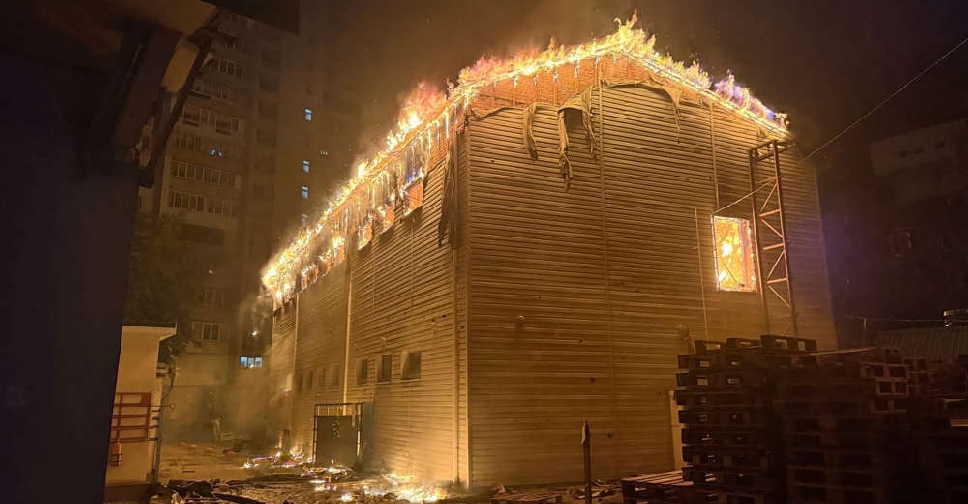 Russian strikes kill 16 in Ukraine's Kyiv
 Prince Harry and Meghan to move back to Britain