Tougher lockdown measures have been introduced in parts of northern England after a rise in the rate of novel coronavirus transmission, raising concerns over a second wave.
Britain reported its highest number of new COVID-19 infections in more than a month on Thursday, as ministers warned more quarantine restrictions were possible.
Around 4 million people were ordered not to mix with other households in Greater Manchester, the biggest city in northern England, parts of West Yorkshire and East Lancashire, though they can still go to work.
Those breaking the rules will face a fine of 100 pounds.
"The problem with this virus is that it thrives on the social contact which makes life worth living," Health Secretary Matt Hancock told Sky. "I totally understand the human impact of this but unfortunately that is how the virus passes on."
Asked by the BBC if the UK was now entering a second wave, Hancock said: "It is not yet and we are absolutely determined to take the action that is needed."
The measures were introduced hastily at the start of Eid al-Adha.
Russian ballistic missiles killed at least five people and injured over two dozen more in Kyiv early on Thursday, authorities said on the Telegram messaging app, damaging buildings and leaving parts of the Ukrainian capital without power.
South Korea and the United States will cut short annual joint military drills to five days from 11 and scale back some field training, the allies said on Wednesday, after President Donald Trump ordered a substantial reduction in US participation.
At least 100 people were killed when a low-tech artisanal gold mine collapsed in the Central African Republic on Tuesday, a senior official at a local mining association said.
An Israeli airstrike killed nine Palestinians at a police station in Gaza on Wednesday, medics said, two days after US envoy Jared Kushner ended a trip to the region that failed to push forward Donald Trump's plan to end the war in the enclave.



 Russian ballistic missiles kill at least five in Ukraine's Kyiv, spark fires
 Kenya tourist helicopter crash kills seven
 US, South Korea to cut length, scope of military drills after Trump order
 Central African Republic gold mine collapse kills at least 100
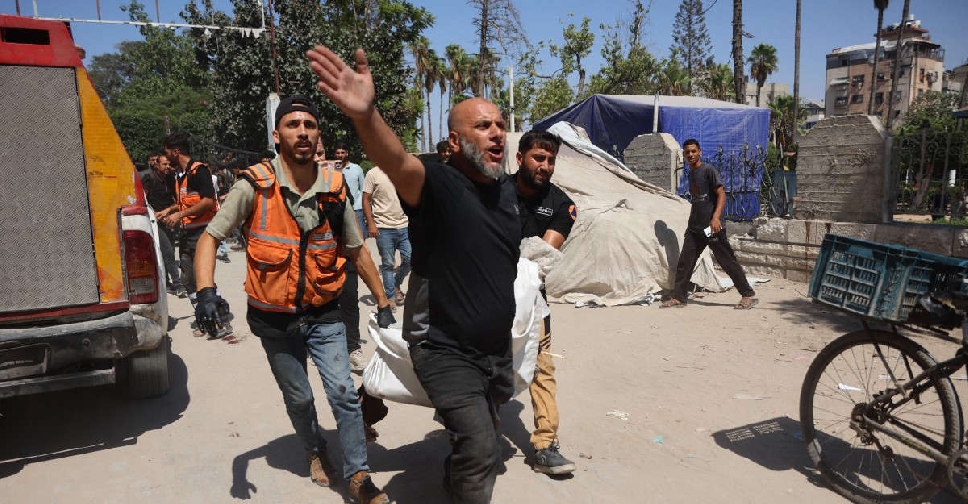 Israeli airstrike kills nine Palestinians at Gaza police station