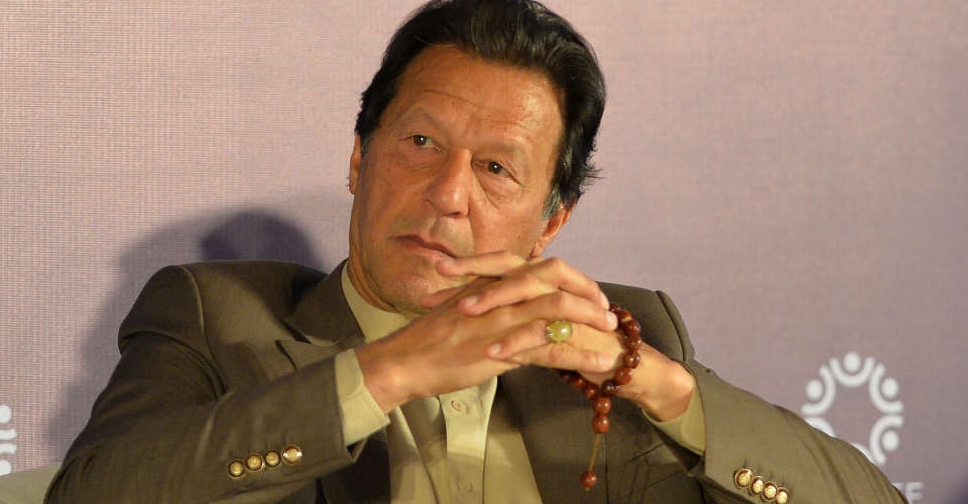
Pakistan's Prime Minister Imran Khan is in danger of losing his coalition partners in a no-confidence vote sought by the opposition, a key ally has said, flagging a "tilt" by his partners in government towards their opponents.
The threat of political turmoil in the nuclear-armed nation is growing as the opposition looks to oust the cricketer-turned-politician in a vote that could come as soon as this month after the no-confidence motion unveiled in parliament last week.
"He is in 100 per cent danger," Pervaiz Elahi, the head of one of the four parties in Khan's ruling coalition, told television broadcaster HUM News.
"They all have got a tilt toward opposition," the veteran politician added in an interview, referring to the four parties, which have a total of 20 seats in the lower house of parliament.
Without them, Khan's party, which has 155 seats in the lower house, would fall short of the 172 needed to retain power.
Khan's ministers have said Elahi would not part ways with the government, while other coalition partners have said they were weighing their options. A spokesman for Elahi's party did not immediately respond to a request for comment.
Pakistan's opposition seeks to throw out Khan after rallying thousands of people on a campaign that he has mismanaged the economy, governance and foreign policy. No Pakistani prime minister has ever completed his term in office.
The joint opposition consists of major parties such as the Pakistan Muslim League-Nawaz (PML-N) and the Pakistan People's Party (PPP) of former prime ministers, Nawaz Sharif and Benazir Bhutto, and has a strength of nearly 163 in the lower house.
It needs a simple majority of 172 to prevail in the no-confidence vote.
"They have the required number ... even more than that," Elahi said about the opposition.
Elahi, the speaker of the assembly in the largest province of Punjab has been negotiating with the opposition over the make-up of the next government in case of Khan's fall.
The opposition and political analysts say Khan has fallen out with Pakistan's powerful military whose support they see as critical for any political party to attain power in the way the former cricket star's upstart party did four years ago.
Khan and the military deny the accusations.
Amid the numbers game, both sides have called for protest sit-in rallies outside parliament in Islamabad, the capital, ahead of the voting, which analysts say has strengthened the prospect of clashes and violence.


 Strong earthquake strikes central Peru
 Overloaded boat capsizes in Nigeria, at least 40 bodies recovered
 Bangladesh elects ruling party veteran Alamgir as president
 Russian strikes kill 16 in Ukraine's Kyiv
 Prince Harry and Meghan to move back to Britain