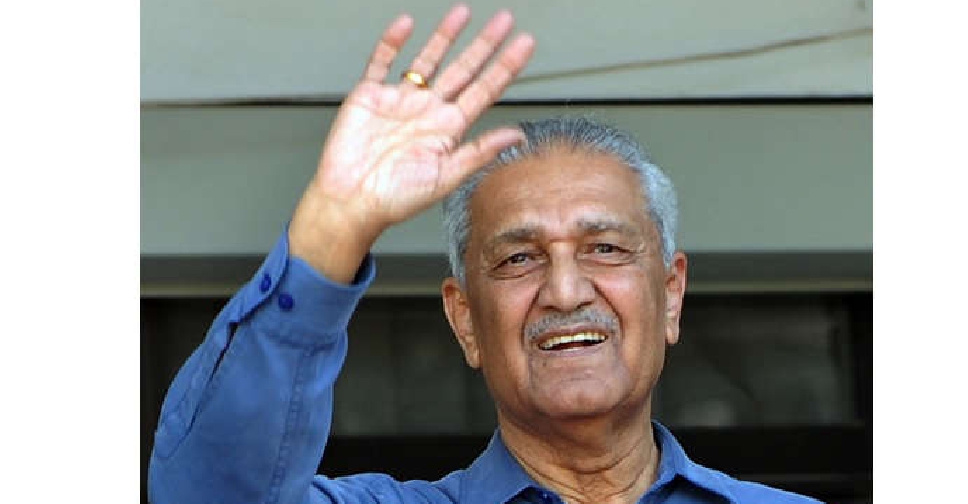
Abdul Qadeer Khan, a Pakistani nuclear scientist who acknowledged being part of a nuclear proliferation ring, died on Sunday. He was 85.
Khan was admitted to Khan Research Laboratories Hospital on August 26 after testing positive for COVID-19 and was later moved to a military hospital in Rawalpindi, said the state-run Associated Press of Pakistan.
He was at the centre of a global nuclear proliferation scandal in 2004 that involved sales of nuclear secrets to North Korea, Iran and Libya. After a confession on national television, Khan was pardoned by then-president Pervez Musharraf but he remained under house arrest for years in his palatial Islamabad home.
In his confession, Khan said he acted alone without the knowledge of the state officials. However, he later said he had been scapegoated.
"He helped us develop nation-saving nuclear deterrence, and a grateful nation will never forget his services in this regard," Pakistani President Arif Alvi said in a tweet.


 8 Israeli airstrikes hit Syria's Abu al-Duhur airbase, state TV reports
 Two killed in high school shooting in southern Philippines, officials say
 Pakistan top court orders ex-PM Imran Khan be moved to hospital from jail
 Russian missile attack kills 10 in Ukraine's Kharkiv region, governor says
 Trump says Iran won't make deal he thinks is needed