Pakistan remained one of the world's three smoggiest countries in 2023, as Bangladesh and India replaced Chad and Iran, with particulate matter about 15 times the level recommended by the World Health Organisation (WHO), data published on Tuesday showed.
Average concentrations of PM2.5 - small airborne particles that damage the lungs - reached 79.9 micrograms per cubic metre in Bangladesh in 2023, and 73.7 micrograms in Pakistan. The WHO recommends no more than 5 micrograms.
"Because of the climate conditions and the geography (in South Asia), you get this streak of PM2.5 concentrations that just skyrocket because the pollution has nowhere to go," said Christi Chester Schroeder, air quality science manager at IQAir, a Swiss air-monitoring organisation.
"On top of that are factors such as agricultural practices, industry and population density," she added. "Unfortunately, it really does look like it will get worse before it gets better."
In 2022, Bangladesh was ranked as having the fifth-worst air quality, and India was eighth.
About 20 per cent of premature deaths in Bangladesh are attributed to air pollution, and related healthcare costs amount to 4 per cent-5 per cent of the country's GDP, said Md Firoz Khan, an air pollution expert at Dhaka's North South University.
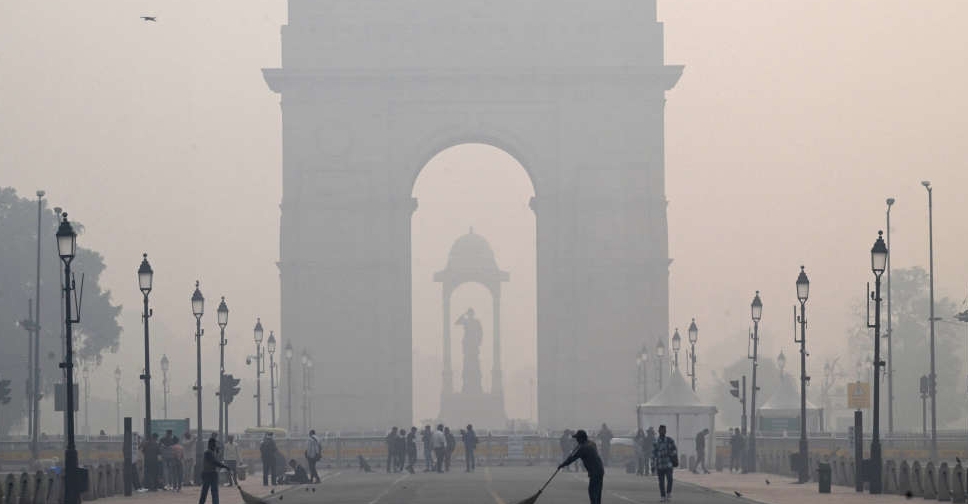
Indian pollution also increased last year, with PM2.5 levels about 11 times higher than the WHO standard. India's New Delhi was the worst-performing capital city, at 92.7 micrograms.
China also saw PM2.5 rise 6.3 per cent to 32.5 micrograms last year, after five consecutive annual declines.
Only Australia, Estonia, Finland, Grenada, Iceland, Mauritius and New Zealand met WHO standards in 2023.
The IQAir report was based on data from more than 30,000 monitoring stations in 134 countries and regions.
Chad, the world's most polluted country in 2022, was excluded from the 2023 listings because of data issues. Iran and Sudan were also taken off the 2023 list.
Christa Hasenkopf, director of the Air Quality Life Index at the University of Chicago's Energy Policy Institute, said 39 per cent of countries have no public air quality monitoring.
"Considering the large potential benefits and relatively low cost, it's stunning that we don't have an organised global effort to deploy resources to close these data gaps, especially in places where the health burden of air pollution has been largest," she said.

 8 Israeli airstrikes hit Syria's Abu al-Duhur airbase, state TV reports
 Two killed in high school shooting in southern Philippines
 Pakistan top court orders ex-PM Imran Khan be moved to hospital from jail
 Russian missile attack kills 10 in Ukraine's Kharkiv region, governor says
 Trump says Iran won't make deal he thinks is needed