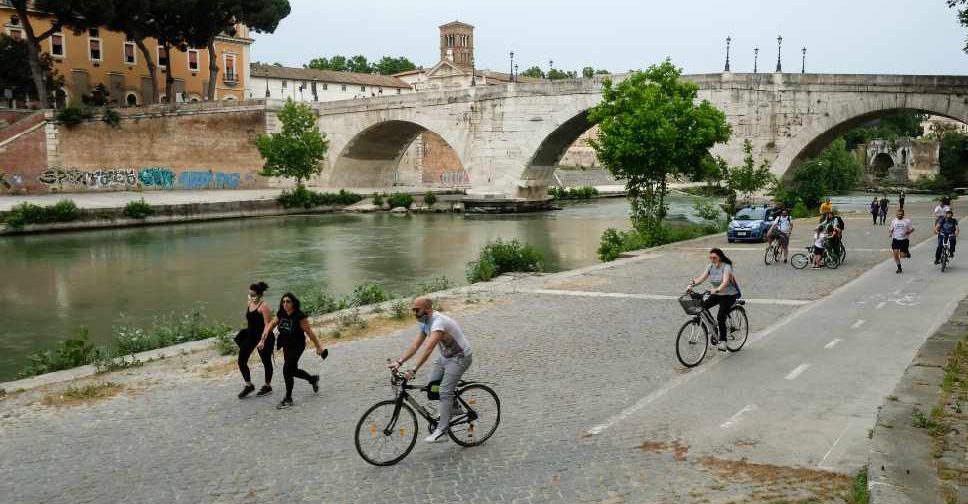
Italy is set to reopen to European tourists from early June without a mandatory 14-day quarantine as part of measures to lift the country’s strict coronavirus lockdown.
Describing it as a "calculated risk", Italian Prime Minister Giuseppe Conte announced that travel to and from Italy, and between the country's regions would be allowed from June 3.
"We're facing this risk and we have to accept it because otherwise we will never get started again," he said.
It comes as the country reopens shops, art galleries, museums and restaurants on Monday, with the people allowed to move without restrictions.
"People will be able to go wherever they want - to a shop, to the mountains, to a lake or the seaside," added Conte.
Meanwhile, the country recorded a drop in deaths since March, with the total number of positive cases at 31,800.
South Korea and the United States will cut short annual joint military drills to five days from 11 and scale back some field training, the allies said on Wednesday, after President Donald Trump ordered a substantial reduction in US participation.
An Israeli airstrike killed nine Palestinians at a police station in Gaza on Wednesday, medics said, two days after US envoy Jared Kushner ended a trip to the region that failed to push forward Donald Trump's plan to end the war in the enclave.
Thai schools conducted active shooter drills on Wednesday, as authorities moved to strengthen security measures two weeks after a 14-year-old opened fire at a school and killed at least eight people.
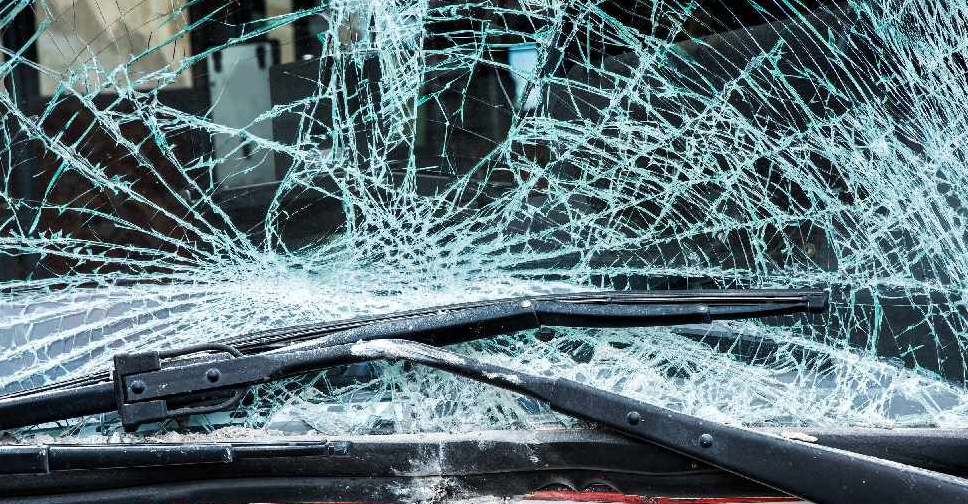
At least 21 people have died and four others injured in a head-on collision between a bus and a truck in the BR-373 highway in Brazil's southern state of Parana, the road operator said on Wednesday in an X post.


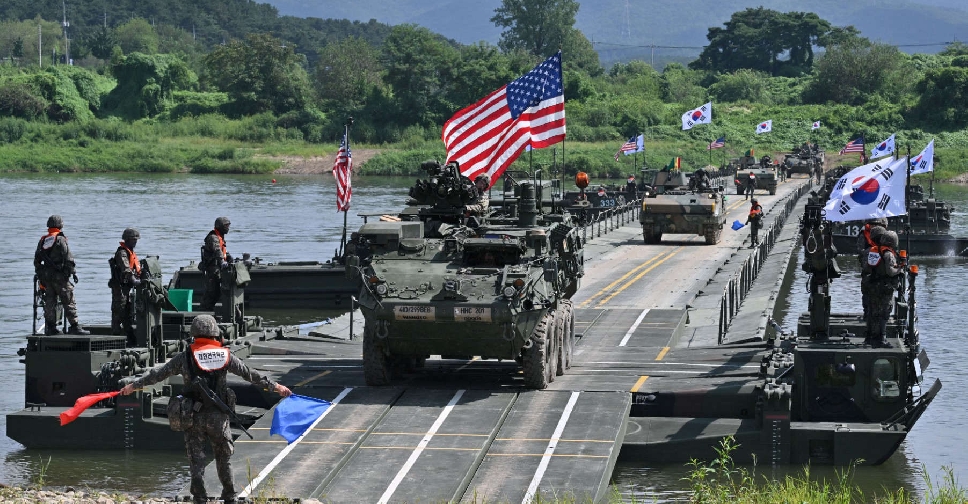 US, South Korea to cut length, scope of military drills after Trump order
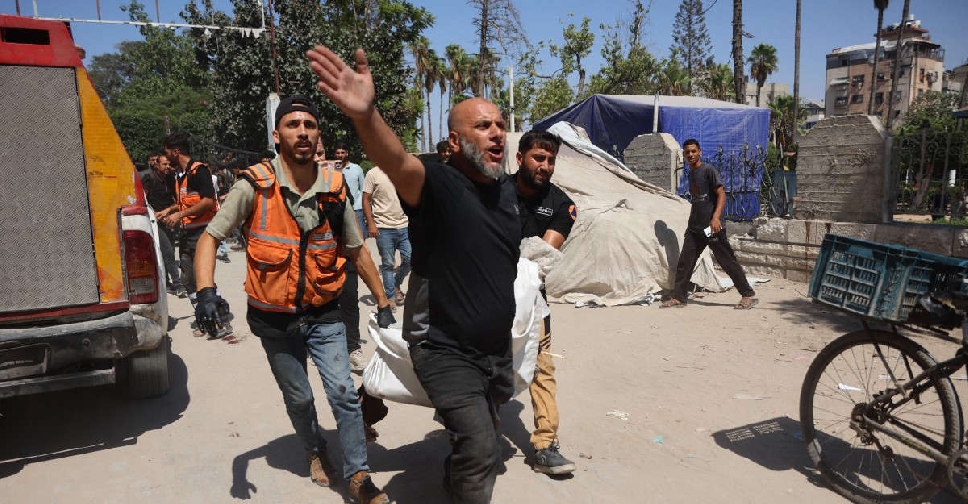 Israeli airstrike kills nine Palestinians at Gaza police station
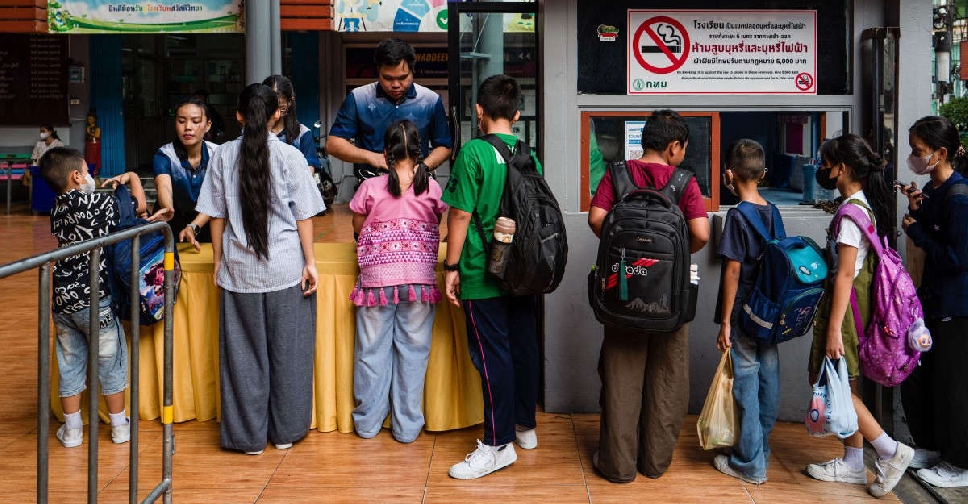 Thai schools hold shooting response drills after deadly school attack
 Bus-truck head-on collision in Parana, Brazil kills at least 21
 At least 9 killed in hotel fire in India's Kolkata