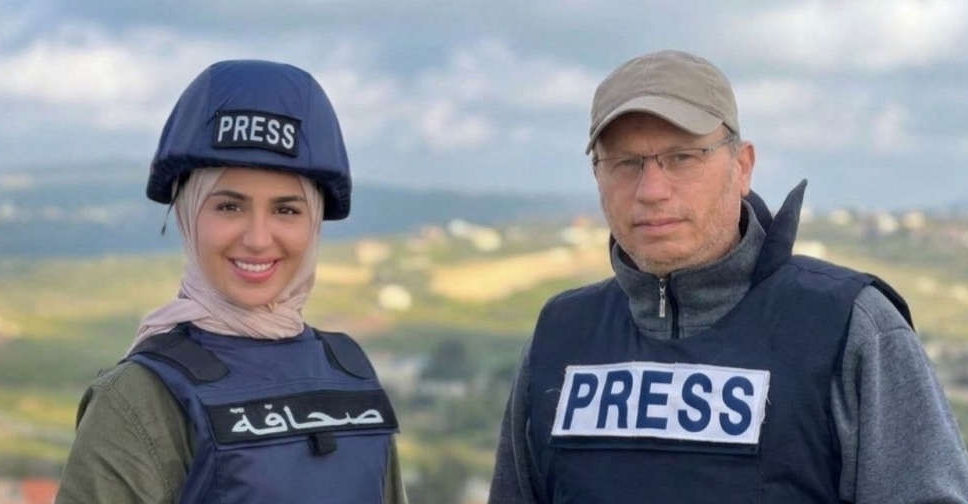
Israeli forces have killed three Lebanese journalists in southern Lebanon on Saturday in an airstrike that Israel's military said had targeted one of the reporters, with a follow‑up strike on the rescue workers sent to assist them also causing fatalities.
Lebanon's health ministry said medics were directly targeted en route to the scene of an earlier strike on journalists.
More than 50 medical workers have been killed in Lebanon, including nine in the last day alone, in what the ministry described as an "escalating pace" of Israeli attacks on healthcare workers and facilities.
The Israeli military did not immediately respond to a request for comment. It has accused Hezbollah of using medical facilities for military purposes and warned it would attack hospitals if the group does not change course.
WHO CONDEMNS ATTACKS ON HEALTH WORKERS
World Health Organization Director-General Tedros Adhanom Ghebreyesus said on X in response to the killings that health workers were protected under international humanitarian law and "should never be targeted", without mentioning Israel.
Israeli strikes killed two soldiers in the Lebanese army in the south on Saturday, the Lebanese military said in separate statements on X.
The Israeli military said on Saturday that the Air Force had struck more than 100 targets in Lebanon since Friday.
Saturday's strike is the first time Israel has acknowledged killing a journalist in Lebanon.
Lebanese television news channel Al Manar said its reporter Ali Shaib and reporter Fatima Ftouni, from Lebanese pan-Arab broadcaster Al Mayadeen, were killed when their vehicle was hit. Lebanon's information minister, Paul Morcos, later said Ftouni's brother, Mohammed, a cameraman, had also been killed.
Israel's military said in a statement it had killed Shaib, whom it called a "terrorist", in a targeted strike, accusing him of being part of a Hezbollah intelligence unit, and said he had reported on locations of Israeli soldiers in Lebanon.
The statement, which also accused Shaib of "incitement" against Israeli soldiers and civilians, did not mention the other journalists or provide evidence to support its assertion that Shaib was a member of a Hezbollah intelligence unit.
Hezbollah, which controls Al Manar, denied that Shaib was part of one of its intelligence units.
"The enemy’s false claims are nothing but an expression of its weakness and fragility, and a desperate attempt to evade responsibility for this crime," it said in a statement.
Lebanese President Joseph Aoun described the journalists as "civilians doing their professional duty."
"It is a brazen crime that violates all treaties and norms through which journalists enjoy international protection in war," he said in a statement on X.
More than 1,180 people have been killed in Lebanon since the US and Israel attacked Iran, according to the country's authorities.
'GROWING RISKS TO JOURNALISTS'
Al Manar described Shaib as an "icon of resistance reporting." Meanwhile, Al Mayadeen said Fatima Ftouni had been distinguished by her brave and objective reporting.
In response to the killings, Reporters Without Borders said it had been raising the alarm for weeks about the growing risks facing media professionals.
The killings followed the death of Hussain Hamood, a Lebanese freelance journalist working for Al Manar, whom the Committee to Protect Journalists (CPJ) said on X was killed in an Israeli airstrike on Wednesday.
At least three other reporters in Lebanon, Iran, and Gaza have been killed in Israeli or joint US-Israeli airstrikes since the Iran war began on February 28, CPJ said on Thursday. The US military did not immediately respond to a request for comment, nor did the Israeli military.
An Israeli strike in October 2024 hit a collection of guesthouses housing only reporters in the southern Lebanese town of Hasbaya, killing two journalists from Al Mayadeen and one from Al Manar, prompting global condemnation.

 Kuwait International Airport suffers 'significant damage' after drone attacks
 Israeli military kills 15-year-old Palestinian in West Bank
 Russian drones kill four in Ukraine, damage key infrastructure
 Manila, Beijing resume talks on South China Sea, energy security
 Yemen's Houthis confirm launching attack on Israel