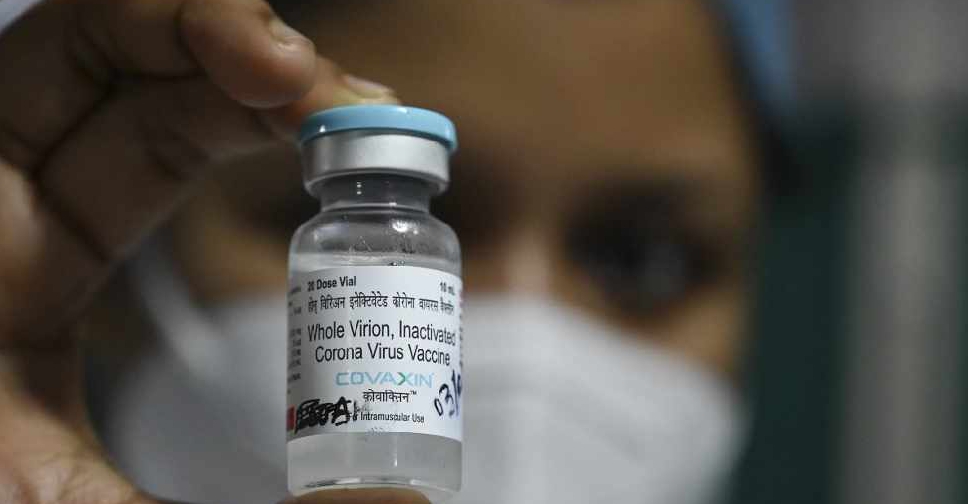
Bharat Biotech's homegrown COVID-19 vaccine has shown an interim vaccine efficacy of 81% in late-stage clinical trials, the Indian company said on Wednesday.
The interim analysis was based on 43 recorded cases of COVID-19 in the trial of 25,800 participants, conducted in partnership with the Indian government's medical research body.
Thirty-six of the 43 cases were recorded in participants who received a placebo, compared with seven cases in people who were given the Bharat Biotech vaccine, pointing to an efficacy rate of 80.6%, the company said.
India had approved the vaccine, branded COVAXIN, in January without late-stage efficacy data, raising questions about its effectiveness.
India's vaccination drive, currently underway, includes COVAXIN and a vaccine developed by Oxford University and AstraZeneca.
Earlier this week, Indian Prime Minister Narendra Modi was inoculated with the first dose of COVAXIN.


 Kuwait arrests Hezbollah-linked cell in security crackdown
 Drone attack hits hotel in Baghdad Green Zone
 Vance plays down differences with Trump on Iran war
 US allies rebuff Trump's request for support in Strait of Hormuz
 Pakistan-bound oil tanker passes through Hormuz Strait amid Iran war