Pakistan's government will present its annual budget to parliament on Friday needing to satisfy the IMF to have any chance of securing the release of more bailout money, with the crisis-riven country due to hold elections by November.
The risk of default on sovereign debt is rising, with the economy creaking under twin deficits and record high inflation, which has further dented the popularity of Prime Minister Shehbaz Sharif's coalition ahead of the vote.
The economy could slide closer to the cliff edge as a result of the latest bout of political instability, with former Prime Minister Imran Khan, the main opposition leader, locked in a dangerous struggle with the country's powerful military.
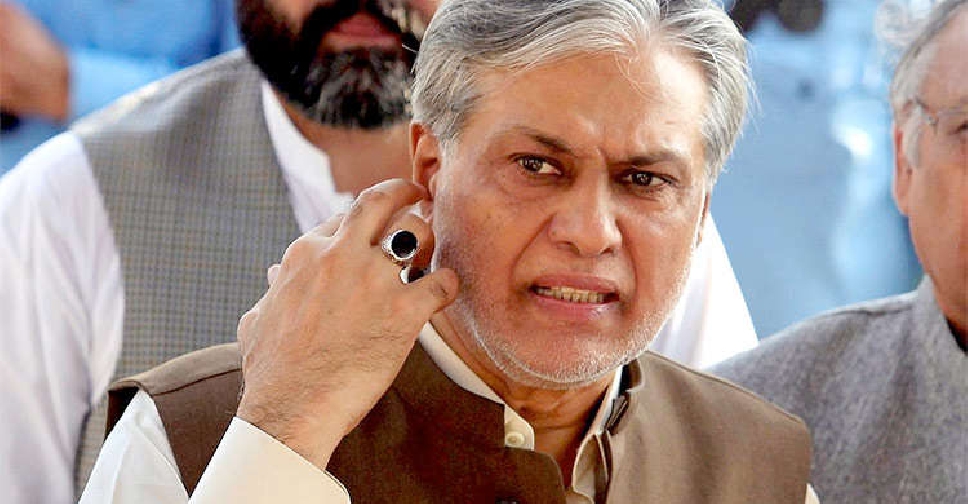
Against the backcloth of this political drama, Finance Minister Ishaq Dar is set to deliver his budget speech to parliament after 4:00 pm on Friday.
Some budget figures were announced earlier this week, including development spending of 1,150 billion Pakistani rupees ($4 billion), and an economic growth target of 3.5 per cent for the coming fiscal year.
Sources have also told Reuters that preliminary budget proposals envisaged a fiscal deficit of 7.7 per cent of GDP, with total spending at 14.5 trillion Pakistani rupees ($50.7 billion) and revenue collection at 9.2 trillion Pakistani rupees ($32.2 billion). The proposals also set an inflation target of 21 per cent, well below the record high of nearly 38% inflation recorded in May.
On Thursday, the International Monetary Fund said that it has been discussing the budget with Pakistan.
Sharif's government is hoping to persuade the IMF to unlock at least some of the $2.5 billion left in a $6.5 billion programme that Pakistan entered in 2019 and which expires at the end of this month.
"The focus of discussions over the FY24 budget is to balance the need to strengthen debt sustainability prospects while creating space to increase social spending," Esther Perez Ruiz, the IMF's resident representative for Pakistan, said on Thursday.
Pakistan missed almost all of its economic targets set in the last budget, most notably its growth target, which was initially set at 5 per cent, revised down to 2 per cent earlier this year. Growth is now projected to be just 0.29 per cent for the fiscal year ending June 30.
Foreign exchange reserves have dipped below $4 billion, according to data released by the central bank on Thursday, enough to cover barely a month of imports.
The government has no fiscal space to introduce popular measures that will win it votes or a stimulus to spur flagging economic activity, with limited avenues for raising revenue in the short term and domestic and international debt obligations continuing to mount.
Sharif's coalition could take some comfort the troubles surrounding opposition leader Khan, whose party has suffered a string of defections of key leaders following a crackdown by the military.
Khan was ousted in a parliamentary confidence vote last year, but polls show he remains Pakistan's most popular politician. He is now fighting numerous legal cases, ranging from corruption to incitement and abetting murder that could result in him being barred from contesting the election.


 Weaponising Strait of Hormuz is an act of economic terrorism: Sultan Al Jaber
 IEA consulting with governments on further oil stock releases, chief Birol says
 Dollar rises as escalating Middle East tensions spur haven demand
 Business leaders highlight Dubai’s resilience amid global developments
 India to withdraw temporary domestic airfare caps from Monday