Oil resumed its advance before US government data forecast to show crude stockpiles declined and as Organisation of Petroleum Exporting Countries (OPEC) and other producers started trimming output to stabilise the market. Futures climbed as much as 0.6 per cent in New York after tumbling 2.6 per cent Tuesday. US inventories probably dropped by 2.25 million barrels last week, according to a Bloomberg survey before an Energy Information Administration report Thursday. Libya, exempt from OPEC’s deal to cut supply, is increasing output from its biggest oil field after two years of internal conflict. Oil last year capped its biggest annual gain since 2009 as the OPEC and 11 nations from outside the group agreed on a plan to reduce production. OPEC member Kuwait has cut output by 130,000 barrels a day from the deal’s official start date of January 1, while Oman is curbing supply by 45,000 barrels a day this month. West Texas Intermediate for February delivery rose as much as 32 cents to $52.65 a barrel on the New York Mercantile Exchange and was at $52.59 at 9.02 am in Hong Kong. Total volume traded was about 74 per cent below the 100-day average. The contract lost $1.39 to close at $52.33 on Tuesday, dropping the most since December 14. Prices rose by 45 per cent last year. Brent for March settlement added as much as 32 cents, or 0.6 per cent, to $55.79 a barrel on the London-based ICE Futures Europe exchange. The contract slid $1.35 to $55.47 a barrel on Tuesday. Prices advanced 52 per cent in 2016, the first gain in four years. The global benchmark crude traded at a premium of $2.18 to March WTI. (Ben Sharples/Bloomberg)

 WTO advances world’s first digital trade rules despite opposition
 Abu Dhabi boosts transparency, governance in real estate sector
 Dr. Sultan Al Jaber dedicates leadership award to UAE President, frontline workers
 Dubai achieves highest-ever ranking in Global Financial Centres Index
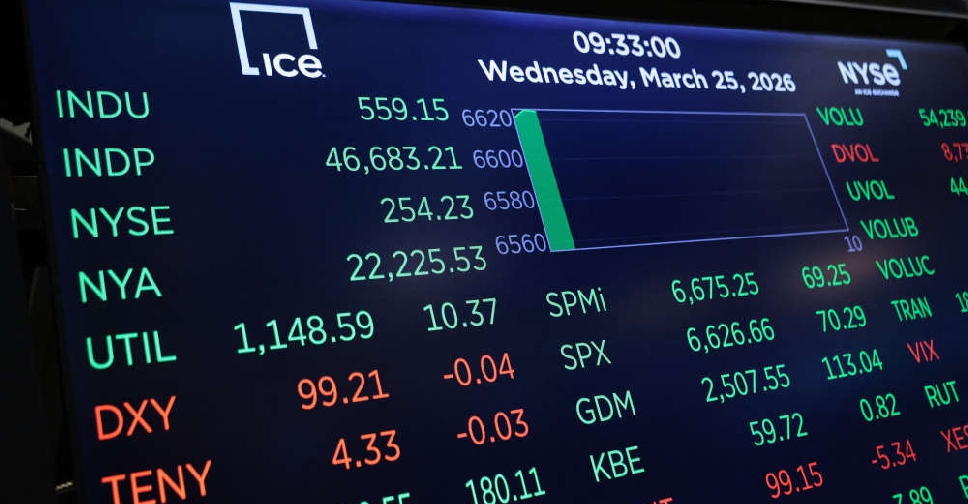 Stocks gain with oil prices easing on optimism from possible ceasefire talks