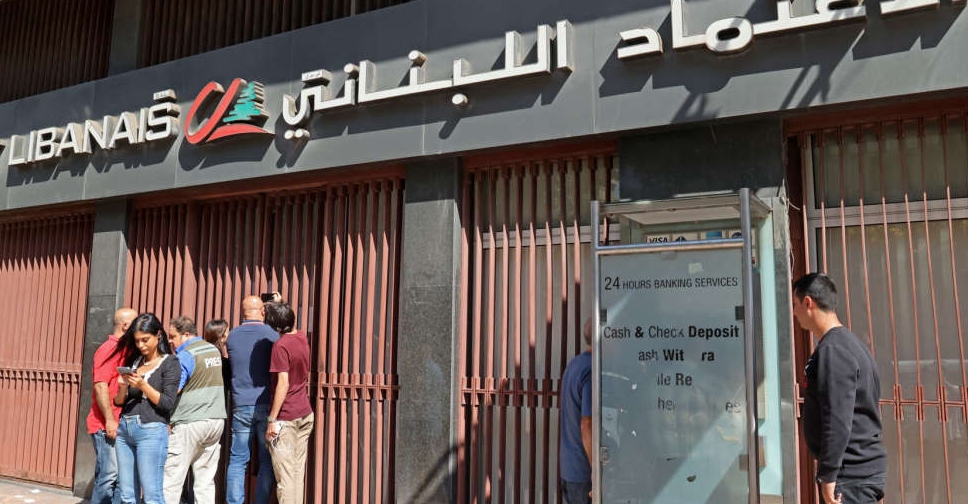
Lebanese banks have unanimously decided to close their doors to clients indefinitely after a series of holdups by depositors seeking funds frozen in the banking system because of the country's financial meltdown, two bankers told Reuters.
Banks will continue urgent operations for clients and back-office services for businesses, the bankers said, but front-office services will remain suspended after more than a dozen holdups in less than a month.
Banks closed for about a week last month in similar circumstances, but reopened at the beginning of October to allow employees to withdraw salaries.
Lebanon's banks association has previously called on the government to enact formal capital controls to replace the informal controls banks adopted in 2019, but parliament has repeatedly failed to pass the law.
The government has made little progress towards reforms that would unlock an International Monetary Fund bailout to help ease a crisis caused by decades of wasteful spending and corruption.
Now in its third year, Lebanon's financial meltdown has sunk the currency by more than 90%, spread poverty, paralysed the financial system and frozen depositors out of their savings in Lebanon's most destabilising crisis since the 1975-90 civil war.


 Fitch affirms Ras Al Khaimah at A+ and raises growth forecast
 G7 to release 100 million barrels from energy stocks
 First UAE-built commercial satellite launches successfully
 UAE lists second Sovereign Retail T-Sukuk on Nasdaq Dubai
 Abu Dhabi invests AED 300 million to advance public transport