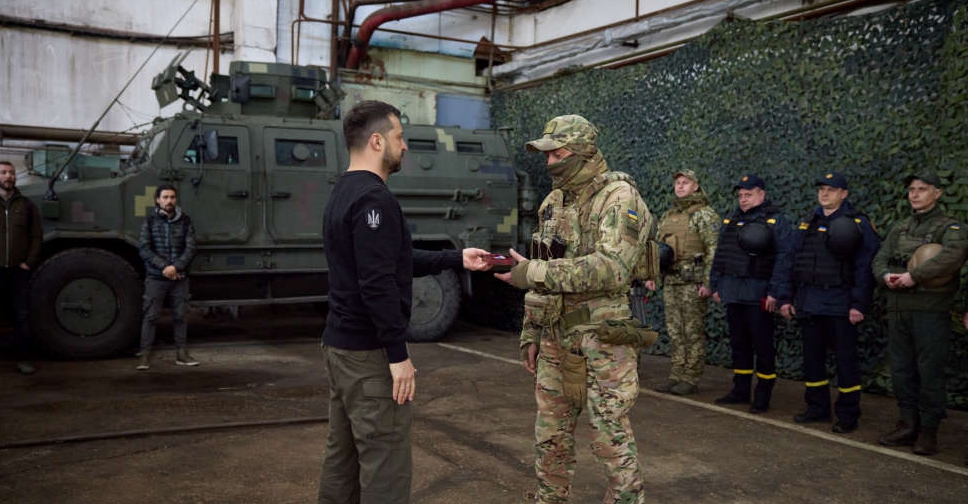
Ukraine's president said Russian troops were holding the Zaporizhzhia nuclear plant "hostage" and its safety could not be guaranteed until they left it, while his forces shut the frontline town of Avdiivka as they planned their next move.
Russian troops have occupied the nuclear power plant, Europe's largest, since the early weeks of the invasion of Ukraine and have shown no inclination to relinquish control.
"Holding a nuclear power station hostage for more than a year - this is surely the worst thing that has ever happened in the history of European or world-wide nuclear power," President Volodymyr Zelenskiy said in his nightly video address.
He decried the Russian presence as "radiation blackmail".
His comments followed a meeting earlier in the day with Rafael Grossi, the director general of the International Atomic Energy Agency (IAEA). The two met at the Dnipro hydroelectric power station - northeast of the Zaporizhzhia plant.
Initiatives on restoring safety and security are "doomed to failure" without an immediate withdrawal of Russian troops from the plant, Zelenskiy said in comments posted on the presidential website.
Russia and Ukraine routinely accuse each other of shelling the Zaporizhzhia plant. Fighting around it and worries of a water shortage and that cooling systems could lose power have raised fears of a nuclear disaster.
A team of IAEA has since September been stationed at the plant, which Kyiv has accused Moscow of using as a shield for troops and military hardware.
Grossi has repeatedly called for a safety zone around it and he is due to visit it again this week. He has tried to negotiate with both sides but said in January that brokering a deal was getting harder.
Zaporizhzhia is one of four regions Russia claimed to annex in September after referendums slammed globally as shams. Russia views the plant as its territory, which Ukraine denies.
Zelenskiy visited the southeastern Zaporizhzhia region on Monday, the latest stage of a tour of frontline regions since a top general said Ukraine's counterattack could come soon.
LEOPARDS REACH UKRAINE
Analysts expect a Ukrainian counterattack to get underway in earnest over April-May as the weather improves and more military aid arrives, including battle tanks Leopard and Challenger.
The 18 Leopard 2 tanks, workhorse of militaries across Europe, pledged by Germany have reached Ukraine, the German Defence Ministry said on Monday.
"I'm sure that they can make a decisive contribution on the front," German Defence Minister Boris Pistorius said on Twitter.
Front lines in Ukraine have barely moved for more than four months despite a Russian winter offensive. Ukraine's military aims to wear down Russian forces before mounting its own attack.
Russia's Wagner mercenary force, which fights alongside Russian forces in eastern Ukraine and is thought to have sustained heavy losses, is seeking to replenish its ranks ahead of any Ukrainian counteroffensive.
A giant recruitment advertisement for the group has appeared on the facade of an office building in north-east Moscow.
It shows Wagner's logo and slogans such as "Join the winning team!" and "Together we will win", along with a picture of a masked man holding a weapon.


 Trump vows to blockade Strait of Hormuz after Iran peace talks stumble
 Nigerian airstrike hits market, 200 feared dead
 Russia, Ukraine trade accusations of ceasefire violations
 At least 30 dead in stampede at Haiti’s historic Laferriere Citadel
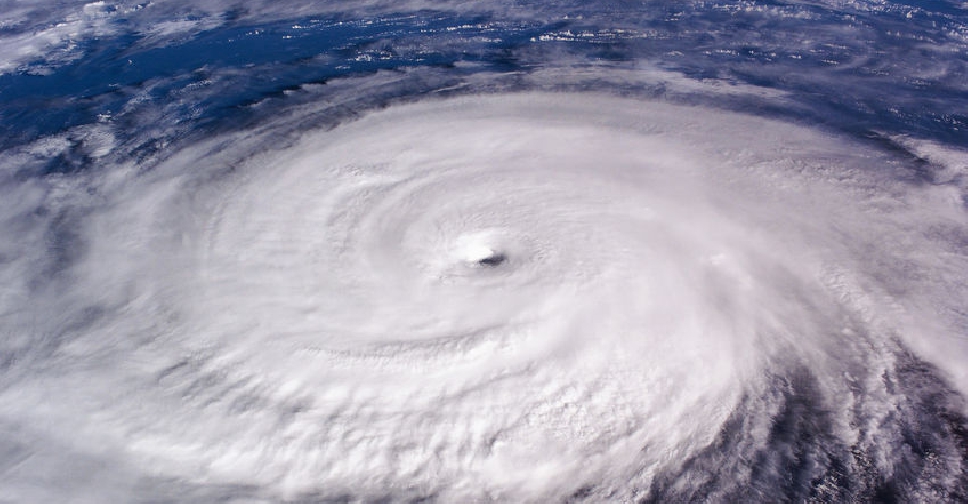 Cyclone lashes New Zealand's North Island, hundreds evacuated