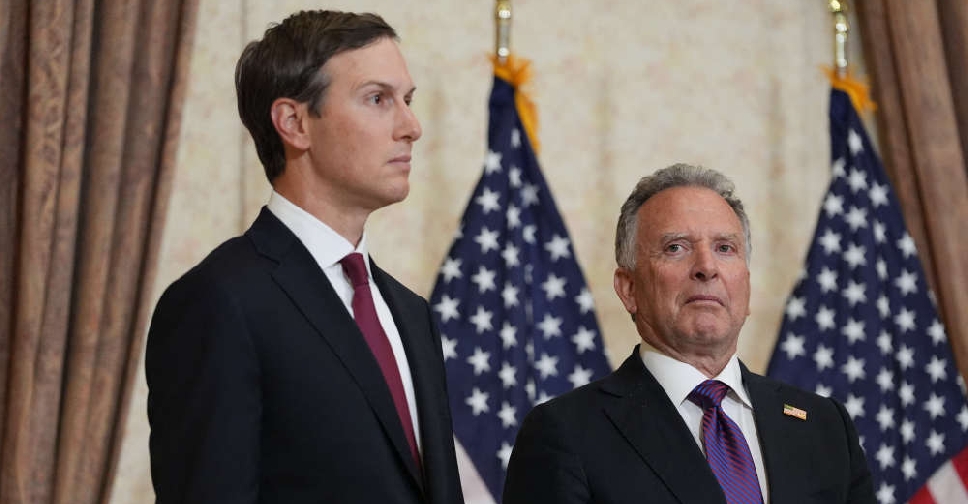
US President Donald Trump's special envoy Steve Witkoff and son-in-law Jared Kushner will travel to Pakistan on Saturday morning for talks with Iran, White House press secretary Karoline Leavitt said in an interview with Fox News on Friday.
"Everyone will be on standby to fly to Pakistan if necessary, but first, Steve and Jared will be going over there to report back to the president, the vice president and the rest of the team," Leavitt said on the Fox News show "America Reports."
Vice President JD Vance is not currently planning to attend but he will be on standby to travel to Islamabad if negotiations progress, according to CNN, which first recorded the travel plans.
Iran's Foreign Minister Abbas Araqchi was also expected in the Pakistani capital Islamabad on Friday to discuss proposals for restarting peace talks with the United States, but was not due to meet US negotiators.
Islamabad was the venue for talks between the US and Iran on ending their war that collapsed earlier this week.
Araqchi said in a statement on X he was embarking on visits to Pakistan, Oman and Russia to coordinate with partners on bilateral matters and consult on regional developments, adding that Iran's neighbours remained Tehran's priority.
Two Pakistani government sources aware of the discussions said Araqchi's visit would be a brief one to discuss Iran's proposals for talks with the US, which mediator Pakistan would then convey to Washington.
There was no direct response from Washington to Araqchi's trip, but US Defense Secretary Pete Hegseth, speaking around the same time the news emerged, told a briefing that Iran had a chance to make a "good deal" with the United States.
"Iran knows that they still have an open window to choose wisely ... at the negotiating table. All they have to do is abandon a nuclear weapon in meaningful and verifiable ways," he said.
Reports on Araqchi's trip in Iranian state media and the Pakistani sources made no mention of Mohammad Baqer Qalibaf, the speaker of Iran's parliament, who was the head of its delegation at the only talks held so far, earlier this month.
Pakistani sources had said earlier that a US logistics and security team was already in place in Islamabad for potential talks.
The last round of peace talks had been expected on Tuesday but never took place, with Iran saying it was not yet ready to commit to attending and a US delegation led by Vice President Vance never leaving Washington.
President Trump unilaterally extended a two-week ceasefire on Tuesday at the 11th hour to allow more time to reconvene the negotiators.
STRAIT OF HORMUZ BLOCKADE
Trump said on Thursday he was in no rush to reach an agreement with Iran and wanted it to be "everlasting," while asserting that the US had an upper hand in a standoff in the Strait of Hormuz, the world's most important energy shipping route.
The United States has yet to find a way to open the strait, where Iran has blocked nearly all ships apart from its own since the start of the war eight weeks ago. Iran showed off its control this week by seizing two huge cargo vessels there.
Trump imposed a separate blockade of Iranian shipping last week, with US forces boarding several Iranian ships in international waters. Iran says it will not reopen the strait until Trump lifts his blockade.
Only five ships crossed the strait in the last 24 hours, shipping data showed on Friday, compared to around 130 a day before the war. Those included one Iranian oil products tanker, but none of the vast crude-carrying supertankers that normally feed global energy markets.
Container shipping company Hapag-Lloyd HLAG.DE also said one of its ships had crossed, without giving details.
Though Trump has said that US forces have destroyed Iran's naval threat, the use of a swarm of small, fast boats to seize the container ships on Thursday underscored Tehran's evolving tactics in the strait as it counters US interception of Iran-linked oil tankers and other vessels.
Pressure for a way out of the war has mounted on Trump, meanwhile, as his fellow Republicans defend narrow majorities in Congress in the November midterm elections with US gasoline prices high, inflation rising and his own approval ratings down.

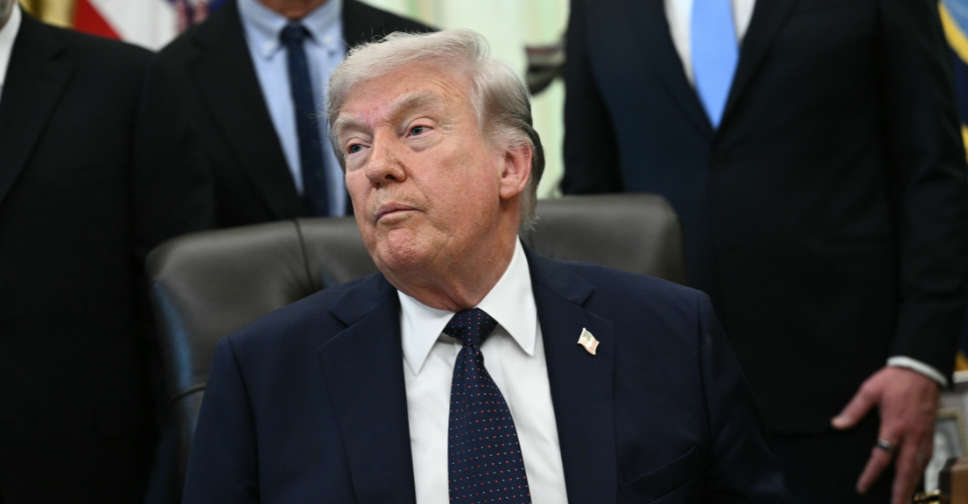 Israel, Lebanon extend ceasefire as Trump seeks 'best deal' with Iran
 Netanyahu says he was successfully treated for prostate cancer
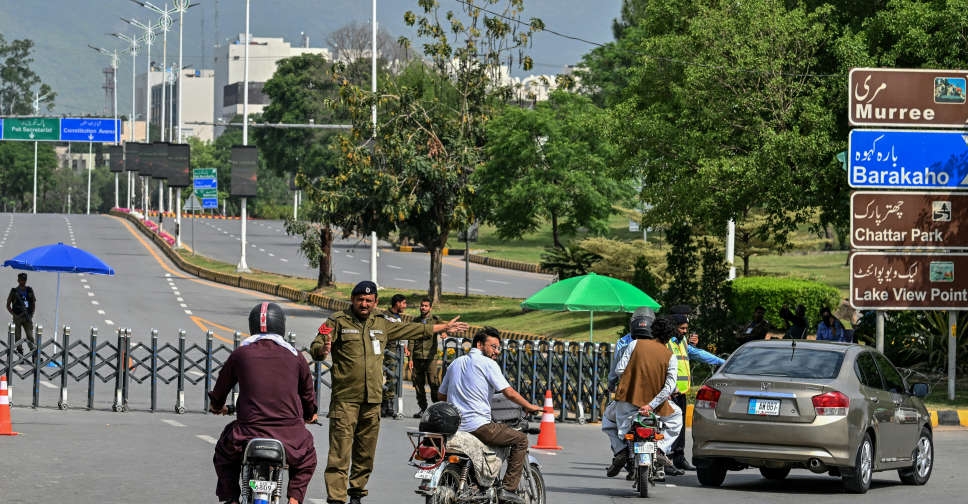 No US-Iran peace talks in sight, but Islamabad maintains security lockdown
 Israeli fire kills 10 in Gaza, medics say
 Kuwait reopens airspace following regional tensions