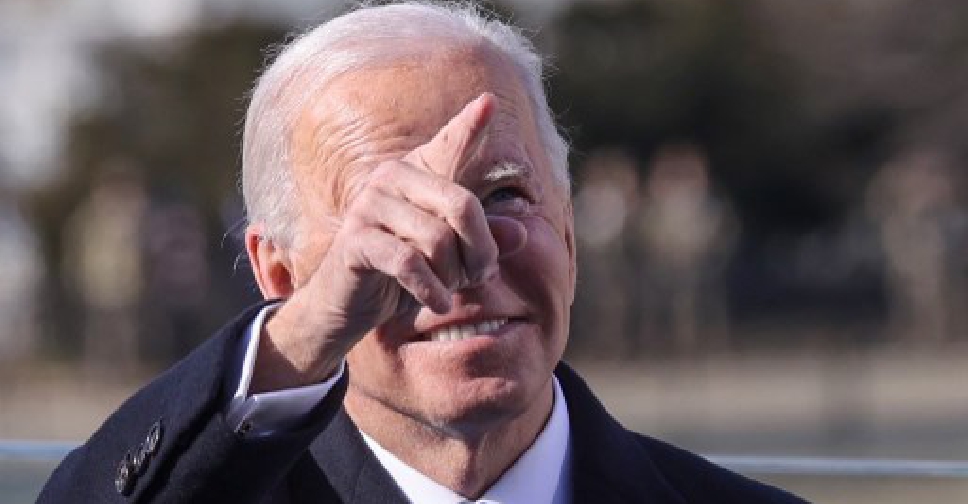
President Joe Biden on Wednesday announced America's return to the international Paris Agreement to fight climate change, the centerpiece of a raft of day-one executive orders aimed at restoring U.S. leadership in combating global warming.
The announcements also included a sweeping order to review all of former President Donald Trump's actions weakening climate change protections, the revocation of a vital permit for TC Energy's Keystone XL oil pipeline project from Canada, and a moratorium on oil and gas leasing activities in the Arctic National Wildlife Refuge that Trump's administration had recently opened to development.
The orders by the newly sworn-in president will mark the start of a major policy reversal in the world’s second-largest greenhouse gas emitter behind China, after the Trump administration pilloried climate science and rolled back environmental regulation to maximize fossil fuel development.
Biden has promised to put the United States on a track to net-zero emissions by 2050 to match the steep and swift global cuts that scientists say are needed to avoid the most devastating impacts of global warming, using curbs on fossil fuels and massive investments in clean energy.
The path will not be easy, with political divisions in the United States, opposition from fossil fuel companies, and wary international partners concerned about U.S. policy shifts obstructing the way.
"We got off track very severely for the last four years with a climate denier in the Oval Office," said John Podesta, an adviser to former President Barack Obama who helped craft the 2015 Paris Agreement. "We enter the international arena with a credibility deficit."
Biden's orders also require government agencies to consider revising vehicle fuel efficiency standards and methane emissions curbs, and to study the possibility of re-expanding the boundaries of wilderness national monuments that the Trump administration reduced in size.
While environmental advocates were thrilled by the orders, industry groups and conservatives criticized them.
Alaska's Republican Governor Mike Dunleavy mocked Biden's decision to shut down oil and gas work in the Arctic National Wildlife Refuge, saying the new president "appears to be making good on his promise to turn Alaska into a large national park."
The American Petroleum Institute, the nation's top oil and gas industry lobby group, said it believed blocking the Keystone XL oil pipeline was a "step backward."
"This misguided move will hamper America’s economic recovery, undermine North American energy security and strain relations with one of America’s greatest allies," API President Mike Sommers said.
HARD PART AHEAD
Global counterparts and climate advocates welcomed Washington’s return to cooperation on climate change, but expressed some skepticism about its staying power and its ability to overcome domestic political turmoil.
A group of Republican senators on Wednesday called on Biden to submit his plan to re-engage the United States in the Paris climate agreement to lawmakers for "review and consideration."
Trump withdrew the United States from the 2015 Paris deal late last year, arguing it was too costly to the U.S. economy.
Biden submitted the formal letter to the U.N. secretary-general re-entering the agreement on Wednesday evening, and it will enter force on Feb. 19.
Brian Deese, Biden’s director of the National Economic Council, told Reuters that the United States hopes to encourage other big emitters to also "push their ambition, even as we have to demonstrate our ability to come back on the stage and show leadership."
Pete Betts, an associate fellow at London-based think tank Chatham House who led climate negotiations for the European Union when the Paris deal was struck, said the United States will need to match its promises with financial commitments too.
The United States under Obama pledged to deliver $3 billion to the Green Climate Fund to help vulnerable countries fight climate change. It has delivered only $1 billion so far.
“The U.S. will need to put some money on the table, and also encourage others to do the same,” he said.


 Trump, Greenland, Denmark sign deal in bid to end Arctic standoff
 US F-16 fighter jet crashes in Germany
 Trump urges compete isolation of Iran, expects deal after election
 Trump set for whirlwind UN meetings with wars in Iran, Ukraine on agenda
 Student opens fire outside school in Turkey, 11 pupils wounded