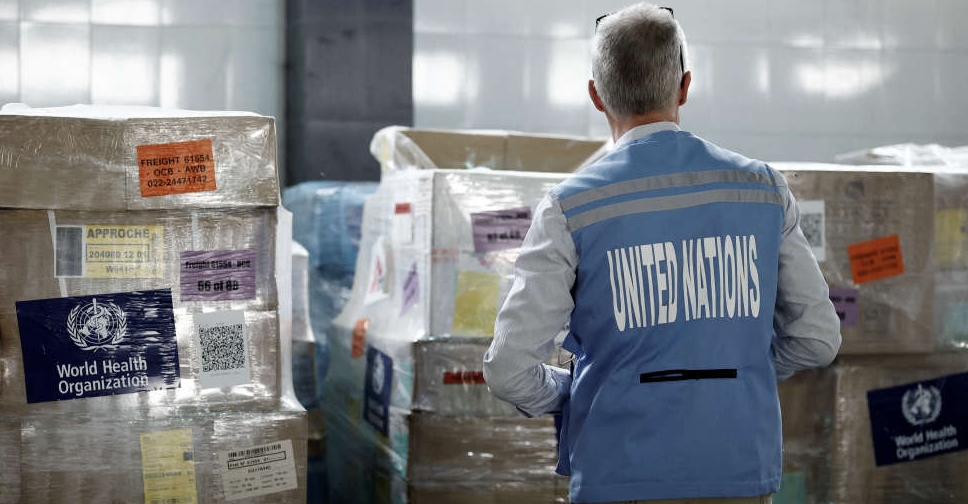
United Nations Secretary-General Antonio Guterres has rejected a new Israeli proposal to control aid deliveries in Gaza, saying it risks "further controlling and callously limiting aid down to the last calorie and grain of flour".
"Let me be clear: We will not participate in any arrangement that does not fully respect the humanitarian principles: humanity, impartiality, independence and neutrality," Guterres told reporters.
No aid has been delivered to the Palestinian enclave of some 2.1 million people since March 2. Israel has said it would not allow the entry of all goods and supplies into Gaza until Hamas releases all remaining hostages.
COGAT, the Israeli military agency that coordinates aid, last week met with UN agencies and international aid groups and said it proposed "a structured monitoring and aid entry mechanism" for Gaza.
"The mechanism is designed to support aid organisations, enhance oversight and accountability, and ensure that assistance reaches the civilian population in need, rather than being diverted and stolen by Hamas," COGAT posted on X on Sunday.
To prevent Hamas from seizing humanitarian supplies and to assure organizations' operations stay neutral and impartial, it is essential to implement a structured monitoring and aid entry mechanism.
— COGAT (@cogatonline) April 6, 2025
The mechanism is designed to support aid organizations, enhance oversight and… pic.twitter.com/57eD2CodfY
Jonathan Whittall, the senior UN aid official for Gaza and the West Bank, said last week that there was no evidence of aid being diverted.
Israel last month resumed its bombardment of Gaza after a two-month truce and sent troops back into the enclave.
"Gaza is a killing field – and civilians are in an endless death loop," said Guterres as he again called for the immediate and unconditional release of all hostages, a permanent ceasefire, and full humanitarian access in Gaza.
"With crossing points into Gaza shut and aid blockaded, security is in shambles and our capacity to deliver has been strangled.
"As the occupying power, Israel has unequivocal obligations under international law – including international humanitarian law and international human rights law," Guterres said. That means Israel should facilitate relief programmes and ensure food, medical care, hygiene and public-health standards in Gaza, he said. "None of that is happening today," he added.
Israel says it does not exercise effective control over Gaza and therefore is not an occupying power.
The war in Gaza was triggered on October 7, 2023, when Hamas killed 1,200 people in southern Israel, and took some 250 hostages, according to Israeli tallies. Since then, more than 50,000 Palestinians have been killed, according to Gaza health authorities.

 US to blockade Iran on Monday after talks fail to yield a deal
 Haiti declares three days of national mourning for 25 killed in stampede
 Orban ousted after 16 years as Hungarians flock to pro-EU rival
 Trump vows to blockade Strait of Hormuz after Iran peace talks stumble
 Nigerian airstrike hits market, 200 feared dead