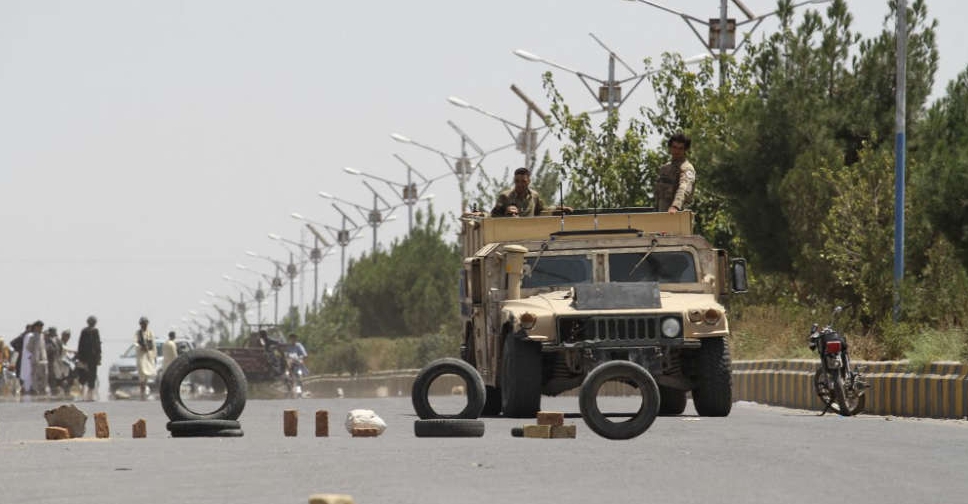
Taliban fighters tightened their grip on captured territory in Afghanistan on Tuesday as civilians hid in their homes.
President Ashraf Ghani called on regional strongmen to support his government after a stunning string of Taliban gains as US-led foreign forces pull out, while a UN official said the gains made in human rights over the past 20 years were in danger of being erased.
In the capital, Kabul, Ghani's aides said he was seeking help from regional militias he has squabbled with over the years to rally to the defence of his government. He also appealed to civilians to defend the country's "democratic fabric", aides said.
In the town of Aibak, capital of Samangan province on the main road between Mazar-i-Sharif and Kabul, Taliban fighters were consolidating their control, moving into government buildings, residents said.
Most government security forces appeared to have withdrawn, residents said.
"The only way is self-imposed house arrest or to find a way to leave for Kabul," said Sher Mohamed Abbas, a provincial tax officer, when asked about living conditions in Aibak.
"But then even Kabul is not a safe option anymore," said Abbas, a father of four and a sole bread winner for a family of nine.
Abbas said Taliban had arrived at his office and told workers to go home. He and other residents said they had not seen nor heard fighting on Tuesday.
For years, the north was the most peaceful part of the country with only minimal Taliban presence.
The militants' strategy appears to be to take the north, as well as main border crossings in the north, west and south, and then close in on Kabul.
The Taliban, battling to defeat the US-backed government, swept into Aibak on Monday meeting little resistance.
The government has withdrawn forces from hard-to-defend rural districts to focus on holding major population centres while officials have appealed for pressure on neighbouring Pakistan to stop Taliban reinforcements and supplies flowing over the porous border. Pakistan denies backing the Taliban.
The United States has been launching air strikes in support of government troops but said it was up to Afghan forces to defend their country.
"It's their struggle," John Kirby, a Pentagon spokesperson, told reporters on Monday.
The United States will complete the withdrawal of its forces at the end of this month under a deal with the Taliban, which included the withdrawal of foreign forces in exchange for Taliban promises to prevent Afghanistan being used for international terrorism.
The Taliban promised not to attack foreign forces as they withdraw but did not agree to a ceasefire with the government. Intermittent talks between the Afghan rivals have been fruitless.


 Trump vows to blockade Strait of Hormuz after Iran peace talks stumble
 Nigerian airstrike hits market, 200 feared dead
 Russia, Ukraine trade accusations of ceasefire violations
 At least 30 dead in stampede at Haiti’s historic Laferriere Citadel
 Cyclone lashes New Zealand's North Island, hundreds evacuated