US-mediated Sudan ceasefire talks are expected to begin in Geneva, Switzerland on Wednesday, despite the army's rejection of the invitation.
The talks are the latest in several international efforts to bring an end to the 16-month conflict, aiming for a cessation of violence, broader humanitarian access, and a mechanism to monitor and ensure implementation.
Sudanese-American talks over two days in Saudi Arabia failed to secure the army’s participation in the Geneva talks, with the Sudanese government insisting on the implementation of a previous agreement with the RSF signed in Jeddah in May last year, which calls for the protection of civilians and safe passage out of conflict zones. Both sides have accused each other of violating the agreement.
Sudan’s army chief Abdel Fattah al-Burhan added the Rapid Support Forces (RSF) must withdraw from occupied cities.
In a taped speech on Monday, RSF leader General Mohamed Hamdan Dagalo reiterated his force's participation in the talks, while also announcing a new force to protect civilians.
Despite their participation, the RSF has also in recent days continued its assault in Omdurman, near the capital, killing children in a designated "safe space", according to UNICEF, and attacking a maternity hospital, according to the government.
It also killed or injured at least 40 people during morning prayers in al-Fashir, the capital of North Darfur where fighting has intensified over the past week, according to local activists, as it seeks to solidify its hold over the west of the country.
"We will move forward with this event this week. That has been made clear to the parties," Tom Perriello, the US special envoy to Sudan, said.
Perriello said on Monday that even if mediated talks between the army and the RSF are not possible, talks will move ahead with technical experts and observers, including the African Union, the UAE, and Egypt, on formulating a plan of action to present to the parties.
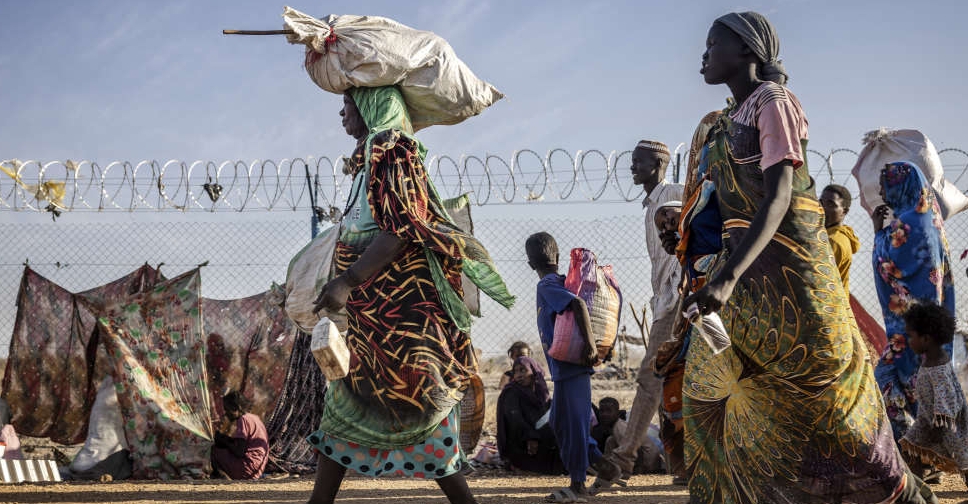
Failure of efforts to bring the war to an end would exacerbate a conflict that has created the world's largest humanitarian crisis. More than 15,000 have been killed, over 7.7 million have been internally displaced, and more than 2.1 million others have fled the country as refugees.

 US military to begin Iran maritime blockade on Monday
 Hungary's Orban concedes landmark election defeat
 Trump vows to blockade Strait of Hormuz after Iran peace talks stumble
 Nigerian airstrike hits market, 200 feared dead
 Russia, Ukraine trade accusations of ceasefire violations