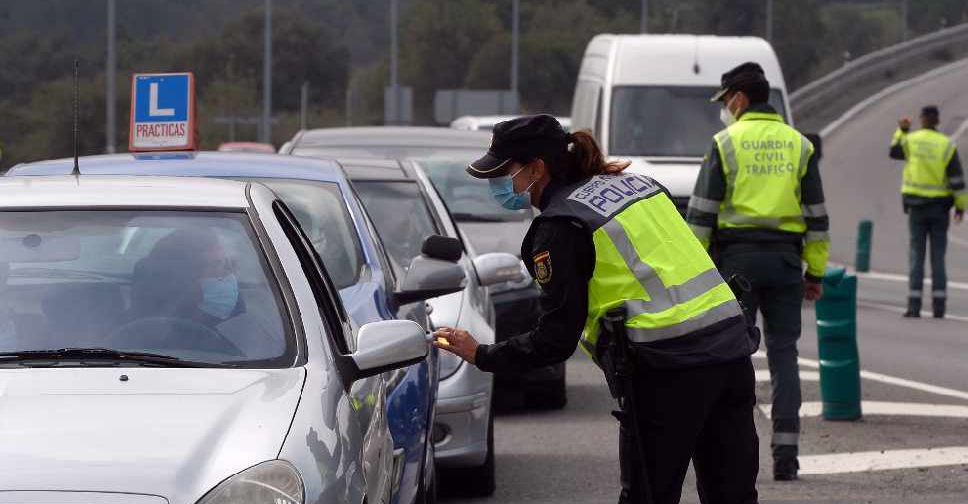
Spain will be under a state of emergency until early May, giving regions legal backing to decide curfews and restrict travel to try and contain rampant COVID-19 contagion.
Spain is one of Europe's worst COVID-19 hot spots, with over 3 million infections.
Its response to the pandemic has often been hampered by political wrangling, but the government this time managed to gather enough votes for parliament to back extending an initial two-week decree until May 9.
Some worried about the consequences, though, in a country that is already suffering through its worst recession since the late 1930s civil war.
The government said the state of emergency, and the restrictions on mobility it comes with across Spain, were unavoidable.
"We are aware that citizens are tired after months of effort and sacrifices, of not being able to do what they used to do before, to hug people, our family and friends," Health Minister Salvador Illa told parliament.
"But it is not the time to relax measures, we have, very tough weeks and months ahead of us."
That will however not be the end of uncertainty for many Spaniards, as the government is leaving it to each region to decide its own measures, creating a patchwork of restrictions across the country.
While Madrid just wants to ban travel in and out of its territory for bank holiday weekends, Catalonia on Thursday joined a growing number of regions banning entering and exiting their territory for at least 15 days.
Catalan officials said the new measures, which also include closing cinemas and theatres and extending a shutdown of bars and restaurants, were necessary to make sure hospitals can cope.
"Our health system cannot deal with this level of stress. It can't take much more," Catalan health chief Alba Verges said.
During weekends, Catalonia residents will also be banned from leaving their municipality.


 Afghanistan says Pakistan strikes kill and injure dozens
 Police officer killed, dozens injured in bomb explosions in Ukraine's Lviv
 Trump pivots to new 15% global tariff after Supreme Court setback
 Hong Kong plans to buy homes devastated in deadly high-rise fire
 US Supreme Court strikes down Trump's global tariffs