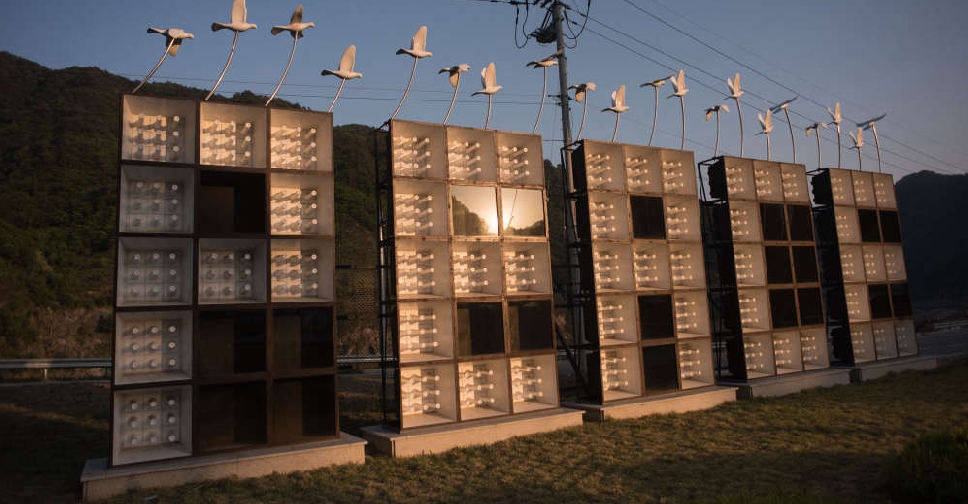
South Korea resumed loudspeaker broadcasts directed at North Korea on Sunday, its military said, following through on a warning demanding Pyongyang stop sending balloons carrying trash into the South.
The decision to resume the broadcasts, as a form of psychological warfare, was made after North Korea began launching on Saturday about 330 balloons with trash attached, with about 80 of them dropping over the border, South Korea's military said.
"The measures we will take may be unbearable for the North Korean regime but they will send a message of hope and light to the North's troops and its people," South Korea's National Security Council said.
South Korea had warned the North it would take retaliatory measures which could include propaganda broadcasts from huge loudspeakers set up at the border.
The broadcasts were made Sunday afternoon and whether more will follow depends on how North Korea responds, South Korea's military said.
Pyongyang started sending balloons carrying trash and manure across the border in May and has said the move was in retaliation for anti-North leaflets flown by South Korean activists as part of a propaganda campaign.
On June 2, it said it would temporarily halt sending the balloons because 15 tons of trash it sent was probably enough to get the message across. However, it vowed to resume if leaflets are again flown from the South by sending a hundred times the amount.
A group of South Korean activists defied the warning and have since flown more balloons to the North with leaflets criticising its leader Kim Jong Un together with USB sticks containing K-pop videos and dramas, and U.S. dollar notes.
North Korea has shown some of the angriest reactions towards the leaflet campaign and the loudspeaker broadcasts, in some cases firing weapons at the balloons and speakers.
South Korea stopped the broadcasts under an agreement signed by the two Korea's leaders in 2018 but tensions have mounted since then as Pyongyang pushed ahead with weapons development.
South Korea's broadcasts include world news and information about democratic and capitalist society with a mix of popular K-pop music. The sound is believed to travel more than 20 kilometres (12.4 miles) into North Korea.

 US military to begin Iran maritime blockade on Monday
 Hungary's Orban concedes landmark election defeat
 Trump vows to blockade Strait of Hormuz after Iran peace talks stumble
 Nigerian airstrike hits market, 200 feared dead
 Russia, Ukraine trade accusations of ceasefire violations