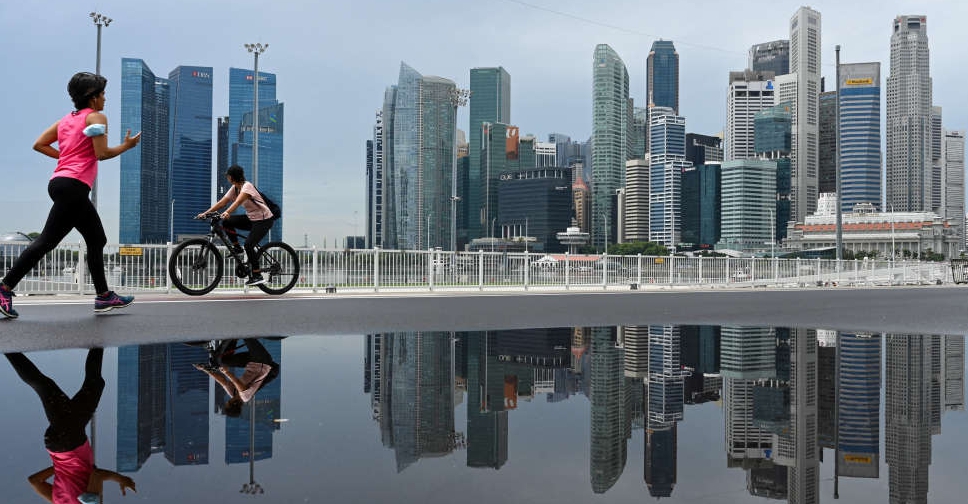
Singapore will do away with requirements to wear masks indoors starting August 29, as the country sees its COVID-19 situation stabilise further, the health minister said on Wednesday.
For the first time in more than two years, people in the Southeast Asian city-state will no longer be required to wear masks indoors except on public transport and in high-risk settings like healthcare facilities.
The health ministry also updated rules for non-vaccinated travellers, dropping a 7-day quarantine requirement starting next week.
Singapore, which is a major Asian financial and travel hub, lifted most pandemic curbs, including travel restrictions, earlier this year.
About 70 per cent of the city-state's 5.5 million population has already contracted COVID-19, Ong Ye Kung, the health minister said in a news conference, adding that the re-infection rate is so far "very low".
Singapore has vaccinated more than 90 per cent of its population and has among the lowest COVID-19 mortality rates in the world.


 US to blockade Iran on Monday after talks fail to yield a deal
 Haiti declares three days of national mourning for 25 killed in stampede
 Australia appoints woman to lead its army for the first time
 Orban ousted after 16 years as Hungarians flock to pro-EU rival
 Trump vows to blockade Strait of Hormuz after Iran peace talks stumble