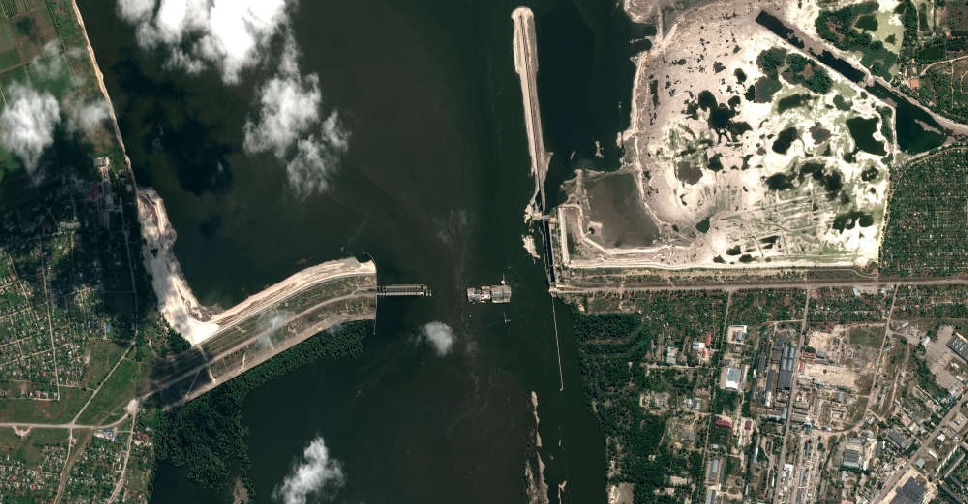
Moscow declined United Nations offers to help residents affected by the flooding from the breached Kakhovka Dam, the world body said on Sunday, as the death toll rose and filthy water has forced the closing of beaches in southern Ukraine.
The collapse of the Moscow-controlled dam on June 6 unleashed floodwaters across southern Ukraine and Russia-occupied parts of the Kherson region, destroying homes and farmland, and cutting off supplies to residents.
The death toll has risen to 52, with Russian officials saying 35 people had died in Moscow-controlled areas and Ukraine's interior ministry saying 17 had died and 31 were missing. More than 11,000 have been evacuated on both sides.
The UN urged Russia to act in accordance with their obligations under international humanitarian law.
"Aid cannot be denied to people who need it," Denise Brown, UN humanitarian coordinator for Ukraine, said in a statement.
Ukraine accuses Russia of blowing up the Soviet-era dam, under Russian control since early days of its invasion in 2022.
A team of international legal experts assisting Ukraine's prosecutors in their investigation said it was "highly likely" the dam's collapse was caused by explosives planted by Russians.
The Kremlin accused Kyiv of sabotaging the hydroelectric dam, which held a reservoir the size of the US Great Salt Lake.
Authorities in Odesa closed the once popular Black Sea beaches there, prohibiting swimming and the consumption of fish and seafood from unidentified sources.
"The beaches of Odesa have been declared as unsuitable for swimming due to the significant deterioration of the water and real danger to health," Odesa's administration said on the Telegram messaging app.
Water tests last week showed dangerous levels of salmonella and other "infectious agents," Ukrainian officials said. Monitoring for cholera was also in place.
Although floodwaters have receded, the Dnipro River on which the Kakhovka Dam was built has carried tons of debris into the Black Sea and Odesa's coastline, causing what Ukraine called an "ecocide".
Levels of toxic substances in sea organisms and on the seabed are expected to worsen, augmenting the risk from land mines that are washing up on the shoreline.
"We can forget about a holiday season for a year," Ukraine's Suspilne broadcaster cited Viktor Komorin, head of Center for Marine Ecology, as saying last week.


 Trump vows to blockade Strait of Hormuz after Iran peace talks stumble
 Nigerian airstrike hits market, 200 feared dead
 Russia, Ukraine trade accusations of ceasefire violations
 At least 30 dead in stampede at Haiti’s historic Laferriere Citadel
 Cyclone lashes New Zealand's North Island, hundreds evacuated