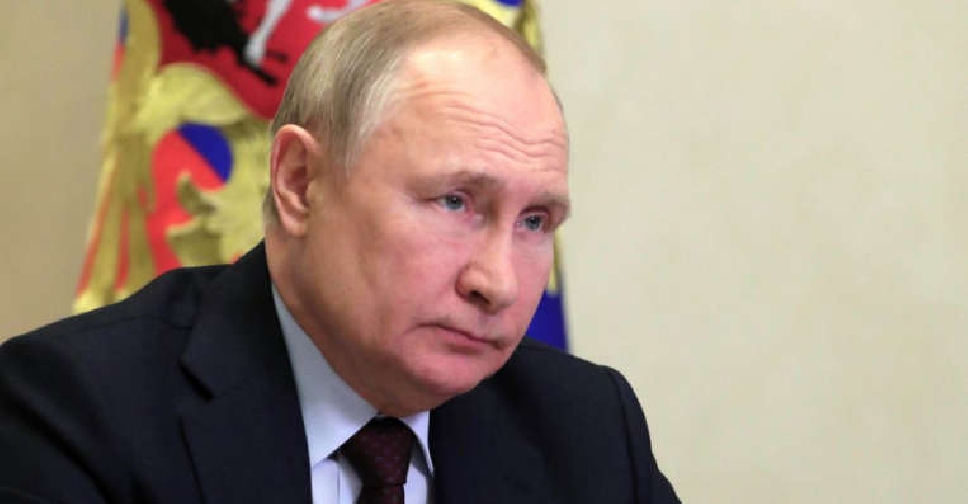
Russian President Vladimir Putin is "open to negotiations" on Ukraine but the West must accept Moscow's demands, the Kremlin said on Friday, a day after US President Joe Biden said he was willing to talk if Putin were looking for a way to end the war.
Biden and French President Emmanuel Macron said after talks at the White House on Thursday that they would hold Russia to account for its actions in Ukraine but the US president also appeared to hold out an olive branch to Moscow while stressing he saw no sign of any change in Putin's stance.
In Moscow's first public response to Biden's overture, Kremlin spokesman Dmitry Peskov told reporters: "The president of the Russian Federation has always been, is and remains open to negotiations in order to ensure our interests."
Peskov said the US refusal to recognise annexed territory in Ukraine as Russian was hindering a search for ways to end the war. Moscow has previously sought sweeping security guarantees including a reversal of NATO's eastern enlargement.
Now, after more than nine months of fighting and with winter tightening its grip, Western countries are trying to boost aid for Ukraine as it reels from Russian missile and drone attacks targeting key energy infrastructure that have left millions without heating, electricity and water.
Fighting is raging in eastern Ukraine, with the town of Bakhmut the main target of Moscow's artillery attacks, while Russian forces in the southern Kherson and Zaporizhzhia regions remain on the defensive, Ukraine's General Staff said in its latest battlefield update.
In a bid to reduce the money available for Moscow's war effort, the European Union has tentatively agreed to a $60 a barrel price cap on Russian seaborne oil, diplomats said. The measure will need to be approved by all EU governments in a written procedure by Friday.
'DESTRUCTIVE'
Putin told German Chancellor Olaf Scholz in a phone call on Friday that the Western line on Ukraine was "destructive" and urged Berlin to rethink its approach, the Kremlin said.
In Berlin's readout on the call, Scholz's spokesperson said the chancellor had condemned Russian air strikes against civilian infrastructure and called for a diplomatic solution to the war "including a withdrawal of Russian troops".
Putin has said he has no regrets about launching what he calls a "special military operation" to disarm Ukraine. He casts the war as a watershed moment when Russia finally stood up to an arrogant West after decades of humiliation following the 1991 fall of the Soviet Union.
The International Atomic Energy Agency hopes to reach an agreement with Russia and Ukraine to create a protection zone at the Zaporizhzhia nuclear power plant, Europe's largest, by the end of the year, the head of the U.N. atomic watchdog, Rafael Grossi, told Italian newspaper La Repubblica in an interview.
The head of Russia's state-run nuclear energy agency Rosatom was later quoted by RIA news agency as saying Moscow had outlined its position on creating a safety zone and was now awaiting a response.
Repeated shelling around the Russian-held plant has raised concern about the potential for a grave accident just 500 km from the site of the world's worst nuclear accident, the 1986 Chornobyl disaster.


 US to blockade Iran on Monday after talks fail to yield a deal
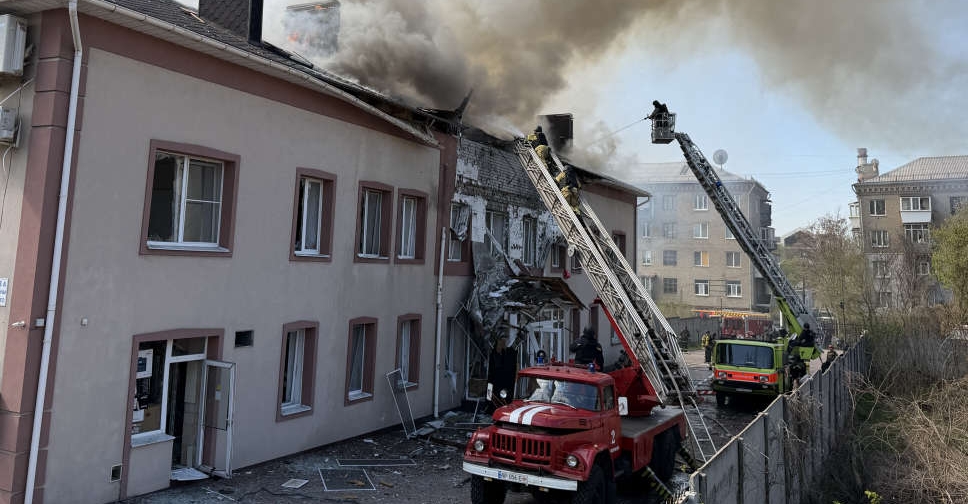 One killed in Ukraine despite Easter ceasefire, officials say
 Haiti declares three days of national mourning for 25 killed in stampede
 Australia appoints woman to lead its army for the first time
 Orban ousted after 16 years as Hungarians flock to pro-EU rival