An earthquake of magnitude 5.5 shook southeastern Afghanistan on Tuesday, sparking fears of further damage and destruction almost two days after a large quake in the same region killed more than 1,400 people and injured thousands more.
Tuesday's quake occurred at a relatively shallow depth of 10 km (6 miles), the same level as the one that struck at midnight on Sunday with a magnitude of 6. That was one of Afghanistan's worst quakes in years, flattening houses in remote villages.
The aftershock caused panic and halted rescue efforts as it sent rocks sliding down mountains, cutting off roads further and making it dangerous to dig through rubble, said Safiullah Noorzai, who works with Aseel, a humanitarian tech platform with networks around Afghanistan.
Noorzai, whose organisation has sent teams to the mountainous region, said more people had been injured, likely pushing the death toll higher.
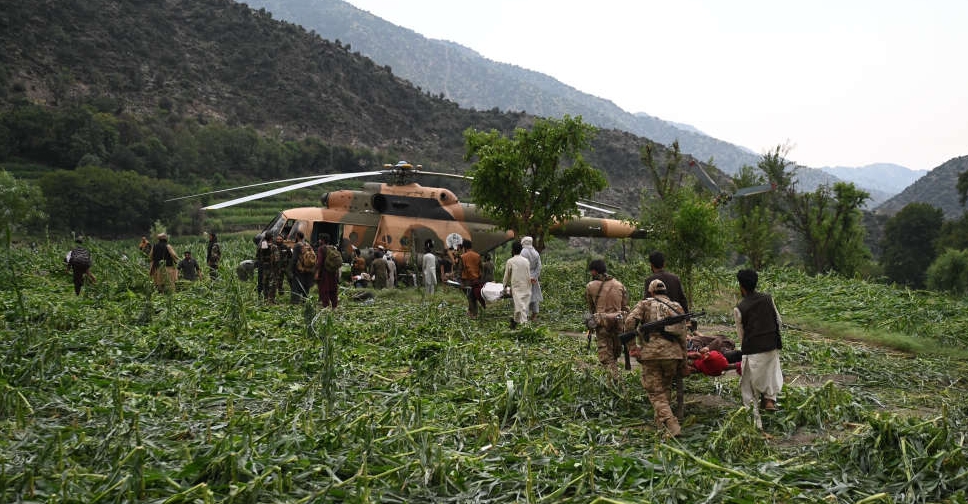
The difficult terrain has badly hindered rescue workers' relief efforts in the isolated villages.
A Reuters journalist who reached the area on Tuesday, before the latest tremors, saw every home had been damaged or destroyed, with locals still digging through the rubble for survivors.
A lot of people were still trapped. Some partially damaged homes were destroyed by the second earthquake, according to residents.
At least 1,411 people are known to have died so far, 3,124 have been injured and more than 5,400 houses destroyed, Taliban administration spokesperson Zabihullah Mujahid said.
The UN coordinator in Afghanistan said the death toll was sure to rise further.
Aid group Save the Children called on the international community to urgently release emergency funds. The earthquake has disrupted sources of clean water, raising fears of disease, and restricted access to food, it said.
"This is now a race against time to save lives – to get injured people out of remote villages cut off by massive rock falls and to get clean water, food, and shelter in," said Samira Sayed Rahman, Programmes and Advocacy Director at Save the Children.
Afghanistan is prone to deadly earthquakes, particularly in the Hindu Kush mountain range, where the Indian and Eurasian tectonic plates meet.
The eastern provinces of Kunar and Nangarhar were worst hit in Sunday night's earthquake.
UNICEF said it was sending medicines, warm clothing, tents and tarpaulins for shelter, and hygiene items such as soap, detergent, towels, sanitary pads, and water buckets.
Taliban soldiers were deployed in the area, providing help and security. The disaster has further stretched the war-torn nation's Taliban administration, already grappling with a sharp drop in foreign aid and deportations of hundreds of thousands of Afghans by neighbouring countries.
"Damaged roads, ongoing aftershocks, and remote locations of many villages severely impede the delivery of aid," the World Health Organization said, adding that over 12,000 people had been affected by the quake.
"The pre-earthquake fragility of the health system means local capacity is overwhelmed, creating total dependence on external actors," it said.

 Hungary's Orban concedes landmark election defeat
 Trump vows to blockade Strait of Hormuz after Iran peace talks stumble
 Nigerian airstrike hits market, 200 feared dead
 Russia, Ukraine trade accusations of ceasefire violations
 At least 30 dead in stampede at Haiti’s historic Laferriere Citadel