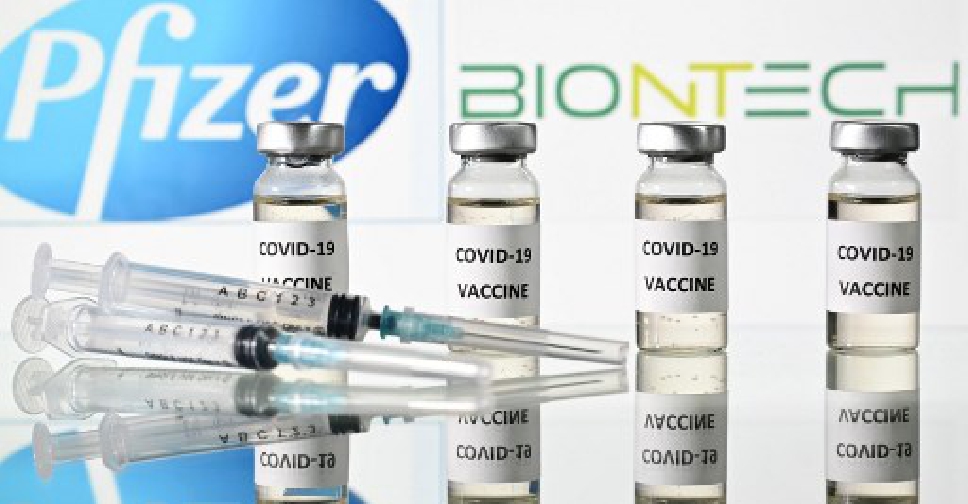
Two doses of Pfizer-BioNTech's COVID-19 vaccine appear to have given 70 per cent protection against hospitalisation in South Africa in recent weeks, a study on the potential impact of Omicron showed.
The study released by South Africa's largest private health insurance administrator, Discovery Health, was based on more than 211,000 positive COVID-19 test results from November 15 to December 7, around 78,000 of which were attributed to Omicron.
The 78,000 results are not confirmed Omicron cases, meaning the study is not able to draw conclusive findings about the variant labelled "of concern" by the World Health Organisation.
South African scientists have so far confirmed around 550 Omicron sequences, with the variant accounting for 78 per cent of sequences from November, more than the previously dominant Delta variant.
South Africa alerted the world to Omicron late last month, triggering alarm that it could cause another surge in global infections, and leading to the imposition of travel restrictions on southern Africa.
South Africa's daily infections have since risen to around 20,000 in recent days.
Based on analysis by Discovery's clinical research and actuarial teams, and in collaboration with South Africa's Medical Research Council (SAMRC), the real-world study calculated that two doses of Pfizer-BioNTech offered 70 per cent protection against hospitalisation during the recent surge in cases and 33 per cent protection against infection.
South Africa is using the Pfizer-BioNTech and Johnson & Johnson vaccines in its COVID-19 immunisation campaign, with more than 20 million Pfizer doses administered so far.
It concluded that there was a higher risk of reinfection during the fourth wave than during previous waves and that the risk of hospitalisation among adults diagnosed with COVID-19 was 29 per cent lower than during the country's first wave early last year.
Children appeared to have a 20 per cent higher risk of hospital admission with complications during the fourth wave than during the first, despite a very low absolute incidence, it said.
Discovery cautioned that the study's findings should be considered preliminary.
Glenda Gray, SAMRC president, said it was important that the Pfizer-BioNTech vaccine appeared to be offering good protection against severe disease and hospitalisation.


 Iran's supreme leader Khamenei killed in US-Israeli strikes
 US and Israel launch strikes on Iran
 Bahrain intercepts 45 Iranian missiles, 9 drones
 Kuwait, Qatar summons Iranian ambassadors over missile, drone attacks
 Arab League condemns Iranian aggressions against UAE, other Arab states