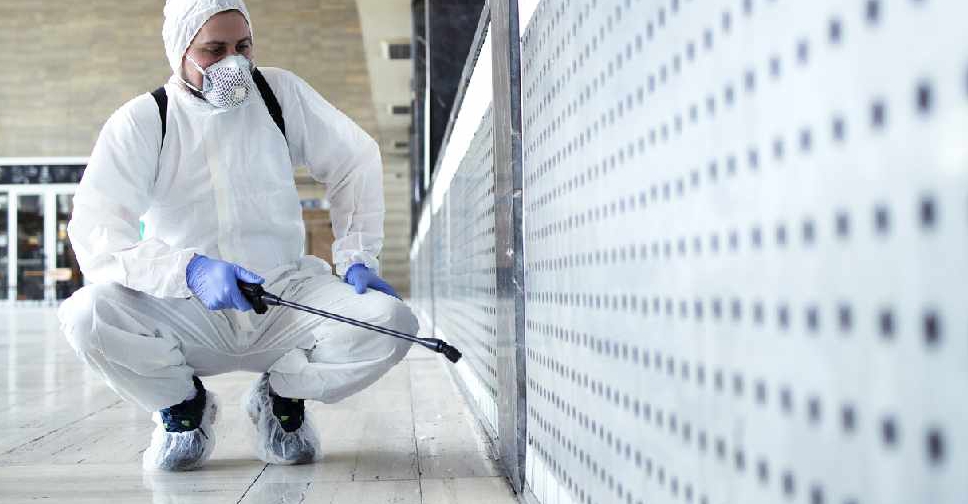
The virus that causes COVID-19 can survive on banknotes, glass and stainless steel for up to 28 days, much longer than the flu virus, Australian researchers said on Monday.
Findings from the study done by Australia's national science agency, CSIRO, appear to show that in a very controlled environment the virus remained infectious for longer than other studies have found.
CSIRO researchers found that at 20 degrees Celsius the SARS-COV-2 virus remained infectious for 28 days on smooth surfaces such as plastic banknotes and glass found on mobile phone screens. The study was published in Virology Journal.
By comparison, Influenza A virus has been found to survive on surfaces for 17 days.
"It really reinforces the importance of washing hands and sanitising where possible and certainly wiping down surfaces that may be in contact with the virus," said the study's lead researcher Shane Riddell.
The study involved drying virus in an artificial mucus on a range of surfaces at concentrations similar to samples from COVID-19 patients and then recovering the virus over a month.
Experiments done at 20, 30 and 40 degrees C showed the virus survived longer at cooler temperatures, longer on smooth surfaces than on complex surfaces such as cotton, and longer on paper banknotes than on plastic banknotes.
"So heading into summer that's certainly going to be an important factor that the virus won't last as long in the warmer temperatures," Riddell said, referring to the upcoming southern hemisphere summer.
All the experiments were done in the dark to remove the impact of ultraviolet light, as research has shown direct sunlight can kill the virus.
"So in the real world results would likely be shorter than what we were able to show," Riddell told Reuters.
Researchers said given that proteins and fats in body fluids can also sharply increase virus survival times, their study may help explain the apparent persistence and spread of the virus in cool environments like meat-packing facilities.
Australia has fared much better than most other rich nations in combating COVID-19, with a total of about 27,000 infections and 898 deaths in a population of 25 million.
The epicentre of the country's second wave of infection, Victoria state, reported 15 new cases on Monday, well shy of a target of less than five which the government has set for the easing of a hard lockdown in the state capital Melbourne.
New South Wales, the most populous state, reported six new cases on Monday, five of whom were returned travellers in quarantine.


 India's 'cockroach' youth party to protest, demand poll chief's resignation
 Congo's Ebola outbreak has killed more than 4,000, government data shows
 About 400 French schools closed as some student protests turn violent
 Yemeni air force carries out strikes on Houthi targets in Taiz province
 Arab League condemns Israeli settlers’ storming of Al-Aqsa Mosque