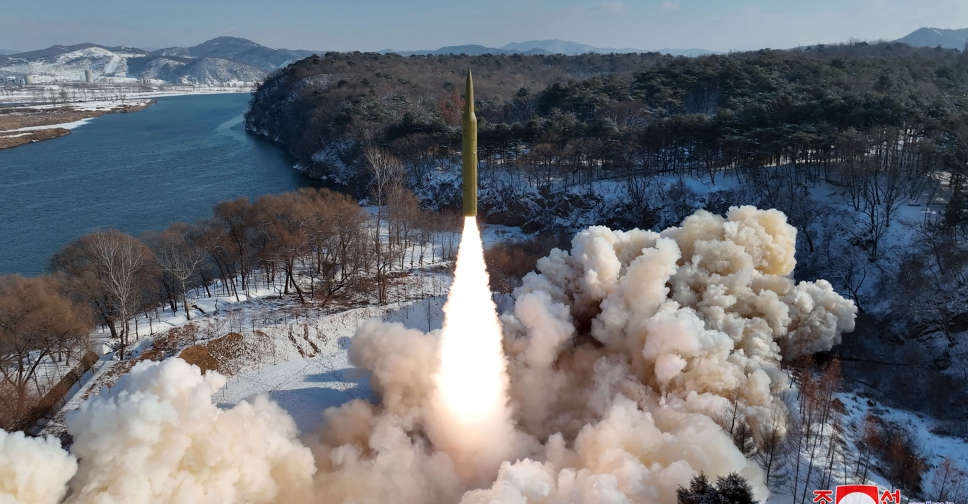
North Korea on Sunday tested a new solid-fuel hypersonic missile with intermediate range, state news agency KCNA said on Monday, in a move that was condemned by the US, South Korea and Japan.
The launch was aimed at testing the reliability of new multi-stage, high-thrust solid-fuel engines and an intermediate-range hypersonic maneuverable controlled warhead, according to KCNA, which said the test did not pose a security threat to neighbouring countries.
South Korea's military in a statement criticised the launch as a violation of UN Security Council resolutions and said direct provocations by the North would be met with its "overwhelming response".
Sunday's ballistic missile launch, the first by the North this year, was condemned by the nuclear envoys of South Korea, the US and Japan, who said after a three-way phone call that North Korea's provocations were a root cause of instability in the region.
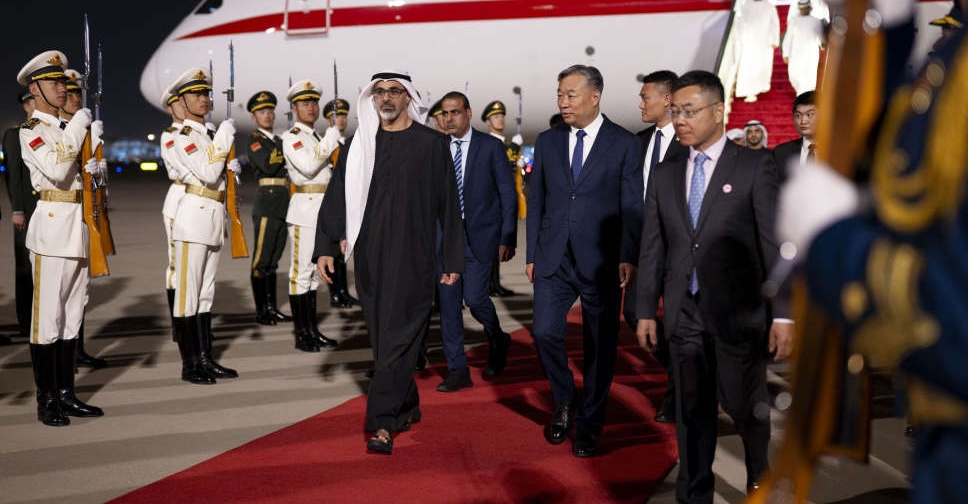
The test occurred on the same day that a delegation led by Foreign Minister Choe Son Hui heading to Russia left Pyongyang, KCNA reported.
The missile launch and the visit to Russia come amid growing tensions between the two Koreas following Pyongyang's series of intercontinental ballistic missile launches and its first military spy satellite, as well as deepening ties between Pyongyang and Moscow that have worried Washington and its allies.
In a separate KCNA commentary on Monday, North Korea accused Seoul of escalating tensions in the region with military drills and armament calls by South Korean officials.
"Even a little spark can be a catalyst for enormous physical conflicts between the two most hostile countries," the commentary said.
North Korea has recently announced changes to designate the South as a separate, enemy state, breaking with decades of policy, with leader Kim Jong Un saying peaceful reunification is no longer possible.
Analysts have said the move could potentially help justify the use of nuclear weapons against Seoul in a future war.
South Korea's military said Sunday's missile, launched from the area of Pyongyang at about 2:55 pm (0555 GMT), flew about 1,000 km off the country's east coast. Japan's defence ministry said the maximum altitude was at least 50 km.
Hypersonic missiles typically launch a warhead that travels at more than five times the speed of sound, or about 6,200 km per hour, often manoeuvring at relatively low altitudes.
Despite their name, analysts say the main feature of hypersonic weapons is not speed - which can sometimes be matched or exceeded by traditional ballistic missile warheads - but their manoeuvrability, which can help the warhead evade missile defences.
Pyongyang had previously said it tested its new solid-fuel engines for an intermediate ballistic missile on November 11 and November 14.


 US to blockade Iran on Monday after talks fail to yield a deal
 Haiti declares three days of national mourning for 25 killed in stampede
 Australia appoints woman to lead its army for the first time
 Orban ousted after 16 years as Hungarians flock to pro-EU rival
 Trump vows to blockade Strait of Hormuz after Iran peace talks stumble