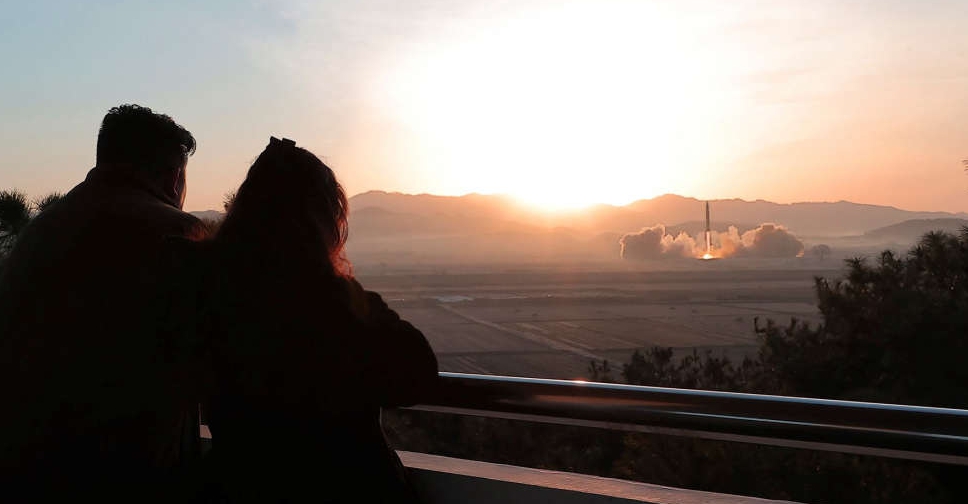
North Korea said that Thursday's launch was its largest Hwasong-17 intercontinental ballistic missile (ICBM), fired during a drill to demonstrate a "tough response posture" to ongoing US-South Korea military drills, state media reported.
Photos released on Friday by the country's government media showed Kim Jong Un watching the launch with his daughter, and included pictures from space apparently shot by a camera mounted on the missile.
North Korea fired the ICBM into the sea between the Korean peninsula and Japan on Thursday, hours before South Korea's president flew to Tokyo for a summit that discussed ways to counter the nuclear-armed North.
"The launching drill of the strategic weapon serves as an occasion to give a stronger warning to the enemies intentionally escalating the tension in the Korean peninsula while persistently resorting to irresponsible and reckless military threats," state news agency KCNA said.
The North's ballistic missiles are banned under United Nations Security Council resolutions and the launch drew condemnation from governments in Seoul, Washington and Tokyo.
South Korean and American forces began 11 days of joint drills, dubbed "Freedom Shield 23," on Monday, held on a scale not seen since 2017 to counter the North's growing threats.
Kim accused the United States and South Korea of increasing tensions with the military drills.
He "stressed the need to strike fear into the enemies, really deter war and reliably guarantee the peaceful life of our people and their struggle for socialist construction by irreversibly bolstering up the nuclear war deterrent," KCNA reported.
China, which has a defense pact with North Korea, also blamed the United States for the current tensions, saying they are caused by Washington's efforts to increase pressure on Pyongyang.
The Hwasong-17 is North Korea's biggest missile yet, and is the largest road-mobile, liquid-fuelled ICBM in the world.
It is believed to have the range to potentially deliver a nuclear warhead to targets anywhere in the United States.
The missile was launched from Pyongyang's airport, and KCNA said it traveled up to a maximum altitude of 6,045 km and flew a distance of 1,000 km for just over 69 minutes, before falling into the open sea. The launch did not pose a safety threat to any neighbouring countries, the report said.


 US waives Iran sanctions, Trump warns Tehran it must abide by agreement
 Forty drown in France as people seek relief from heatwave
 Israeli gunfire kills two people in south Lebanon, civil defence says
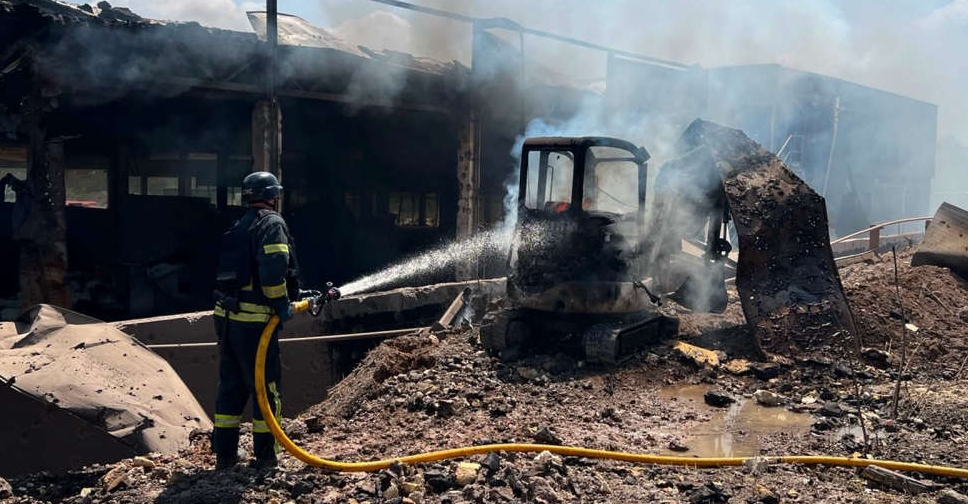 Russian strikes injure six in Ukraine as fuel crisis deepens into Siberia
 Congo says confirmed Ebola cases rise to 1,048, including 267 deaths