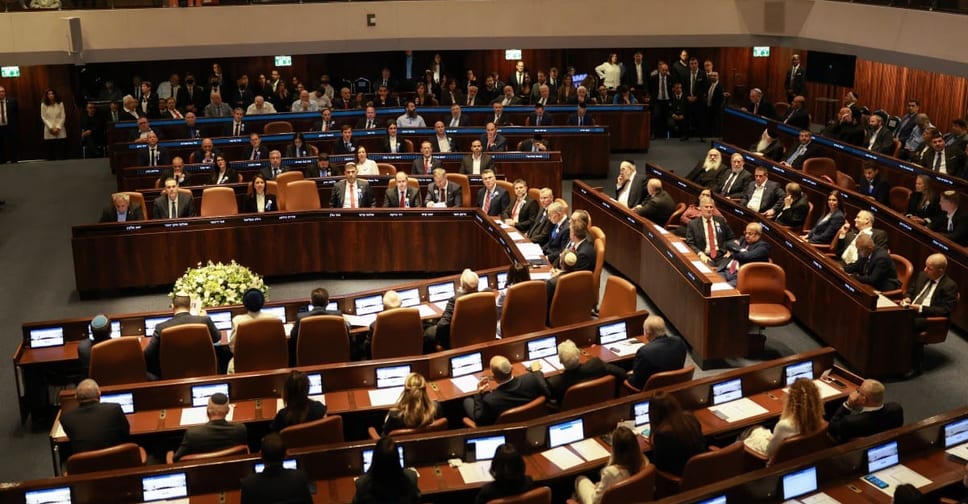
Israel's parliament was sworn in on Tuesday without a new government, after a deadlocked general election stripped Prime Minister Benjamin Netanyahu of his parliamentary majority but left his main rivals with no clear path to power.
Lawmakers elected in the October 27 vote took their oaths of office as Gadi Eisenkot, a former general, sought to forge a coalition after Israel's president tasked him on Sunday with forming a government.
Eisenkot and his allies also lack a majority and he has yet to strike deals with parties that could bring him to power.
If both Eisenkot and Netanyahu fail to form coalitions, another election could follow.
Presiding over the swearing-in ceremony, President Isaac Herzog told lawmakers: "You must do everything to avoid a repeat election."
"Reach out a hand for compromise, even between rivals... Look upon one another with generosity. There is much work to be done here, and it requires the ability and experience found in every part of this House."
PARLIAMENT COULD TRY TO SET UP OCTOBER 7 INQUIRY
Netanyahu remains caretaker prime minister until a new candidate manages to form a coalition.
His right-wing Likud party's alliance with far-right and ultra-Orthodox parties outperformed election expectations but still lost its majority, now holding 53 of the Knesset's 120 seats.
Eisenkot's centre-right Yashar party and patchwork partner factions hold just 48 seats.
But they have potential allies in Israel's Arab-led parties, which hold 19 seats and are aligned with Eisenkot in their vehement opposition to Netanyahu.
This means that the newly sworn-in parliament could still deliver on some of Eisenkot's campaign promises, such as potentially setting up a commission of inquiry into the October 7, 2023 Hamas attacks, something backed by the Arab parties but largely opposed by Netanyahu.
It also could allow Eisenkot to replace the current Knesset speaker, a Likud member.
Herzog told Knesset members that parliament was "duty bound to leave no stone unturned" in investigating and understanding the "catastrophe" of October 7, while Israel continues to face threats from Iran and its proxies.
Eisenkot initially has until December 6 to form a government but he can seek a two-week extension to December 20.
He has acknowledged his path to power is "extraordinarily complex".
His options include trying to form a minority government with Arab party support, bringing ultra-Orthodox parties into his camp despite years of mutual hostility, or forging a unity government with Netanyahu.
All three paths face formidable obstacles.
Ultra-Orthodox parties have so far said they would not join an Eisenkot-led government.
For his part, Netanyahu has cast doubt on the election results by baselessly alleging voter fraud by Arabs, who make up a fifth of the population.
Election officials have said they are probing potential misconduct, but that they have seen no evidence of fraud that could have influenced the vote's outcome.
If Eisenkot fails to form a government, Herzog would likely ask Netanyahu to try to build a coalition. If he also fails, another candidate would get a chance before Israel would be forced into another election.
Moments after the official opening of parliament, Eisenkot and his allies submitted a series of bills, including legislation to establish a state commission of inquiry into the October 7 attacks and to impose term limits on the prime minister.
They also proposed repealing a controversial judicial overhaul and other laws enacted under Netanyahu's government over the past four years.

 Defiant Hegseth blasts impeachment effort ahead of House vote
 Saudi official inspects Aramco Riyadh office after Houthi attack
 Three workers die at Tata's India iPhone parts factory in latest safety incident
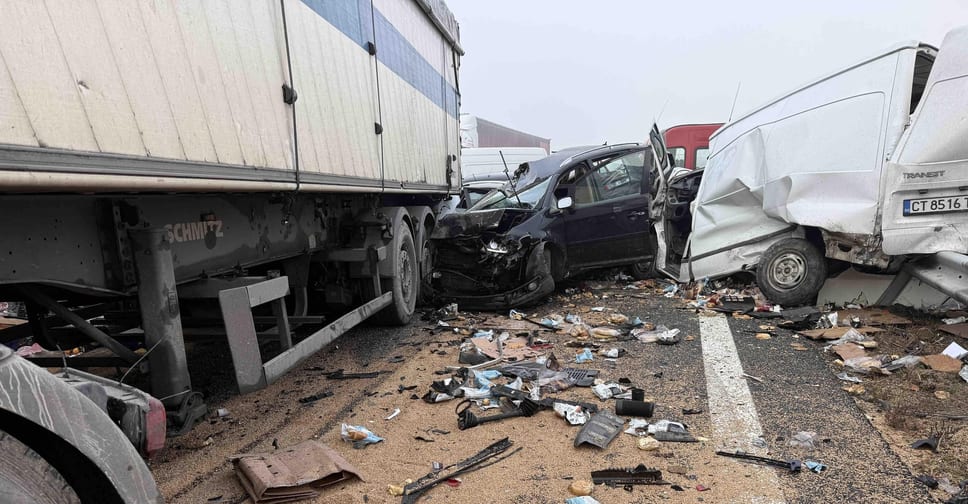 Eleven dead, fifty injured in Bulgarian motorway pile-up
 UN warns situation in Gaza continues to deteriorate amid floods