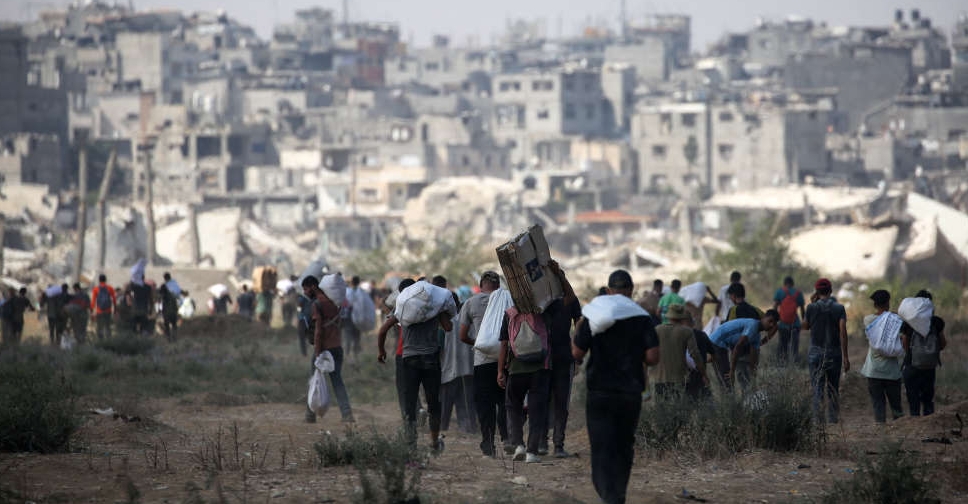
Israeli Prime Minister Benjamin Netanyahu will convene his security cabinet this week to decide on the country's next steps in Gaza following the collapse of indirect ceasefire talks with Hamas.
Last Saturday, during a visit to the country, US Middle East envoy Steve Witkoff had said he was working with the Israeli government on a plan that would effectively end the war in Gaza.
But Israeli officials have also floated ideas including expanding the military offensive in Gaza and annexing parts of the shattered enclave.
The failed ceasefire talks in Doha had aimed to clinch agreements on a US-backed proposal for a 60-day truce, during which aid would be flown into Gaza and half of the hostages Hamas is holding would be freed in exchange for Palestinian prisoners jailed in Israel.
After Netanyahu met Witkoff last Thursday, a senior Israeli official said that "an understanding was emerging between Washington and Israel," of a need to shift from a truce to a comprehensive deal that would "release all the hostages, disarm Hamas, and demilitarise the Gaza Strip," - Israel's key conditions for ending the war.
A source familiar with the matter told Reuters on Sunday that the envoy's visit was seen in Israel as "very significant".
But later on Sunday, the Israeli official signalled that pursuit of a deal would be pointless, threatening more force: "An understanding is emerging that Hamas is not interested in a deal and therefore the prime minister is pushing to release the hostages while pressing for military defeat."
Israel's Channel 12 on Monday cited an official from his office as saying that Netanyahu was inclining towards expanding the offensive and seizing the entire Palestinian enclave.
What a "military defeat" might mean, however, is up for debate within the Israeli leadership. Some Israeli officials have suggested that Israel might declare it was annexing parts of Gaza as a means to pressure Hamas.
Others, like Finance Minister Bezalel Smotrich and National Security Minister Itamar Ben-Gvir want to see Israel impose military rule in Gaza before annexing it and re-establishing the Jewish settlements Israel evicted 20 years ago.
The Israeli military, which has pushed back at such ideas throughout the war, was expected on Tuesday to present alternatives that include extending into areas of Gaza where it has not yet operated, according to two defence officials.
While some in the political leadership are pushing for expanding the offensive, the military is concerned that doing so will endanger the 20 hostages who are still alive, the officials said.
Israeli Army Radio reported on Monday that military chief Eyal Zamir has become increasingly frustrated with what he describes as a lack of strategic clarity by the political leadership, concerned about being dragged into a war of attrition with Hamas.

 Trump says Iranian 'fast-attack' ships that come close to US blockade will be eliminated
 Former Brazil spy chief arrested by ICE in the United States
 Deadline passes for US blockade of Iran's ports, Tehran threatens to retaliate
 Israel presses assault on Lebanon border town ahead of US-hosted talks
 Hungarian election winner Magyar vows to fight graft, change constitution