Hong Kong leader Carrie Lam said on Thursday it was not the time to lift a ban on flights from nine countries including the United States and Britain, with plans to reopen the city only after the government controls a deepening coronavirus outbreak.
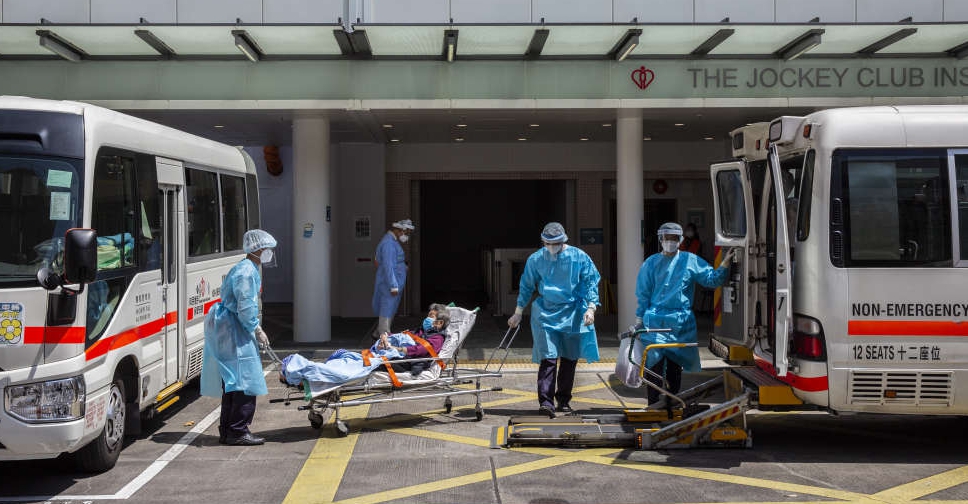
The global financial hub has some strict restrictions in place to combat a surge in coronavirus cases that has seen the city suffer the most deaths globally per million people in the week to March 7, according to the Our World in Data publication.
Total infections have surged to about 600,000, including more than 2,800 deaths - most in the past two weeks.
The Chinese territory has had its borders effectively sealed since 2020 with few flights able to land and passengers banned from transitting.
"This is not the time to lift the ban. A lot of people will rush to come back...there will be infected cases and that will add a lot of pressure to our public hospital system," Lam said.
Her comments come a day after she announced a shift in her government's approach to tackling the coronavirus, devoting more medical resources to elderly people as infections and deaths climb rapidly amongst the city's mainly unvaccinated seniors.
Hong Kong's government had previously focused its resources on identifying, treating and isolating all cases, even those that are asymptomatic and mild, adding pressure on its hospitals and healthcare system.
Until recently, the government said it was focusing its efforts on carrying out compulsory mass testing for Hong Kong's 7.4 million residents sometime this month.
Contradictory messages from authorities over the scheme and plans for a city-wide lockdown have sparked panic buying by residents, who have been emptying supermarket shelves for over 11 days.
There was now no time frame for the testing, Lam said on Wednesday.
The change in approach came after a top Chinese official said that Hong Kong had to prioritise reducing infections, severe illnesses and deaths.
Hong Kong, like mainland China, has adopted a "dynamic zero" strategy that seeks to curb infections with strict mitigation measures. The approach has been severely tested by the fast-spreading Omicron variant.
China has seen a rise of locally transmitted coronavirus infections reporting 402 for March 9, nearly doubling from the daily count a day earlier.


 Trump vows to blockade Strait of Hormuz after Iran peace talks stumble
 Nigerian airstrike hits market, 200 feared dead
 Russia, Ukraine trade accusations of ceasefire violations
 At least 30 dead in stampede at Haiti’s historic Laferriere Citadel
 Cyclone lashes New Zealand's North Island, hundreds evacuated