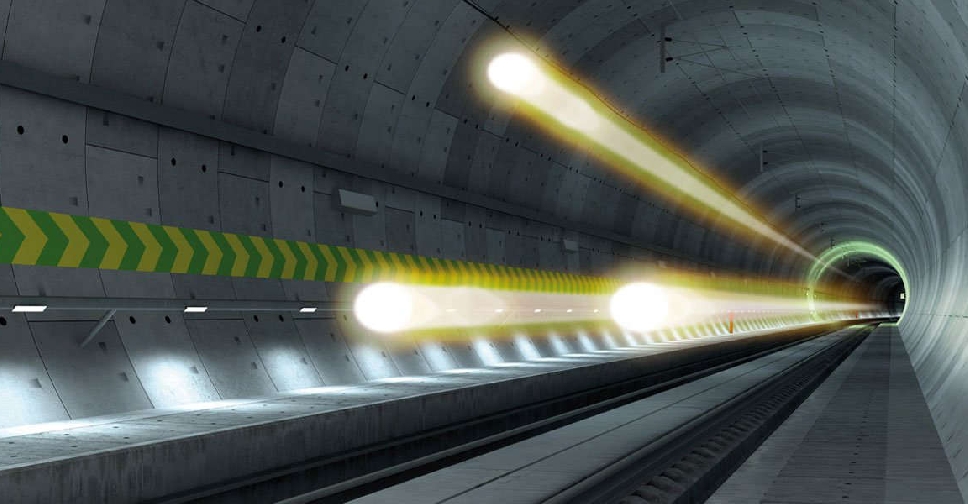
Workers broke through a final, thin veil of rock on Thursday, opening an underground tunnel between Austria and Italy that will eventually become a high-speed rail line linking the north and south of Europe.
The Brenner Base Tunnel, which is being billed as the world's longest underground rail connection, is a centrepiece of a European Union drive to shift freight off the roads and onto rail, to cut pollution and boost cross-border trade.
"Today we are taking together a decisive step for the construction of one of the largest infrastructure works in the entire continent," Italian Prime Minister Giorgia Meloni said at the rock breaking ceremony.
"It is a historic day ... for Italy, for Austria, and for the whole of Europe."
The link will be the first dedicated rail tunnel directly connecting Austria and Italy. It is due to open in 2032, about 16 years behind schedule, and is set to cost 8.5 billion euros - about 2.5 billion above budget.
The tunnel will stretch 55 km (34 miles) when complete, extending to 64 km by hooking up to an existing underground link into Innsbruck. It will cut journey times between Fortezza in Italy to Innsbruck to less than 25 minutes from 80 minutes.
The Brenner Pass is one of Europe's busiest mountain crossings used for freight transport. Each year, more than 2.5 million trucks, 14 million vehicles and 50 million tonnes of goods cross the Alpine pass, choking local communities.
Currently, around 70 per cent of trans-Alpine freight traffic through the Brenner travels by road, with only 30 per cent by rail - a balance the tunnel aims to reverse.
However, the hoped-for impact of the new link could be undermined by Germany, which accounts for a significant amount of road traffic through the Alps, but has not finalised crucial northern access routes to hook up with the Brenner tunnel.

 At least 14 killed in explosion at weapons depot in Syria
 US hits five Iranian oil tankers after attack on Navy ships
 UK gives air traffic provider a week to probe outage that halted flights
 Serbia's President Vucic dissolves parliament, calls snap elections
 With large crowds attending, Norway lays King Harald to rest