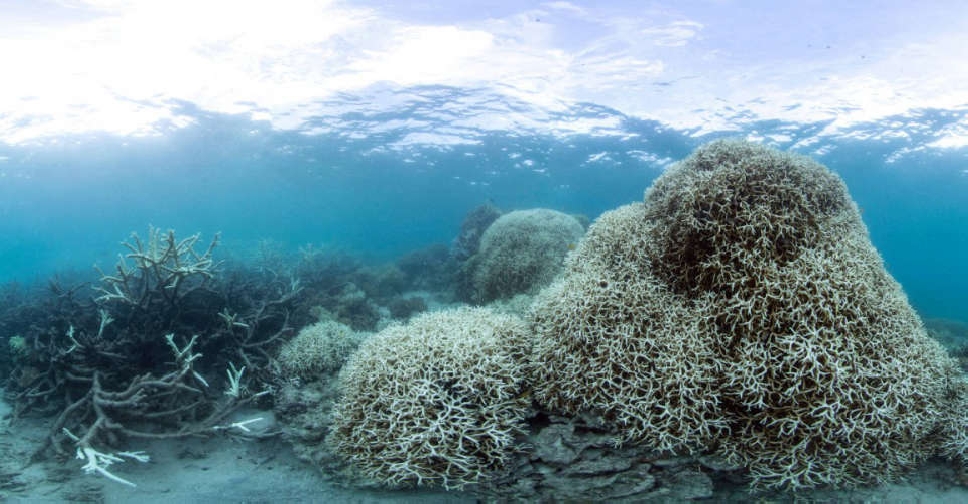
Australia's Great Barrier Reef has been hit by a major coral bleaching event, with the results consistent with patterns of heat stress that have built up over summer at the biologically diverse site, a government agency announced.
The Great Barrier Reef Marine Park Authority (GBRMPA), the agency tasked with monitoring the reef's health, confirmed that, "a widespread, often called mass, coral bleaching event is unfolding" across the reef.
"While the area's aerial surveys are showing that the coral bleaching is extensive in the shallow water areas, we will need in-water surveys to confirm the severity of the coral bleaching and also what the depth range is," Roger Beeden, Chief Scientist at GBRMPA, said in a video message.
Beeden said the bleaching follows on from similar reports on reefs around the world due to elevated sea surface temperatures primarily driven by climate change but amplified by the impacts from the El Nino phenomenon, which usually results in warmer ocean waters.
The news comes after the US National Oceanic and Atmospheric Administration earlier this week said the world was on the verge of a fourth mass coral bleaching event which could see wide swathes of tropical reefs die, including parts of the Great Barrier Reef.
The World Wide Fund for Nature-Australia said the fifth mass bleaching event in eight years showed climate change was putting "tremendous pressure" on the reef.
"WWF is very concerned that this bleaching event is unfolding in an area where corals have not been previously exposed to these extreme temperatures. Unless we see a significant drop off in temperatures in the next few weeks, the risk of significant coral mortality is high," Richard Leck, WWF-Australia's Head of Oceans, said in a statement.
Bleaching causes corals to expel the colourful algae living in their tissues and turn white. Coral can survive a bleaching event but it can stunt growth and affect reproduction.
Australia has been lobbying for years to keep the reef - which contributes about $4 billion (AED14.7 billion) to the economy and supports 64,000 jobs - off UNESCO's endangered list as it could lead to losing the heritage status, taking some shine off its attraction for tourists.

 US military to begin Iran maritime blockade on Monday
 Orban ousted after 16 years as Hungarians flock to pro-EU rival
 Trump vows to blockade Strait of Hormuz after Iran peace talks stumble
 Nigerian airstrike hits market, 200 feared dead
 Russia, Ukraine trade accusations of ceasefire violations