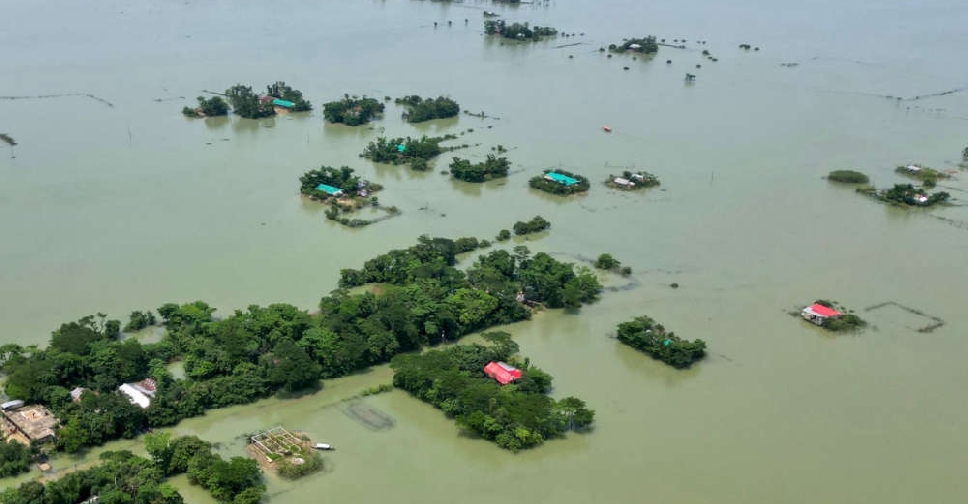
Monsoon rains and upstream river water from India have caused widespread flooding in northeastern Bangladesh, stranding more than 2 million people, and the situation could worsen, officials said on Friday.
The UN agency UNICEF said trapped residents in the region, including more than 772,000 children, were in urgent need of assistance.
"Children are the most vulnerable, facing heightened risks of drowning, malnutrition, deadly waterborne diseases, the trauma of displacement, and potential abuse in overpopulated shelters," said Sheldon Yett, UNICEF Representative to Bangladesh.
The Bangladesh Meteorological Department forecast further heavy rainfall in the next few days that could exacerbate the flooding and cause landslides in hilly areas.
At least 10 people, including eight from the Rohingya community, were killed on Wednesday after heavy monsoon rains triggered landslides in refugee camps in southern Bangladesh.
The northeastern region has been particularly hard hit, with heavy rainfall and upstream water from India causing widespread inundation. Bangladesh is still recovering from a cyclone that hit its coastal belt in the south late last month.
"I fear it could be as devastating as the 2022 floods," Sylhet resident Shameem Chowdhury said, referring to flooding that was the worst in the region for 122 years.
TV footage showed extensive flooding in fields and villages with people wading through knee-deep water in Sylhet city as the rainfall dangerously swelled water levels along four rivers in the region.
Vast areas of land are submerged, posing a significant threat to crops if the floodwaters linger for an extended period, agriculture ministry officials said.
The flooding has also caused significant damage to infrastructure with over 810 government schools in the Sylhet division flooded and nearly 500 being used as flood shelters, UNICEF said.
Almost 140 community clinics were also submerged, disrupting essential healthcare services.
A 2015 analysis by the World Bank Institute estimated that approximately 3.5 million people in Bangladesh, one of the world's most climate-vulnerable countries, were at risk of annual river flooding.
Scientists attribute the exacerbation of such catastrophic events to climate change.

 Dozens quarantined in Siberia after plague institute lab worker dies
 UK novelist and politician Jeffrey Archer dies aged 86
 US, German scientists win Nobel medicine prize for work on light and brain
 Nigeria military aircraft crashes with 32 aboard
 At least 22 dead after boats collide on Congo river