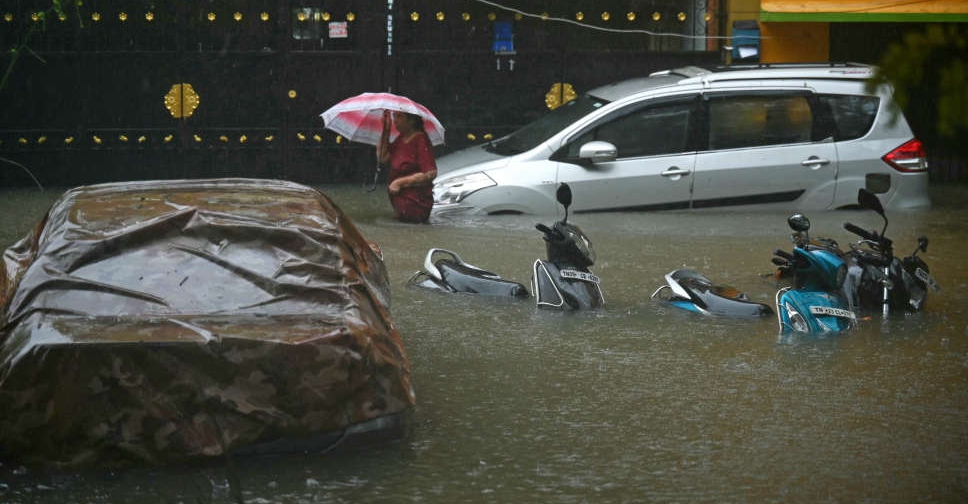
Cyclone Michaung barrelled into the southern Indian coast on Tuesday with intense winds, its arrival preceded by torrential rains and flooding that killed at least 13 people, as officials assessed the damage.
Tall waves crashed into southern coastal towns over the last two days as the cyclone approached, submerging entire villages and halting all transportation as more than 390,000 people felt its impact, authorities said.
Michaung made landfall near the beach town of Bapatla in Andhra Pradesh state with winds of up to 70 mph that later dropped slightly as the 'severe' category cyclone weakened, the Indian weather office said. Further weakening is forecast in the next six hours.
Trees were uprooted and at least 25 villages inundated as the cyclone traversed northwards and authorities evacuated more than 15,000 people to safety ahead of landfall, the Andhra Pradesh government said.
"We have taken all measures and have all the equipment. We have also broadcast precautions to the public yesterday," Zahid Khan, a National Disaster Response Force official, told ANI news agency, adding the force had multiple teams deployed on ground.
The 13 people killed include a 4-year-old boy who died after a wall collapsed, authorities said. More than 140 trains and 40 flights were cancelled in the state.
Up to eight inches of rain is expected in the state over the next 24 hours, the weather office said.
In neighbouring Tamil Nadu state capital Chennai, a major electronics and manufacturing hub, residents waded through waist-deep floodwaters that also swept away cars.
The floods triggered memories of similar rains in Chennai eight years ago which killed 290 people, as some activists questioned whether the city's infrastructure could handle extreme weather events.
On attempts to improve stormwater drainage systems in the city, Raj Bhagat P, a civil engineer and geo-analytics expert said: "Their solutions would have helped a lot in moderate and heavy rainfall, but not in very heavy and extremely heavy rains."
The Chennai airport - one of the busiest in the country - was closed on Monday after a runway was submerged and reopened at 9:00 am on Tuesday, a spokesperson for the federal civil aviation ministry said.
Taiwan's Foxconn and Pegatron halted Apple iPhone production at their facilities near Chennai due to heavy rains, sources familiar with the matter said on Monday.


 Iran threatens to retaliate for US blockade
 Israel presses assault on Lebanon border town ahead of US-hosted talks
 One killed in Ukraine despite Easter ceasefire, officials say
 Haiti declares three days of national mourning for 25 killed in stampede
 Australia appoints woman to lead its army for the first time