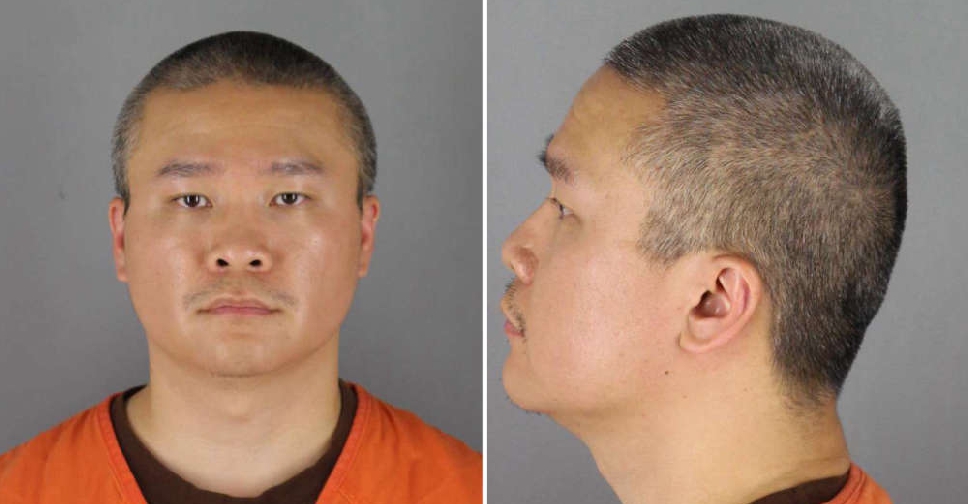
Former Minneapolis police officer Tou Thao was sentenced to 4-3/4 years in prison for aiding and abetting manslaughter in the 2020 killing of George Floyd, a Black man whose neck was pinned to the ground by another officer's knee during a botched arrest.
The sentence, meted out by Hennepin County District Judge Peter Cahill, was more than the 4-1/4 years requested by Minnesota Attorney General Keith Ellison.
"I was hoping for a little more remorse, regret, acknowledgment of some responsibility," Cahill said before handing down the sentence.
The sentence will run concurrently with the 3-1/2 years Thao previously received on a federal conviction of violating Floyd's civil rights.
Cahill in May found Thao guilty of one count of aiding and abetting manslaughter in the second degree for his role in Floyd's death. Thao, a nine-year veteran of the police force, was the fourth and final officer sentenced in the killing.
"I didn't intend on doing any malice or ... try hurt anyone. That was never my intent. I did the best that I thought I could," Thao said in court before he was sentenced.
Derek Chauvin, a white officer captured on cellphone video kneeling on Floyd's neck for more than nine minutes on May 25, 2020, was found guilty of murder in 2021. Thao held back a small crowd of bystanders while Chauvin and two other officers were subduing Floyd, who police suspected of using a counterfeit $20 bill at a nearby store.
The killing ignited a wave of protests over racism and police brutality across the United States and around the world.
Lawyers for Thao did not immediately respond to requests for comment on Monday.
The other two officers at the scene, Thomas Lane and J. Alexander Kueng, restrained Floyd's knees and buttocks while Chauvin knelt on his neck. Lane and Kueng last year pleaded guilty in state court to aiding and abetting second-degree manslaughter. Lane was sentenced to 3-1/2 years in prison. Kueng was sentenced to three years.
At a federal trial last year, Kueng and Lane were also found guilty of violating Floyd's civil rights. Lane was sentenced to 2-1/2 years and Kueng to three years in federal prison, to run concurrently with the state sentence.
Chauvin was sentenced to 22-1/2 years in state prison for the unintentional second-degree murder of Floyd. Last year, he received a concurrent sentence of 21 years in prison on federal charges of violating Floyd's civil rights.


 US-Iran peace talks end without agreement, delegations leave Pakistan
 Russia, Ukraine trade accusations of ceasefire violations
 At least 30 dead in stampede at Haiti’s historic Laferriere Citadel
 Cyclone lashes New Zealand's North Island, hundreds evacuated
 US-Iran talks pause for now, disagreements remain